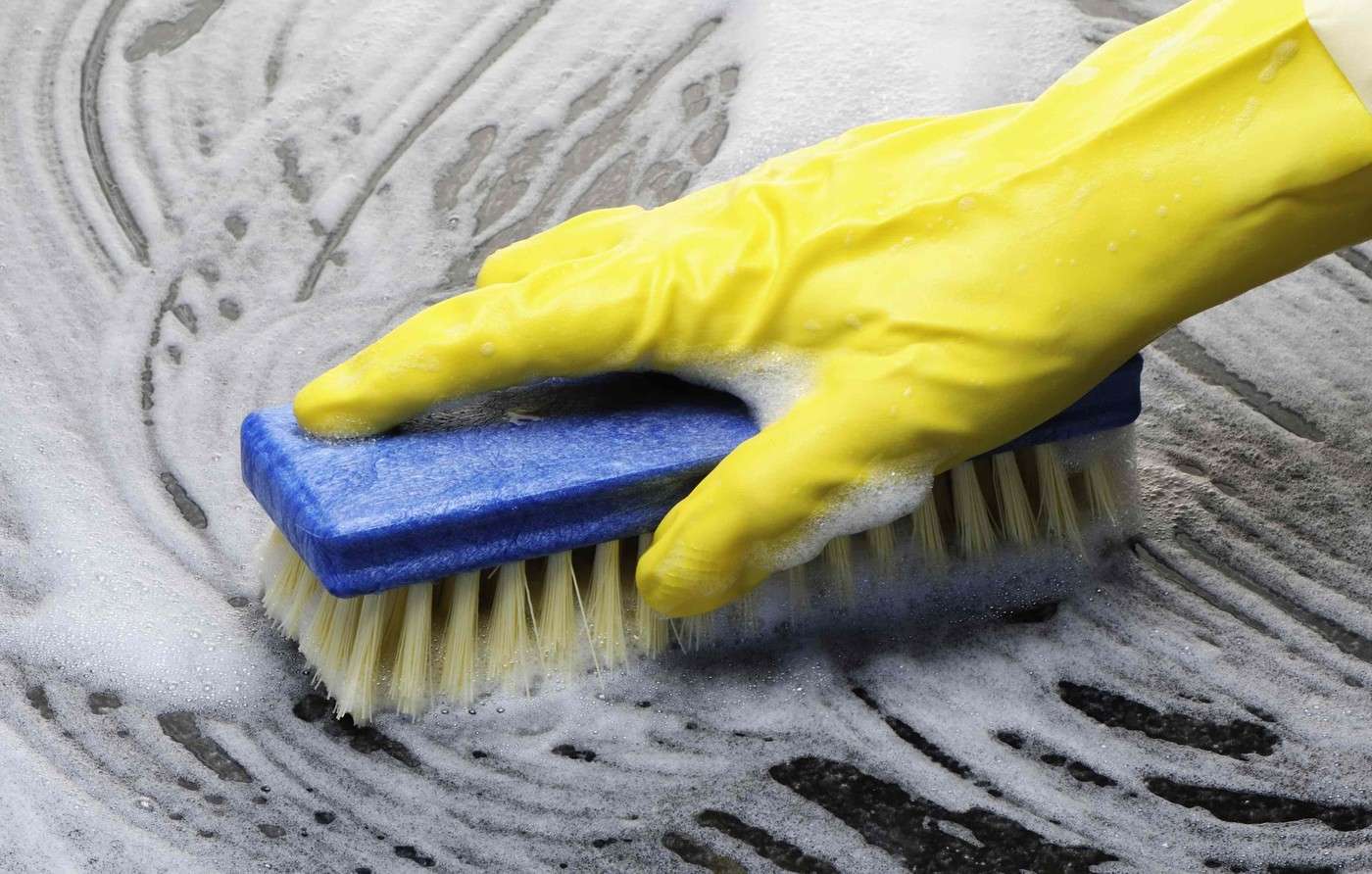
The Spruce's brush guide distinguishes narrow grout tools, broad scrubbers, and long-handled shapes as well as hard and soft bristles. That matters when residue lies in a corner: more pressure from a large brush does not substitute for a head that reaches the space. Its household recommendations favor nylon or plastic over unnecessarily abrasive wire. Select the shape and stiffness together, using the actual finish to decide whether scrubbing belongs in the method at all.
Use firm bristles where scrubbing is appropriate
The Spruce identifies hard-bristle brushes as useful for grout, durable tile and other heavy cleaning tasks. A narrow brush reaches spaces that a large scrubber cannot. For household use, the article recommends nylon or plastic bristles rather than metal or wire, which can be unnecessarily abrasive.
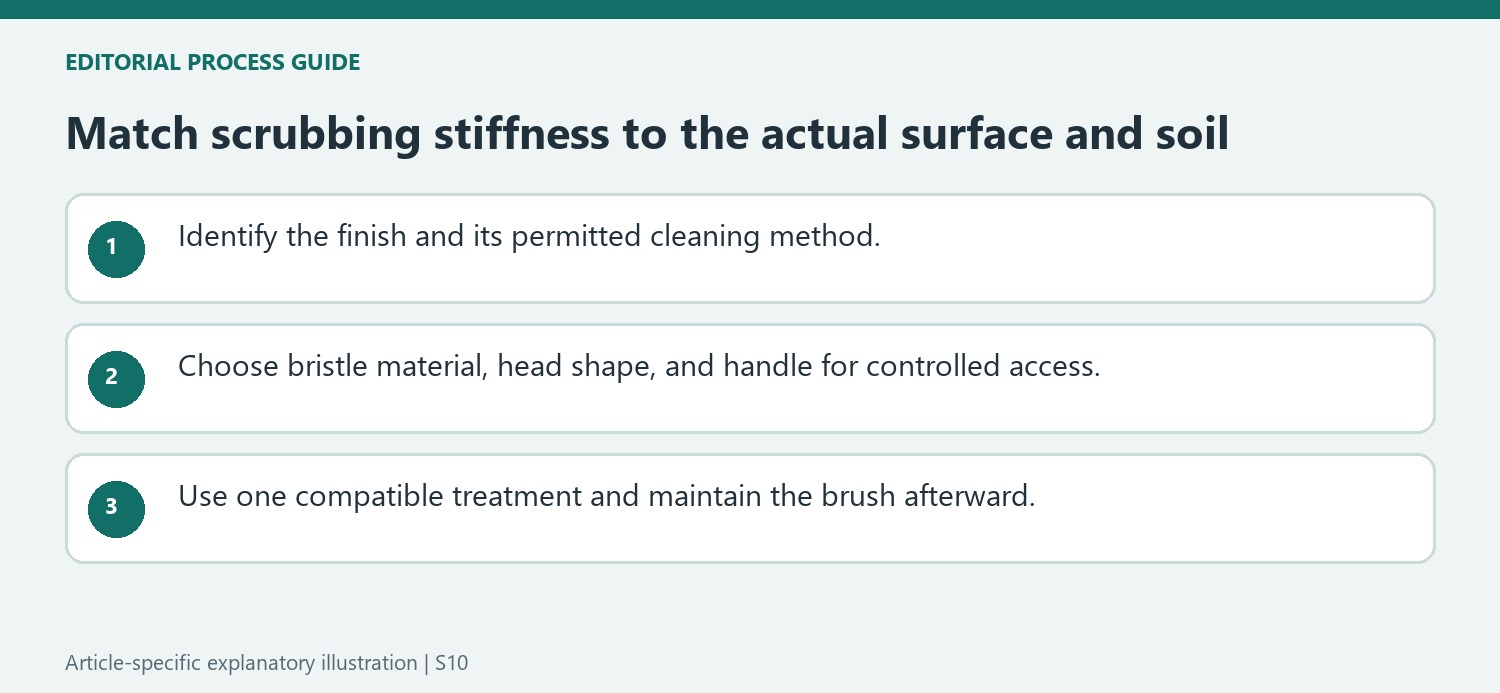
Switch tools for delicate finishes
The guide distinguishes tougher cleaning from work on glass, polished wood, painted surfaces and appliance exteriors, where softer bristles help avoid scratching. A brush's shape and stiffness should therefore follow the material and available space. Check the surface instructions first, and do not turn a recommendation for scrubbing a durable floor into permission to scour every finish in the room.
Separate brush geometry from cleaning chemistry
The Spruce compares narrow grout brushes, larger scrubbers and long-handled tools with pointed ends for corners. Choosing the right shape can improve access without forcing a broad brush into a small gap. Its examples also move between concrete, car mats, tile and appliance surfaces, so no one chemical recipe follows the brush everywhere. Read the surface and cleaner instructions independently; products listed as alternatives must not be mixed. On coated or delicate materials, a hard brush may be inappropriate even if the stain is stubborn. Remove loose debris first where suitable, then use the gentlest compatible tool that can reach the affected area.
Check both the soil and the material under it
The Spruce's hard-bristle examples include concrete, grout, outdoor surfaces, vehicle mats, and other demanding jobs. That range is a list of possible applications rather than permission to scrub every version of those materials with the same force. Identify the surface finish and its care requirements first. A coated, polished, painted, or delicate surface can need a gentler tool than the neighboring rough material. The source distinguishes nylon or plastic household bristles from metal wire. Keep that distinction when comparing a narrow grout brush with a wider scrub broom. The strongest-looking brush is only useful when its contact does not damage the object being cleaned.
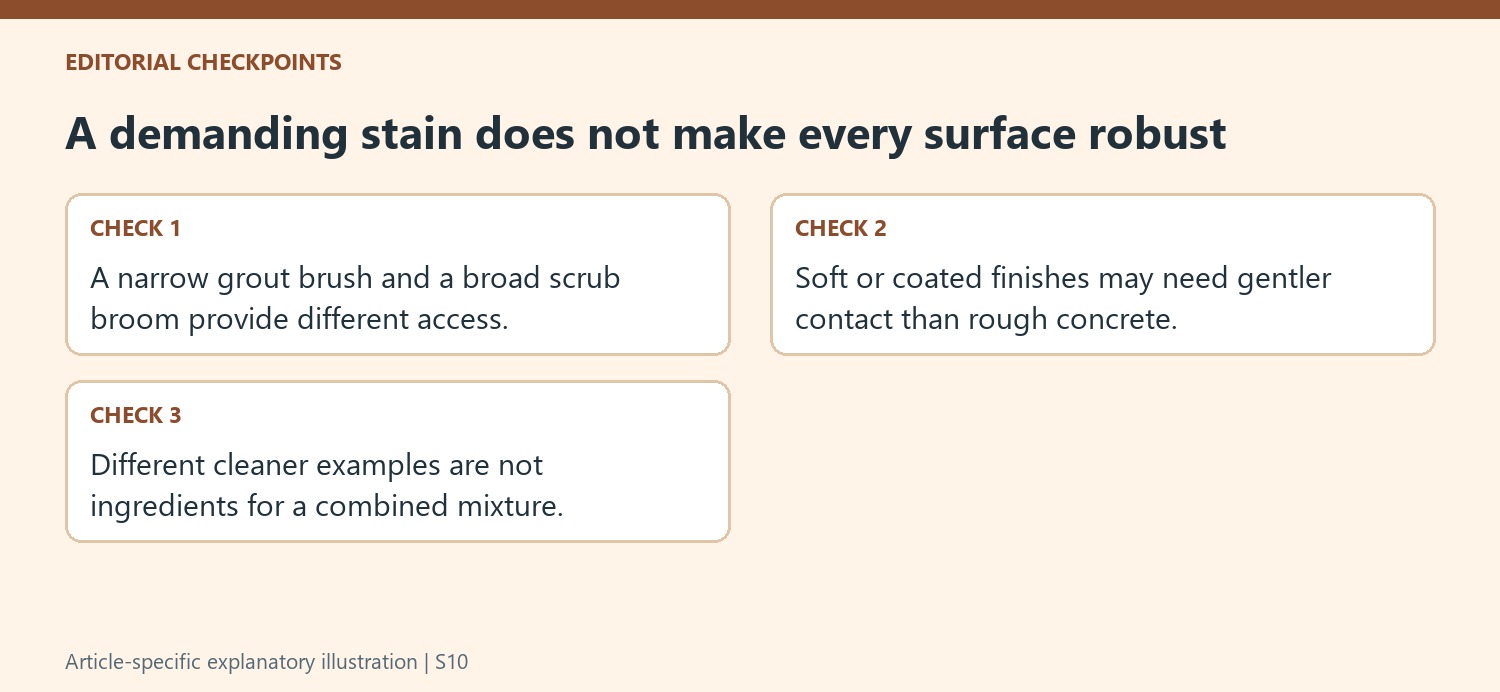
Fit the brush shape to access and control
A narrow brush can reach a grout line without forcing a large head over adjacent surfaces. A longer handle may make an extended floor task easier to manage, provided it still gives adequate control in corners. Before applying a cleaner, remove loose debris by the method appropriate to the surface. Follow any grain or directional care guidance rather than using random pressure simply because a stain is persistent. For a fabric or carpet, obtain the actual care method before adopting the article's broad stain-scrubbing example. The tool choice should support the approved treatment, not replace the need to identify the stain and material.
Keep the cleaner and the brush as separate compatibility checks
The source names several chemical treatments across different tasks. They are alternatives within particular methods, not a list to combine. Use an appropriate labeled product at its specified concentration and contact conditions, checking compatibility with the surface and brush. Outdoor rinsing and disposal also depend on the actual treatment and site. If a mark remains, reconsider its cause instead of immediately escalating stiffness or mixing another cleaner into the first. Clean the brush according to its own instructions and inspect for bent, loose, or worn bristles before storing it. A well-maintained task-specific brush can be versatile without being universal. Its useful feature is controlled mechanical action on a compatible surface, rather than an assumption that more abrasion always produces a better clean.
References
- This Tool Will Transform the Way You Clean at Home Forever (You Can Use It Everywhere!). The Spruce; Mary Marlowe Leverette.
The Spruce's brush guide distinguishes narrow grout tools, broad scrubbers, and long-handled shapes as well as hard and soft bristles. That matters when residue lies in a corner: more pressure from a large brush does not substitute for a head that reaches the space.


Leave a Comment
Comments (0)