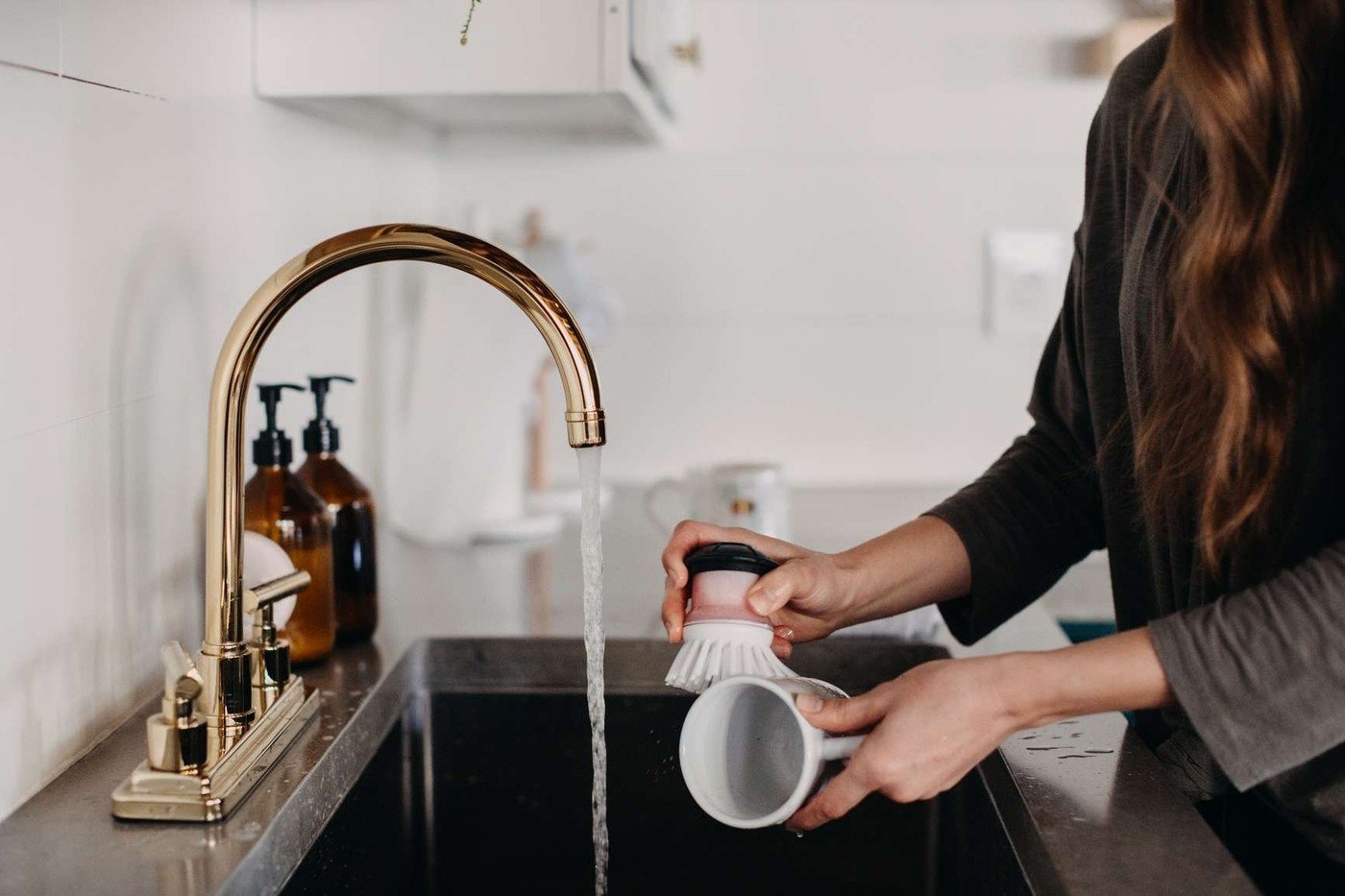
The Spruce's comparison of dish brushes and sponges centers on airflow, reach, and handling rather than a simple claim that one tool always cleans better. Open bristles can shed water more readily, and a handle can help work inside a tall vessel. A flexible sponge retains a different role for delicate shapes and absorbing spills. Those distinctions make the condition of the tool and the cookware's surface more useful selection criteria than habit alone at the sink.
Airflow changes maintenance
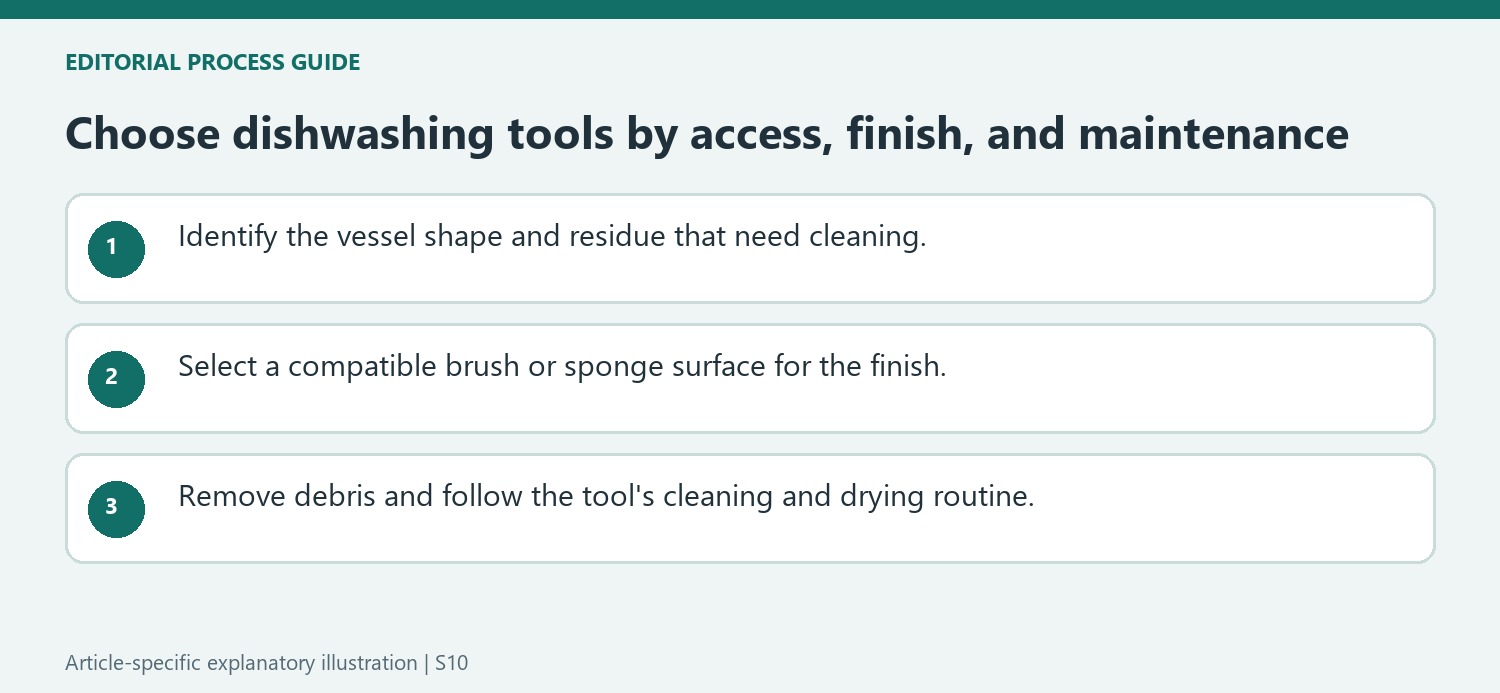
The Spruce reports cleaning experts favoring dish brushes for many scrubbing tasks because water can move through the bristles and the tool can dry more readily. A brush can also reach into taller vessels. These advantages make shape and drying behavior useful considerations when choosing a kitchen cleaning tool.
Keep a gentler option for delicate work
The article recognizes that sponges can suit delicate or intricate items and absorbing spills. Match the tool to the cookware or finish, and maintain it instead of assuming any reusable brush stays clean by itself. A firm scrubber is not appropriate for every coated pan. Check the item's care instructions and use a separate, suitable approach when the surface is vulnerable to scratching.
Judge the whole tool and its drying arrangement
The Spruce quotes Polya Petrova on water moving through bristles and Alicia Sokolowski on the leverage provided by a handle. Those design benefits can make a brush easier to use and dry, but they do not make it self-sanitizing. Rinse out trapped food and maintain the brush using its own instructions. Choose a head narrow enough for the vessel and a stiffness compatible with the surface. The source keeps sponges as an option for delicate shapes and absorbing spills; their flexibility is a separate advantage from scrubbing power. Keep either tool in suitable condition instead of relying on its category alone to establish cleanliness.
Compare the whole dishwashing task rather than choosing one winner
The Spruce interviews cleaning professionals who generally prefer brushes for handling and scrubbing, while retaining a role for sponges. Start with the dishes that are awkward to clean. A long-handled brush may improve access into a tall suitable vessel, whereas a compliant sponge can conform to some contours more closely. Check that the actual head reaches the base without wedging into a narrow opening. A tool that is comfortable in the hand still needs to be compatible with the glass, glaze, or coating. The experts' preferences are a useful comparison of functions, not a universal guarantee that every brush is safe on every pan.
Choose contact that preserves the item's finish
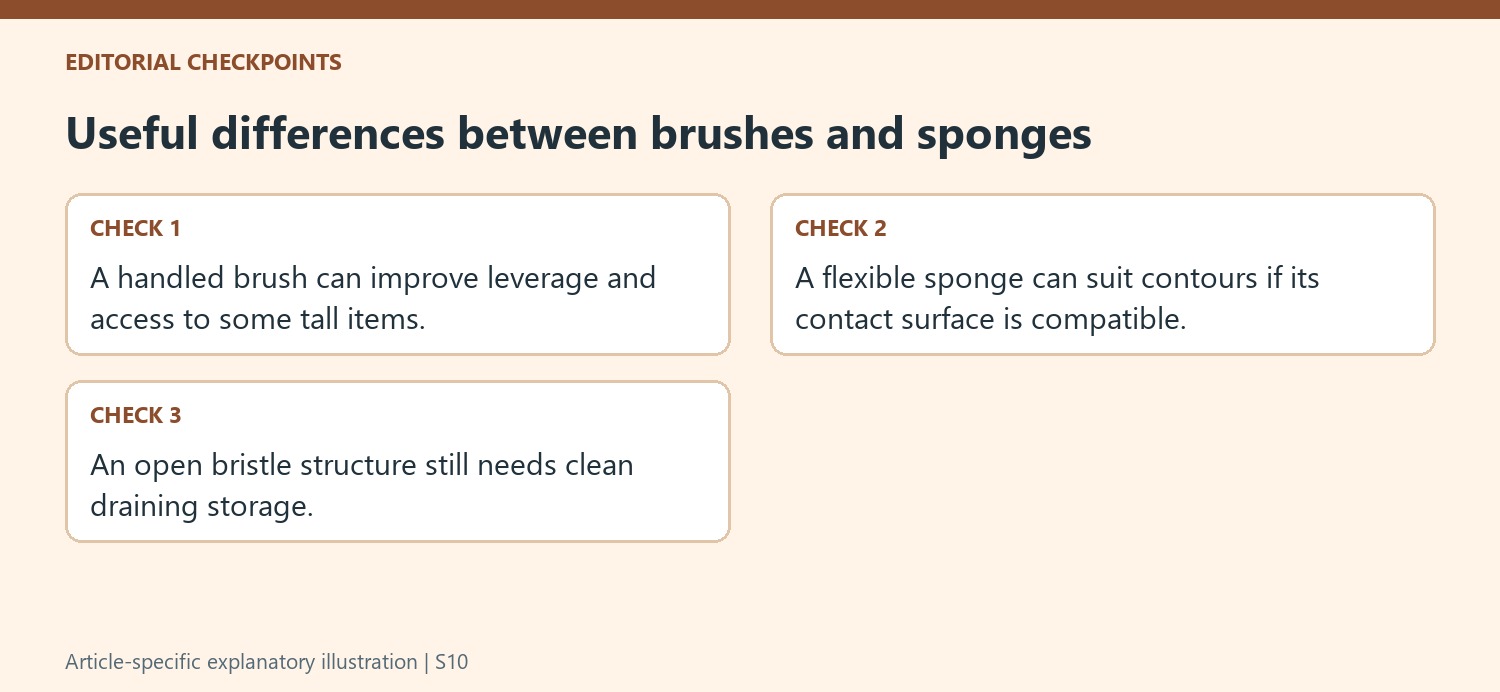
For delicate pieces, follow the item manufacturer's permitted sponge or brush type. A sponge's soft side and abrasive pad can behave very differently, and soft-looking bristles can still carry grit. Inspect the tool and remove trapped food appropriately before moving to a more sensitive item. Soften stuck-on residue through the dishware's approved soaking method where permitted rather than compensating immediately with harder pressure. The source's account of handle leverage explains why a brush may reduce direct hand contact with the washing area, but it does not establish protection from every hot-water or sharp-object hazard. Work within the actual dish and tool instructions.
Make draining and replacement part of the comparison
The professionals connect brush hygiene with an open bristle structure that lets water drain more readily than a wet sponge. That advantage depends on the tool being cleaned and stored appropriately. Remove food debris, use the tool's permitted cleaning method, and position it so it can dry rather than sitting in dirty pooled water. A sponge used to absorb a countertop spill should not automatically return to washing delicate glass without proper cleaning. Inspect both types for odor, damage, or worn working surfaces and follow replacement guidance. A household can keep more than one suitable tool when their roles are clear. The more useful choice is the arrangement that handles the dishes effectively and can be maintained consistently after the meal.
References
- Should You Scrub Your Dishes With a Sponge or Brush? What Cleaning Pros Use for the Best Clean. The Spruce; Sarah Lyon.
The Spruce's comparison of dish brushes and sponges centers on airflow, reach, and handling rather than a simple claim that one tool always cleans better. Open bristles can shed water more readily, and a handle can help work inside a tall vessel.


Leave a Comment
Comments (0)