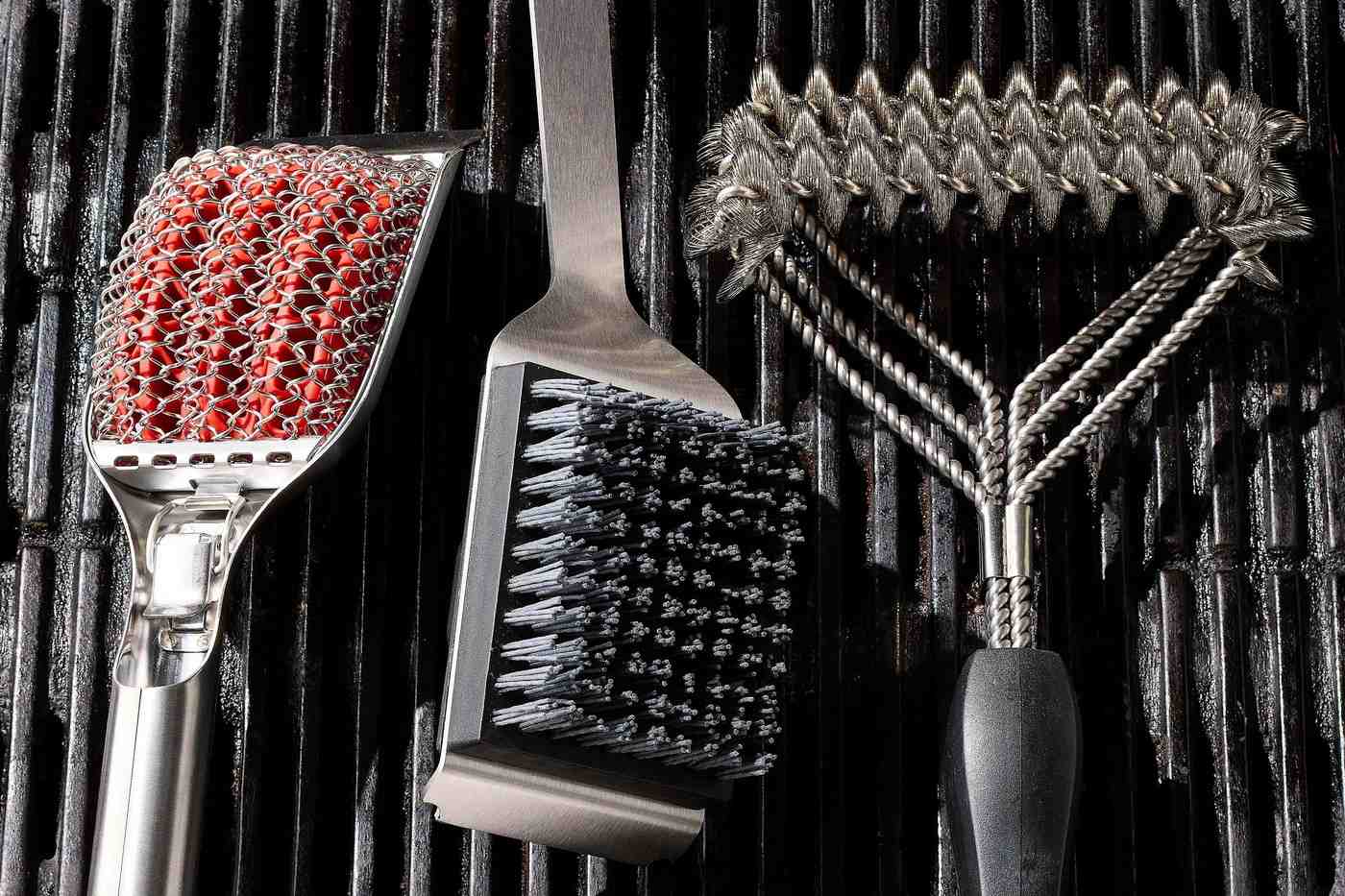
Better Homes and Gardens' grill-brush report concerns a hazard that ordinary comparisons of scrubbing strength miss: detached wire can remain on a grate and travel into food. The doctors cited describe injuries from swallowed bristles. Choosing grill-cleaning equipment therefore requires attention to what the tool leaves behind, not just the burnt residue it removes. Inspect the brush and cooking surface, then compare a compatible alternative using its own temperature limits and the grill maker's instructions.
Grill-brush wear creates a different hazard
Better Homes and Gardens reports that wire bristles can detach from a grill brush, remain on the grate and become attached to food. Swallowed bristles can cause serious injuries. This is a tool-selection issue beyond whether the brush removes burnt residue effectively.
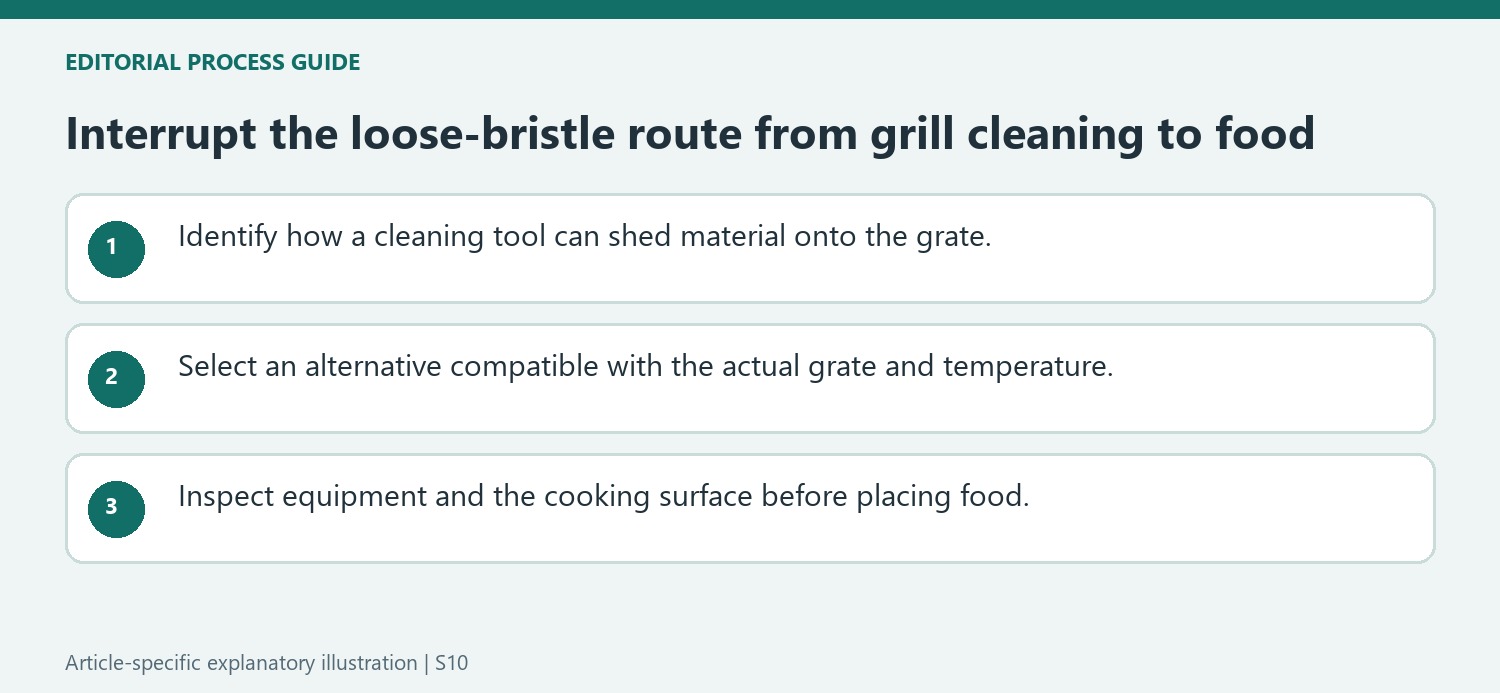
Compare a suitable alternative
The article discusses alternatives such as mesh or nylon tools and other grill-cleaning methods. Follow the chosen tool's temperature and use restrictions, since a replacement material is not automatically suitable on a hot grate. Inspect equipment before cleaning and keep food away from damaged tools. A heavily abrasive brush should be judged by its condition and intended application as well as its immediate scrubbing power.
Inspect the grate as well as the replacement tool
BHG's doctors describe detached bristles becoming embedded in food, which makes this a foreign-object hazard rather than merely a scratched-grate problem. Choosing a non-wire alternative addresses that particular failure mode, but the replacement still needs the grill and tool makers' instructions. Some nylon tools are intended for cool surfaces, and cleaning stones or other products have their own restrictions. Inspect the tool for damage and the cooking surface for remaining debris before adding food. The article's cases illustrate why cleaning effectiveness alone is not enough: equipment must leave the food-contact surface suitable for use after the residue has been removed.
Understand the failure mechanism behind the reported injuries
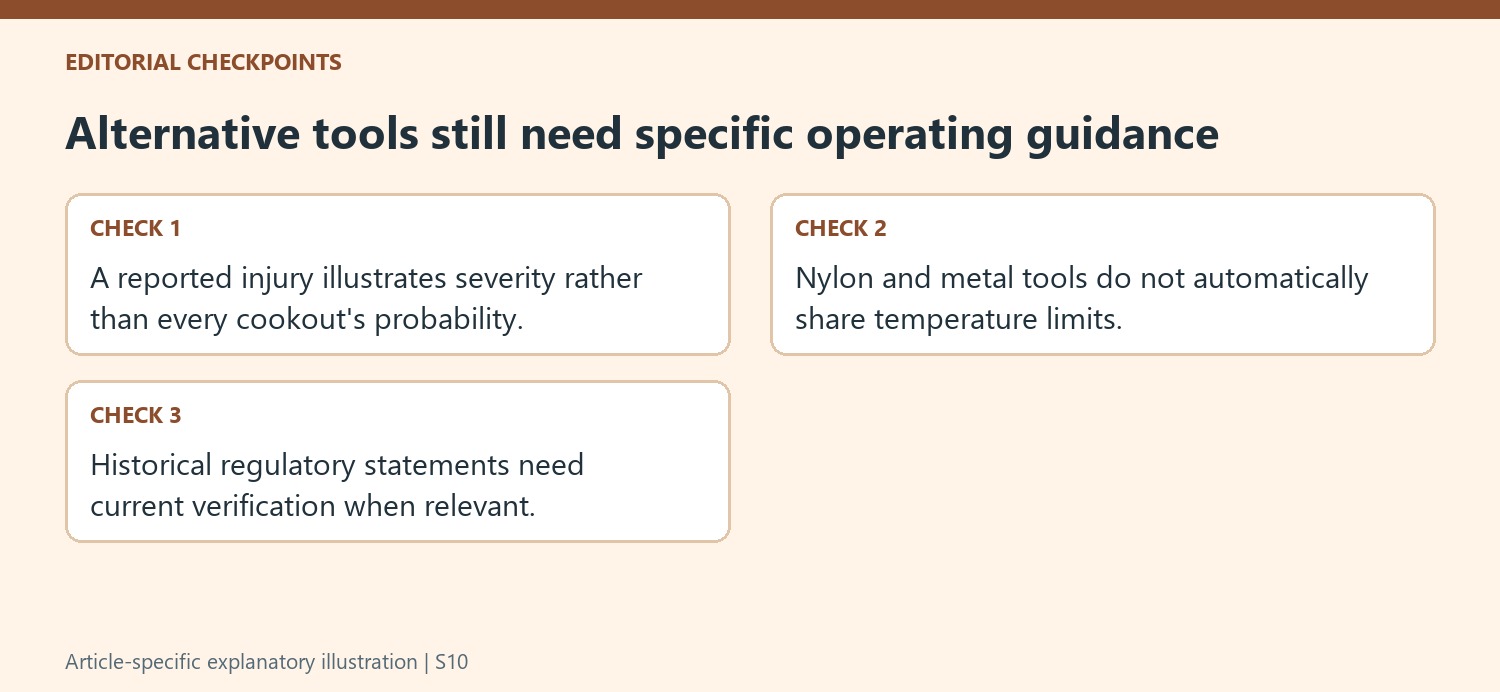
Better Homes and Gardens interviews physicians about fine wires coming loose from grill brushes, remaining on cooking surfaces, and transferring to food. The important sequence is shedding, transfer, and possible ingestion. The danger does not depend on a bristle being large enough to notice in an ordinary glance. The reported medical cases illustrate serious consequences without establishing the probability for every grill session. Avoid turning a historical emergency-visit estimate into a current complete count. The practical question is how the cleaning method can prevent a loose sharp fragment from entering food, rather than how popular or inexpensive a particular brush has been.
Choose an alternative for the actual grate and temperature
The source names alternatives including wood or bamboo scrapers, grill stones, mesh designs, nylon tools, and other approaches. Those names are a starting point for comparison, not proof that all versions fit every grill. Read the grate maker's cleaning guidance and the tool's permitted temperature and material use. A nylon tool should not be assumed to tolerate the same hot surface as a metal implement. A stone or other abrasive product can also need a specified method and residue removal. Select a complete compatible process, including the final inspection of the cooking area, rather than replacing one brush with an unfamiliar tool and keeping every old habit unchanged.
Make the cleaning method part of the cooking setup
Discuss who cleans the grill and how before food reaches the grate. At a shared cookout, the source recommends asking about the method rather than assuming that the host's tools are the same as those at home. Inspect equipment for wear and follow replacement guidance. Where a wire-bristle brush remains in use, the article advises inspection before and after cleaning and removing possible residue from the grate; these checks should not be represented as eliminating every risk. The feature's account of regulatory status belongs to its publication context and should not substitute for checking current official information if that matters to a purchase. Awareness is useful when it leads to a deliberate compatible tool choice and a cooking surface checked before food is placed on it.
References
- Here's Why You Should Never Use a Wire-Bristle Grill Brush (It Can Land You in the Hospital). Better Homes & Gardens; Karla Walsh.
Better Homes and Gardens' grill-brush report concerns a hazard that ordinary comparisons of scrubbing strength miss: detached wire can remain on a grate and travel into food. The doctors cited describe injuries from swallowed bristles.


Leave a Comment
Comments (0)