
Better Homes and Gardens' kitchen routine distinguishes removing visible dirt from completing a suitable sanitizing step, while its spill advice extends beyond the first mark on the counter. Liquid can reach cabinet fronts, seams, or drawers below. Inspect the path of a fresh mess before relying on the next scheduled clean. The weekly plan then brings appliance exteriors, frequently handled surfaces, and cloth laundering back into view, using products appropriate to each material and any food-contact requirements.
Clean visible dirt before sanitizing
Better Homes and Gardens distinguishes wiping away dirt from reducing germs with a suitable sanitizer. A surface can look tidy without having completed a product's sanitizing procedure. Use the appropriate cleaner first and follow the relevant product directions, especially on food-contact surfaces, rather than treating every quick wipe as disinfection.
Schedule floor and appliance tasks
The article places mopping and other deeper work into a weekly kitchen routine while keeping dishes, spills and clutter under daily control. Choose a regular time and a practical order for the room. The schedule may need adjustment for children, pets or heavy cooking, so use the checklist as a plan to adapt rather than an inflexible promise that one cleaning frequency fits every household.
Look beyond the first visible part of a spill
BHG points out that a spill can travel from the counter into cabinet or drawer areas, making prompt inspection more useful than waiting for the next checklist date. Its weekly list also includes appliance exteriors, sink seams, frequently used cabinet fronts and laundering dishcloths. Select products for the individual material; the source explicitly notes that laminate-counter care should not be copied blindly to granite or quartz. If a sanitizing step is needed on a food-contact surface, use a suitable product's current directions, including contact and any rinse requirements. A printed checklist can cue the work, while the actual mess determines what cannot wait.
Build the weekly order around what daily work leaves behind
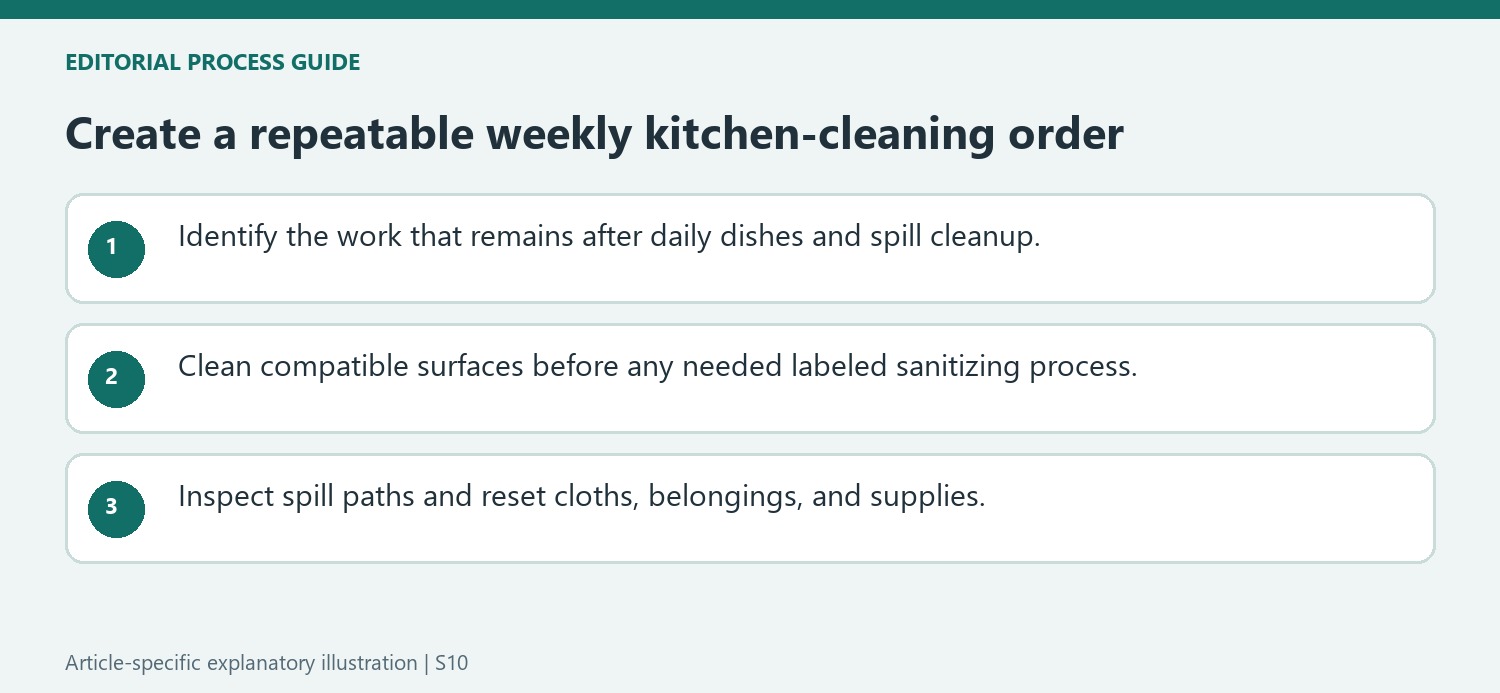
The source treats routine wiping, dishes, and obvious spills as the base for a more thorough weekly session. Walk through the kitchen and identify the smudged appliance fronts, cabinet contact points, sink detail, and floor areas that need additional attention. Put those tasks in an order that avoids cleaning the floor before loose material falls from higher work. Use a realistic time when the kitchen can be partly unavailable, rather than copying a day of the week from a generic plan. A repeatable order makes omissions easier to notice without requiring every week to involve an identical amount of work.
Separate soil removal from any required sanitizing step
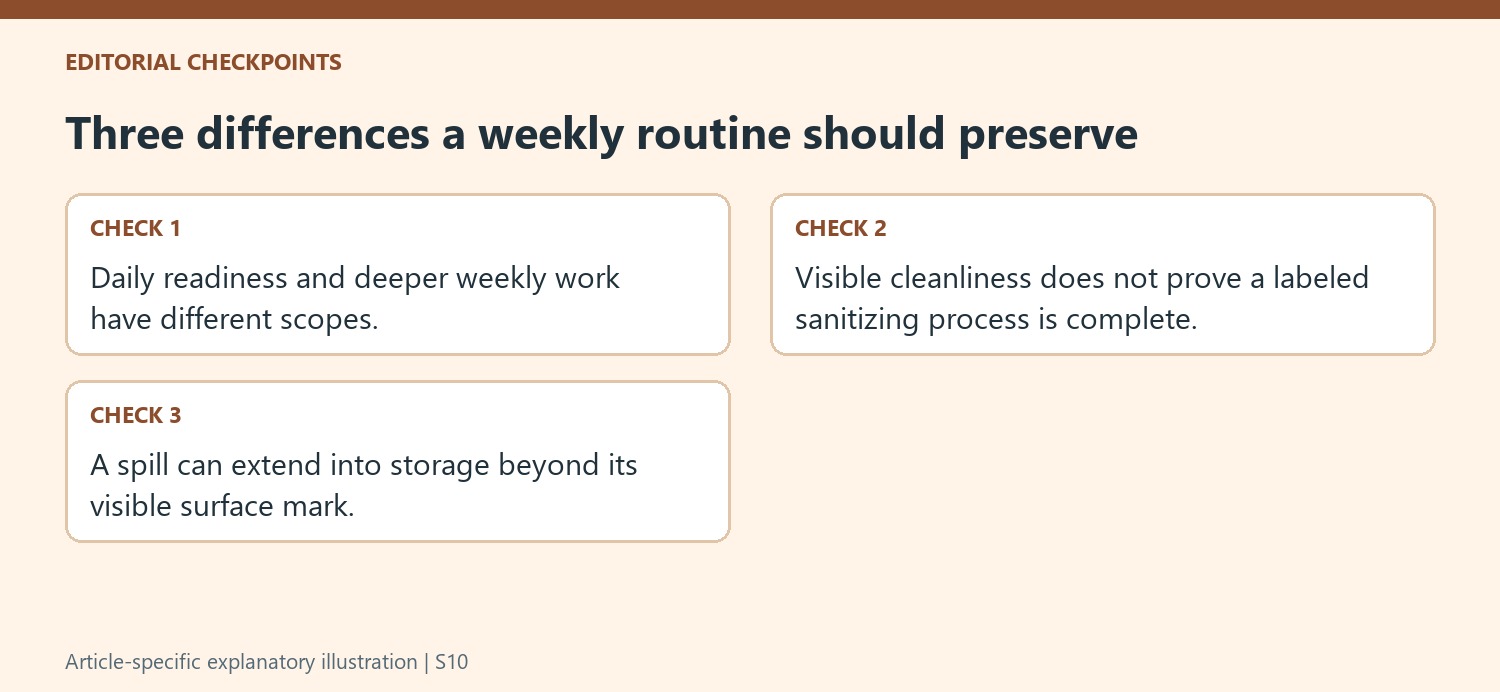
The checklist discusses cleaning and sanitizing, which should remain distinct procedures. Remove soil using a surface-compatible method, then follow a suitable labeled sanitizer or disinfectant where that step is needed. Its directions determine application, contact conditions, rinsing requirements, and whether use on a food-contact surface is appropriate. Do not improvise a formula or assume a quick wipe leaves the same result as the labeled process. Keep cloths and tools separated between incompatible tasks. A visible shine can be satisfying evidence of a finish, but it is not a measurement of every microorganism or proof that a food-safety requirement has been met.
Review the spill path and finish the reset
The source notes that a spill can reach drawers or cabinets as well as the visible counter and floor. Check its actual extent promptly rather than waiting for the normal weekly list. During the scheduled session, follow care instructions for cabinet finishes, appliances, and flooring, avoiding a single mixture applied throughout the room. Launder used dishcloths and towels through their suitable process and leave clean replacements ready. Return loose items to their intended homes so the next cooking session begins with usable surfaces. Keep a short note of deferred maintenance or missing supplies. The useful weekly routine closes the gap left by ordinary daily work while remaining flexible enough to respond to the kitchen's actual condition.
References
- This Kitchen Cleaning Checklist Makes Tidying Up Less Daunting. Better Homes & Gardens; Alicia Chilton; Jessica Bennett.
Better Homes and Gardens' kitchen routine distinguishes removing visible dirt from completing a suitable sanitizing step, while its spill advice extends beyond the first mark on the counter. Liquid can reach cabinet fronts, seams, or drawers below.


Leave a Comment
Comments (0)