Choose the boundary before buying organizers
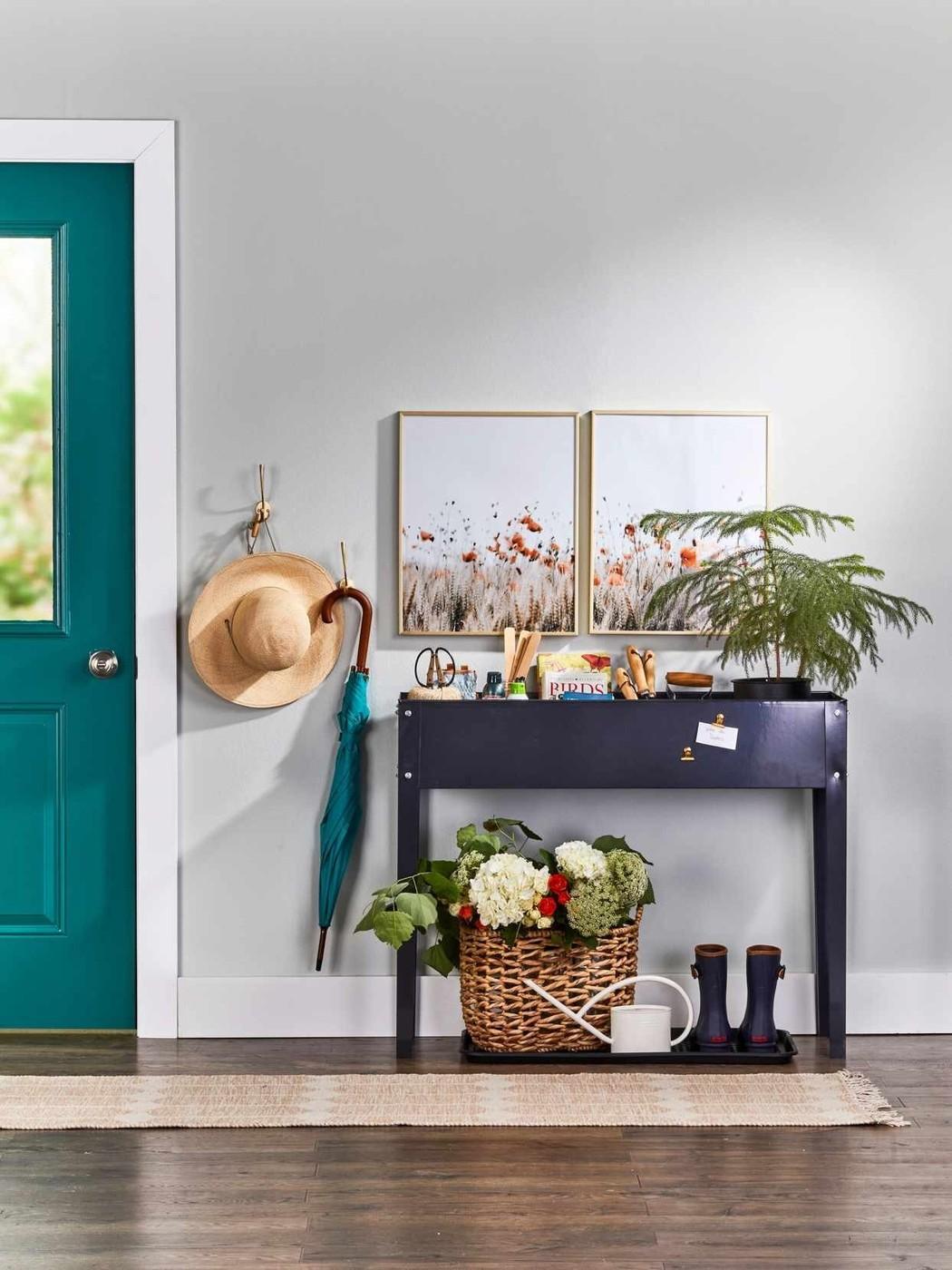
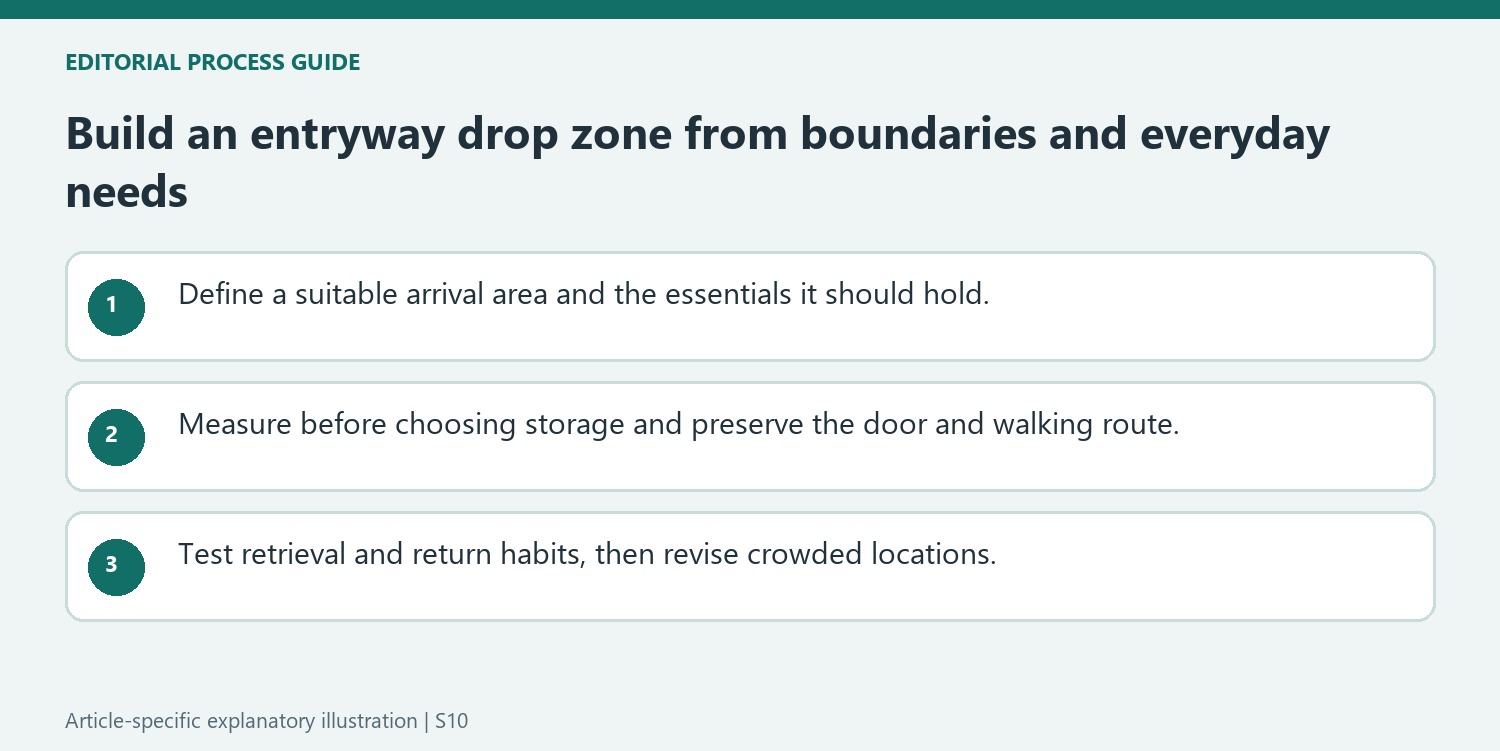
Better Homes and Gardens starts its entryway plan by defining exactly where the arrival zone will sit. A narrow hall may offer one possible location, whereas a larger foyer needs a deliberate boundary to prevent bags and papers spreading throughout the space. The guide then sorts what must remain within reach, including keys, pet supplies and daily bags, before selecting storage furniture.
Contain what comes through the door
Better Homes and Gardens recommends deciding where the entryway's everyday items should live, whether the space is a large foyer or a small section of hallway. A defined area for keys, bags and frequently used belongings helps prevent them from spreading across the floor and nearby furniture.
Make tidying part of cleaning preparation
Use storage that fits the household's routine and available space instead of treating one layout as correct for every entrance. Returning items to their assigned places exposes the surfaces that need dusting or floor care. An organizing system is not a substitute for removing tracked-in dirt, but it makes those cleaning jobs easier to complete consistently.
Choose storage after listing what must live here
BHG's categories include keys and wallets, bags, shoes, accessories, papers and pet supplies. Select only the ones the household actually needs at the entrance, then measure the available width, depth and height. Its narrow-space examples use vertical hooks and shelves, while a bench or hall tree needs enough room without blocking the route. A large family command center can live elsewhere if the doorway cannot accommodate it. Keep frequently used items easy to put back, with secure appropriately installed storage and suitable handling for wet footwear. The system should reduce the amount moved during cleaning, rather than pack every available surface with additional containers.
Define what the drop zone should contain
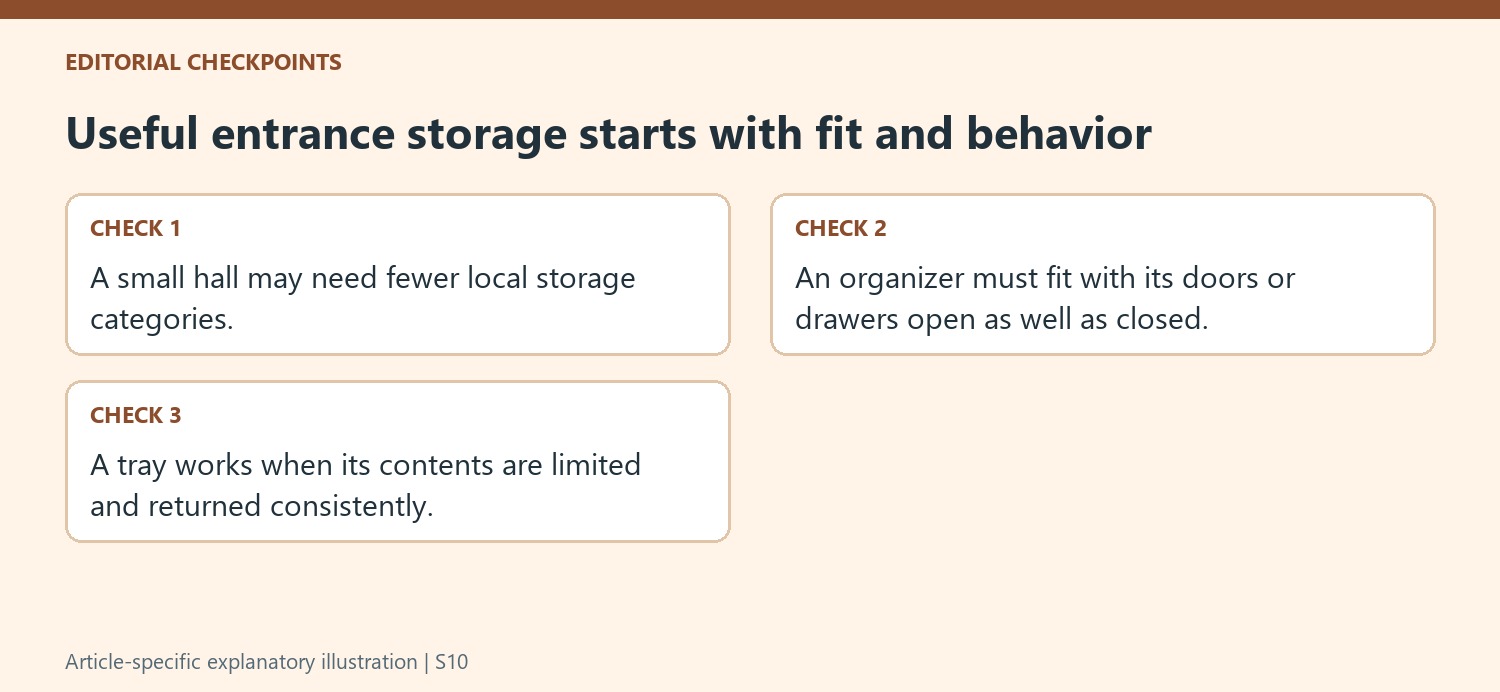
The source begins with a boundary because an entrance can otherwise become storage for the entire household. Identify the place that fits the normal arrival route and the door's operation, then list what genuinely needs to be there. Keys, an everyday bag, current shoes, and a few useful accessories may have a stronger claim than occasional sports equipment or months of paperwork. Remove items that belong elsewhere before shopping for organizers. The size of the available space determines what can be supported locally. A narrow hall may need a simple arrangement rather than a full command center, and that is a practical design decision rather than a failure to include every suggested category.
Choose containers after reviewing dimensions and use
A slim console, shoe cabinet, hooks, shelf, or bench should solve a defined need without narrowing the usable route excessively. Measure the available space and allow for doors, drawers, and the action of taking off footwear. Follow installation and load guidance for wall-mounted storage and furniture. A tray for small essentials is useful when it is easy to reach and has a limited set of contents. A boot tray needs a surface and position suited to moisture, while frequently used bags need accessible hooks or compartments. Do not assume one all-in-one piece fits simply because it contains several attractive storage functions in a product photograph.
Test the return habit before adding more storage
Use the arrangement during ordinary arrivals and departures, then notice which belongings still land outside the boundary. Check whether the intended location is too high, crowded, difficult to open, or inconvenient for its user. Keep children's storage appropriate to their abilities and the actual item. Review mail and outgoing possessions through a separate action routine so the drop zone does not become a permanent holding area. Clean the surfaces and containers through their material instructions, including the area underneath where safely accessible. Adjust the setup as seasonal needs change. The durable result is an entrance where everyday essentials can be found and returned while the rest of the space remains available for movement and use.
References
- 11 Must-Know Tips for Organizing an Entryway. Better Homes & Gardens; Mary Cornetta.
Better Homes and Gardens starts its entryway plan by defining exactly where the arrival zone will sit. A narrow hall may offer one possible location, whereas a larger foyer needs a deliberate boundary to prevent bags and papers spreading throughout the space. The guide then sorts what must remain within reach, including keys, pet supplies and daily bags, before selecting storage furniture.


Leave a Comment
Comments (0)