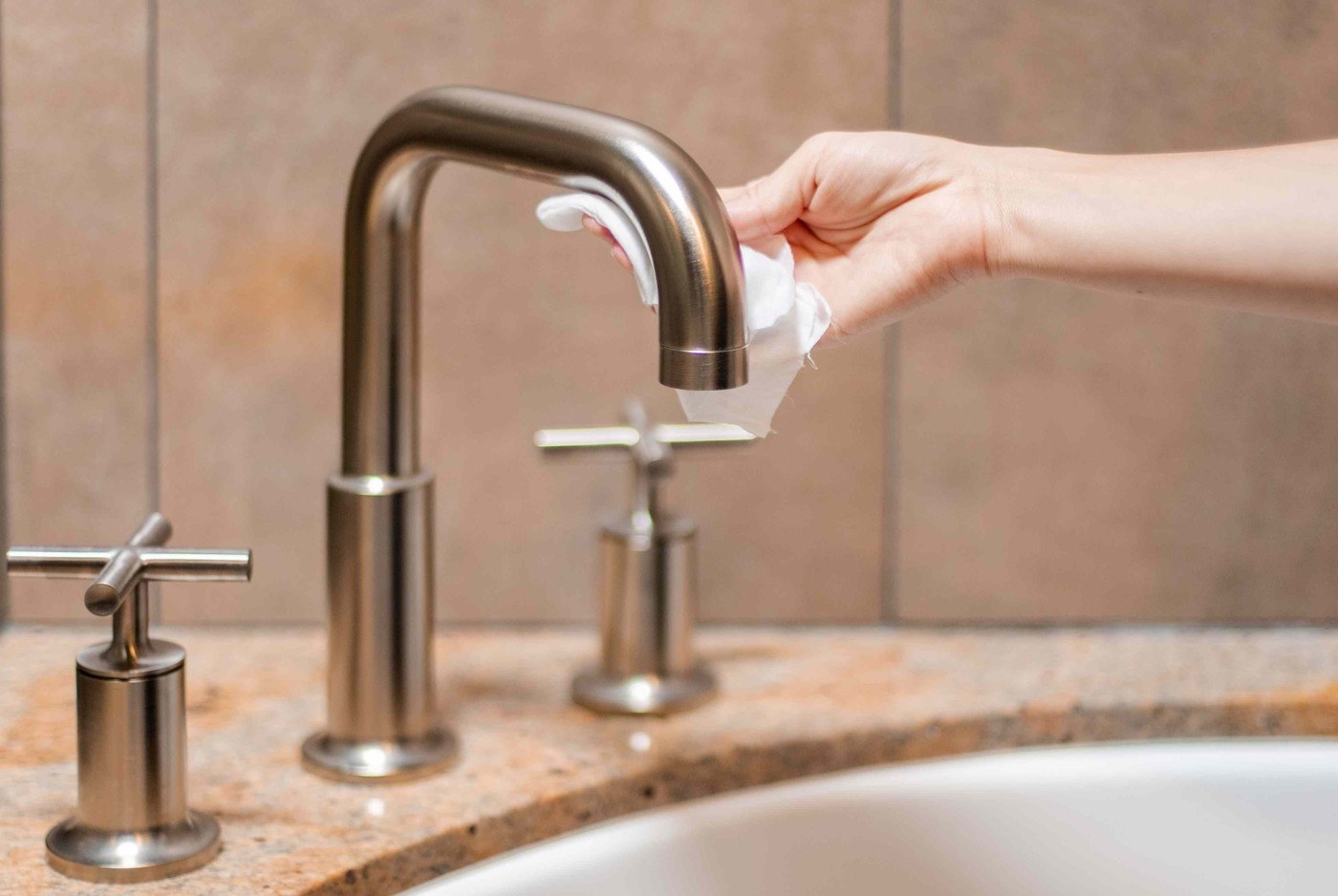
The Spruce's bathroom checklist extends beyond sinks and toilets to small leaks, dust-holding film on trim, and equipment such as fan covers. Those less visible checks become easier when storage is cleared and the everyday counter reset has already been handled. Use the deeper session to inspect as well as clean, distinguishing splash residue from moisture that returns beneath a fixture. Keep toilet tools separate from vanity work and choose each method for the material or device being maintained.
Keep the everyday reset small
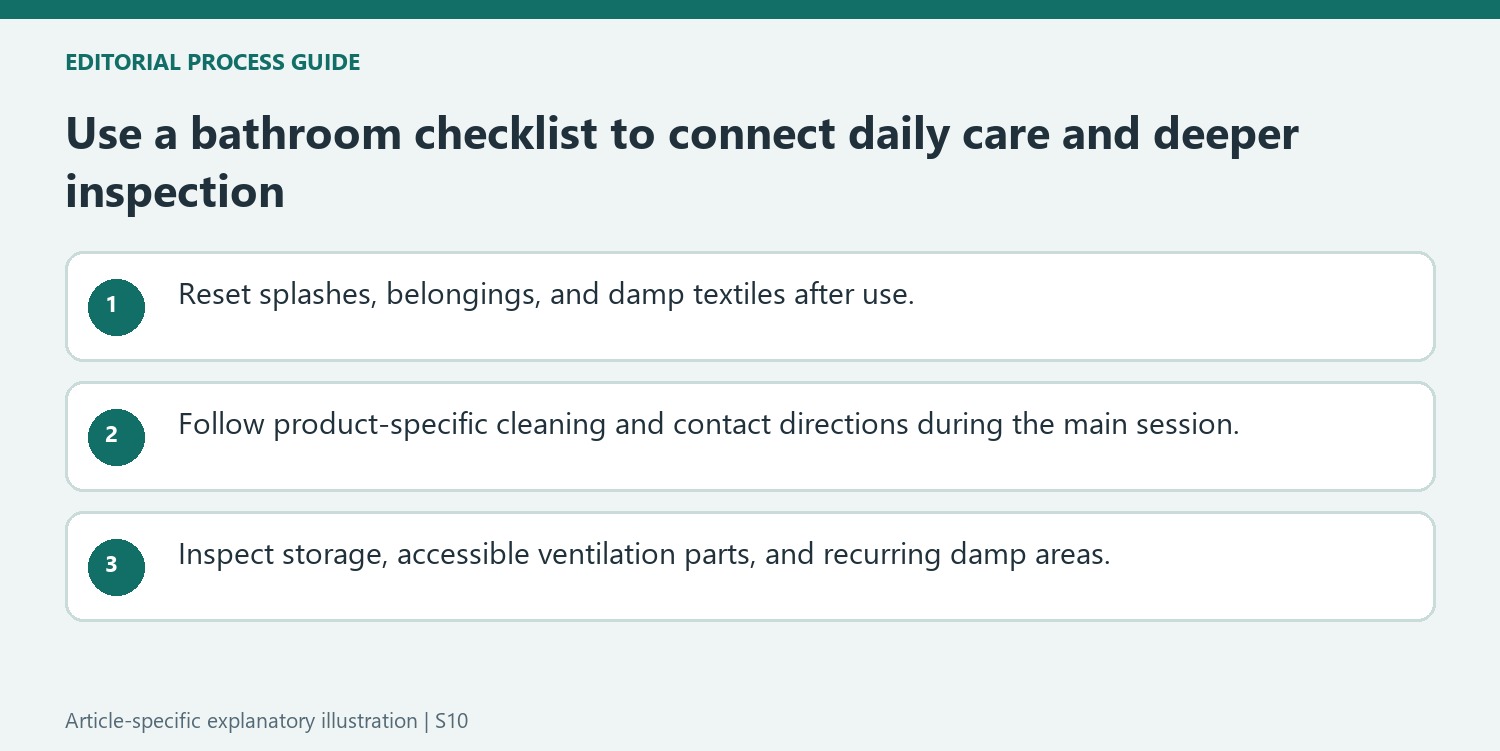
The Spruce organizes bathroom cleaning into tasks that can be maintained regularly rather than left until the room needs an extensive rescue. Keep the counter usable, remove obvious residue and allow towels to dry. These actions prepare the space for the more deliberate cleaning of fixtures and floors.
Do the deeper work deliberately
Use the checklist to cover the sink, toilet, shower and other areas at the appropriate interval. Select a cleaner suitable for the material and follow its directions instead of assuming every bathroom surface tolerates the same product. Daily tidying makes the room easier to use, but does not replace removing accumulated soap residue or completing a labeled disinfecting procedure when needed.
Add a brief inspection to the deeper clean
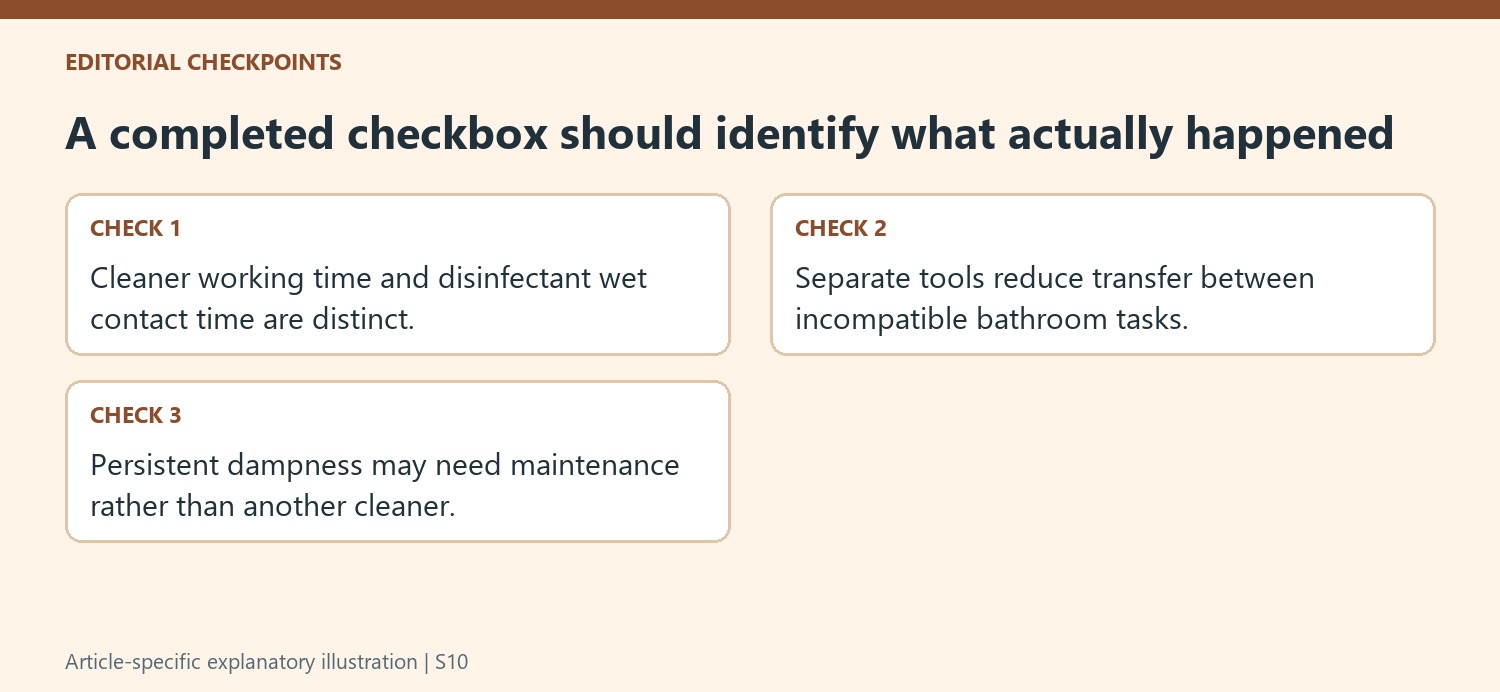
The Spruce's longer-interval list includes looking beneath the sink and around fixtures for small leaks or drips. Clearing storage makes that inspection possible and helps distinguish recurring dampness from ordinary splash residue. Its examples also include door jambs and baseboards where grooming-product film can trap dust, plus fan covers that need their own equipment instructions. A checklist should keep those places visible without encouraging one chemical across all materials. Use fresh dedicated tools around the toilet and separate them from vanity work. Follow the selected disinfectant's actual wet-contact requirements; merely allowing an arbitrary pause from a general cleaning feature does not establish disinfection.
Make the quick checklist support drying and access
A useful daily bathroom list describes actions small enough to repeat: remove fresh splashes appropriately, return belongings, and arrange wet textiles or a shower curtain to dry. Use a fresh suitable cloth for each incompatible task rather than carrying toilet residue toward the basin. Notice whether a surface is dirty, simply wet, or showing a recurring problem; those conditions call for different responses. Small resets keep the room accessible for later cleaning but should not expand into an unplanned deep-cleaning session every time it is used. Record anything that requires a different product, more time, or maintenance access instead of forgetting it.
Distinguish cleaner working time from disinfectant directions
During the larger session, an appropriate cleaner may need time to loosen deposits before wiping or rinsing. That working period is not interchangeable with the labeled wet contact time of a disinfectant. Read the relevant product directions and check surface compatibility before application. Do not assign one universal waiting period to the basin, shower, toilet, and every finish. Clean from higher areas toward lower ones where practical and leave the floor until the other work is complete. Keep task-specific tools identifiable. This order helps reduce repeated work while preserving the separate requirements of soil removal, any needed disinfection, and final surface care.
Use periodic checks to find conditions cleaning cannot solve
Storage, ventilation covers, textile components, and dust that has adhered to bathroom products can be overlooked during ordinary wiping. Place them on a suitable reminder and consult care instructions before washing or dismantling anything. A curtain's washable parts and a light or fan's accessible cover have different access requirements. Look for leaking fittings, persistent dampness, and deteriorated surfaces rather than using fragrance or stronger cleaners to conceal the symptoms. Return clean supplies to organized storage and allow maintained equipment to dry appropriately. Revise the checklist according to actual use, keeping urgent conditions separate from the next weekly or seasonal appointment. A manageable record should reveal unfinished maintenance as well as completed cleaning.
References
- Here’s the Ultimate Bathroom Cleaning Checklist to Keep It Sparkling. The Spruce; Mary Marlowe Leverette.
The Spruce's bathroom checklist extends beyond sinks and toilets to small leaks, dust-holding film on trim, and equipment such as fan covers. Those less visible checks become easier when storage is cleared and the everyday counter reset has already been handled.


Leave a Comment
Comments (0)