Check acid-sensitive surfaces before treating tracked-in marks
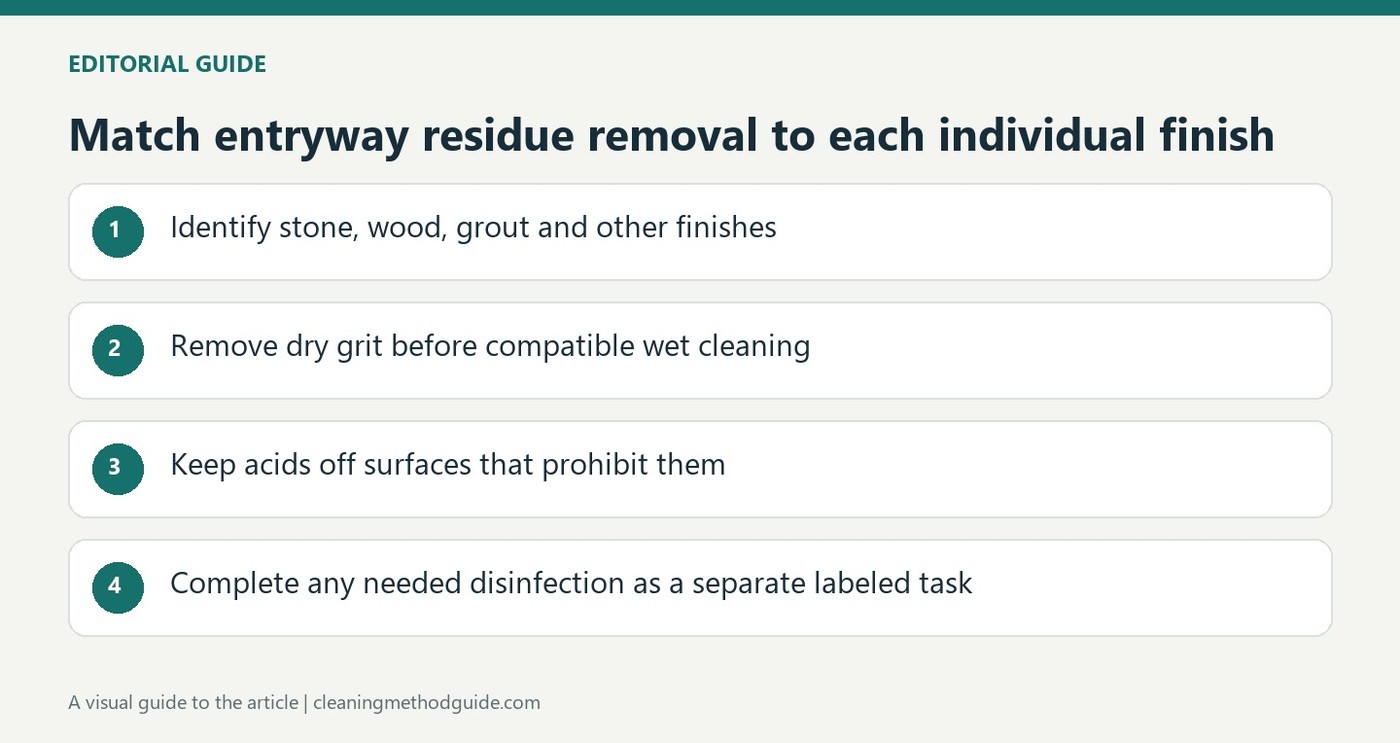
Better Homes and Gardens examines vinegar specifically for the grit, water marks and salt residue that collect near an entrance. Its experts contrast suitable cleaning uses with materials that acid can damage, including natural stone and some wood finishes. They also distinguish routine dirt removal from a labeled disinfecting process, so a familiar pantry ingredient does not become a substitute for every entryway task.
Identify where vinegar is unsuitable
The Spruce discusses vinegar for some entryway dirt and road-salt residue, while warning against it on natural stone, hardwood and waxed surfaces. The material and finish matter more than the room name. A cleaner that suits one durable surface near the door can harm another immediately beside it.
Do not confuse cleaning with disinfection
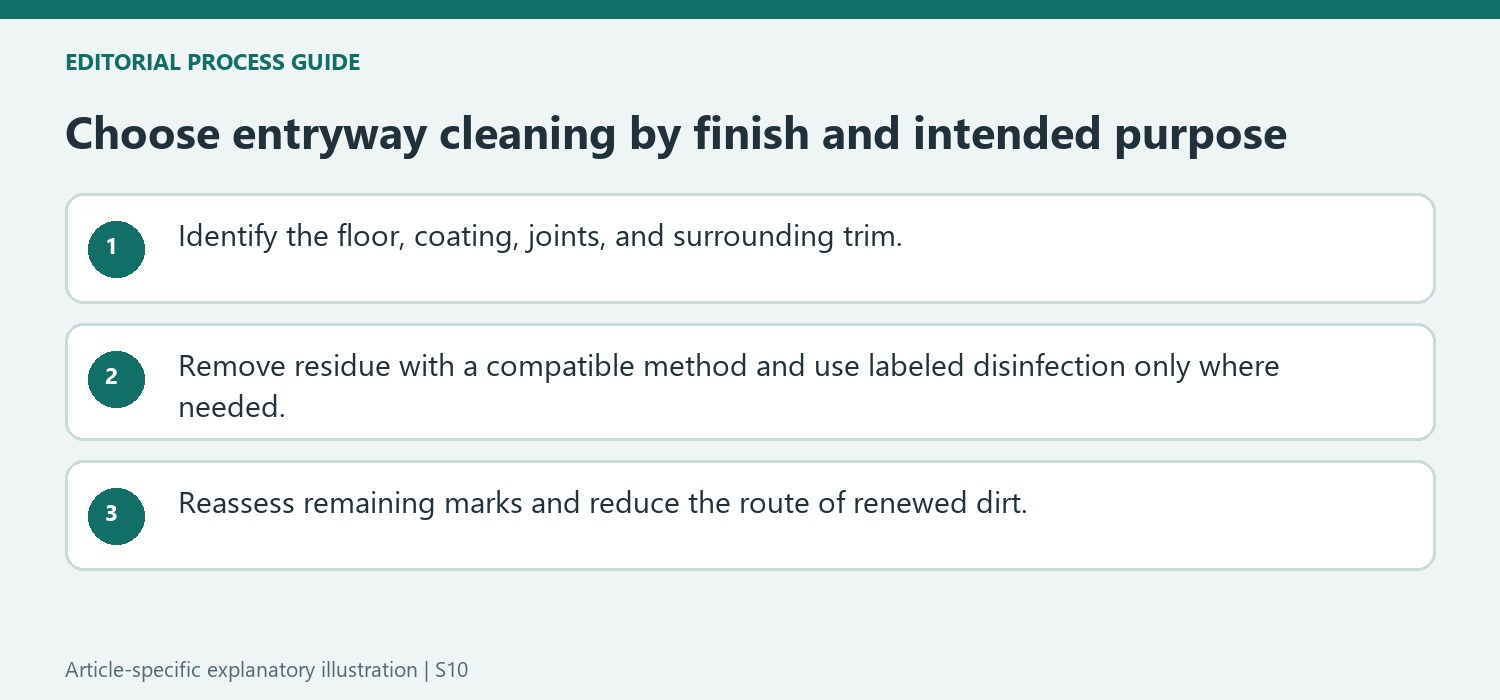
The article recommends an appropriate EPA-registered disinfectant when a disinfecting task is needed, rather than treating vinegar as an equivalent. Remove loose grit before wet cleaning, follow the chosen product's directions and inspect high-touch areas separately. Surface-specific choices make a more reliable checklist than applying one homemade solution to the floor, door, glass and every nearby furnishing.
Treat the entrance as several surfaces rather than one zone
The Spruce names stone, hardwood, waxed finishes and unsealed grout among acidic-cleaner exceptions. Those can sit next to a more tolerant tile or glass panel in the same doorway. Map the actual material before choosing treatment and keep liquid off neighboring finishes. Its alternative suggestions include a stone-appropriate pH-neutral cleaner and a wood-safe floor product; the current item instructions remain the deciding source. For a high-touch handle requiring disinfection, choose a suitable registered product and its labeled procedure separately from floor washing. Never add vinegar to bleach or another chemical in an attempt to extend one entryway mixture across all the tasks.
Identify the finish before selecting a residue remover
The source discusses vinegar's role in some entrance cleaning tasks while identifying important exceptions. Start with the floor and adjacent surfaces, not with the bottle already in the cupboard. Natural stone, unsealed grout, hardwood, and waxed or polished finishes can require methods that exclude acid. Even a broad category such as tile or vinyl does not replace the actual flooring manufacturer's directions. Check coatings, joints, and trim that a cleaner might contact during application. Where vinegar is unsuitable or the material is uncertain, choose the appropriate approved cleaner rather than increasing dilution and assuming that this resolves every compatibility concern.
Keep ordinary cleaning separate from a disinfecting process
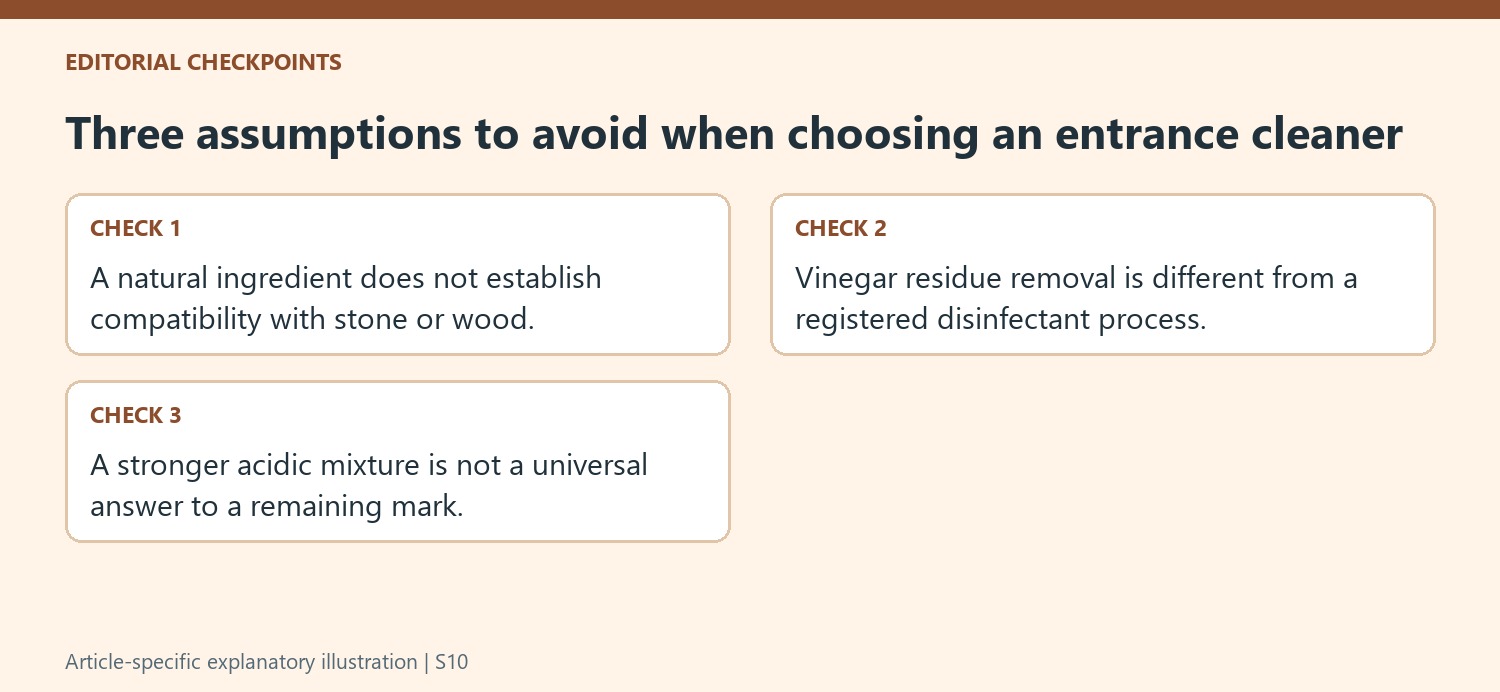
Removing tracked residue and treating a high-touch handle are different decisions. The source explicitly distinguishes household vinegar from a registered disinfectant. If disinfection is appropriate, select a product labeled for the intended surface and follow its application, contact, and any rinsing requirements. A fast wipe or a sharp smell does not demonstrate the required result. Avoid spraying electrical fittings or wetting vulnerable seams. Never combine vinegar with bleach, and do not mix products to create an improvised stronger treatment. Finish one compatible process through its directions before deciding whether anything else is needed. The relevant label governs the procedure rather than a general claim that an ingredient is natural.
Inspect the result without escalating unnecessarily
Remove loose grit through the suitable floor method before wiping so the cleaning tool is not simply moving abrasive debris around. Work in manageable areas and avoid leaving the entrance slippery or saturated. If a salt mark or smudge remains, reassess the material and permitted treatment instead of repeatedly applying acid. Inspect the mat, footwear storage, and nearby floor for the route by which residue returns. A compatible cleaner can address the surface condition, while better dirt containment may reduce the next accumulation. Maintain used tools and record any finish change or persistent moisture requiring attention. The source's budget and environmental descriptions are not guarantees of safety for every surface, person, pet, or use. Confirm the actual surface instructions before the next application, even when a household ingredient is familiar.
References
- The Overlooked Area You Should Clean With Vinegar Before Guests Arrive, According to Cleaning Pros. The Spruce; Gemma Johnstone.
Better Homes and Gardens examines vinegar specifically for the grit, water marks and salt residue that collect near an entrance. Its experts contrast suitable cleaning uses with materials that acid can damage, including natural stone and some wood finishes. They also distinguish routine dirt removal from a labeled disinfecting process, so a familiar pantry ingredient does not become a substitute for every entryway task.


Leave a Comment
Comments (0)