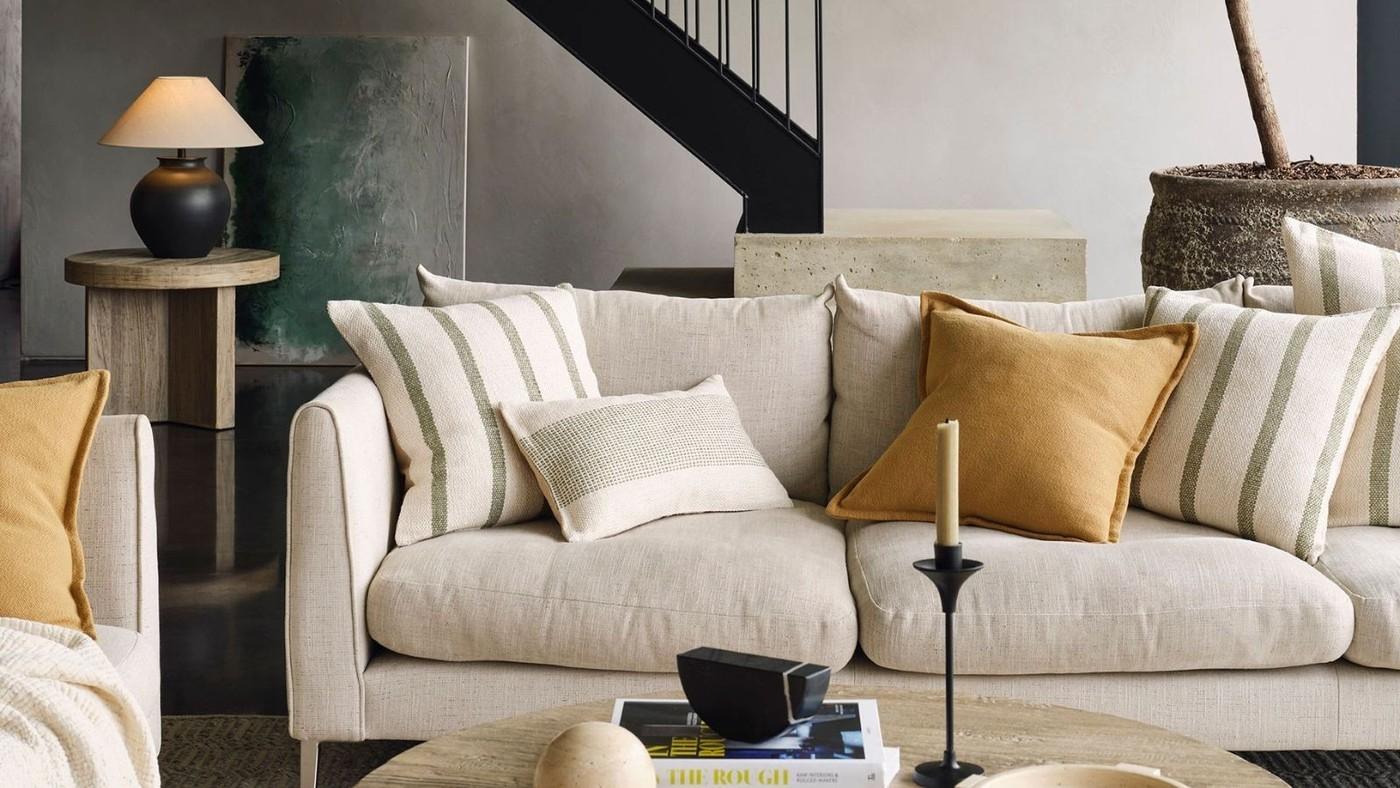
Repeatedly lost belongings and obstructed floors can signal that the room needs simpler storage before a cleaning schedule will be easy to maintain.
Identify the practical clutter
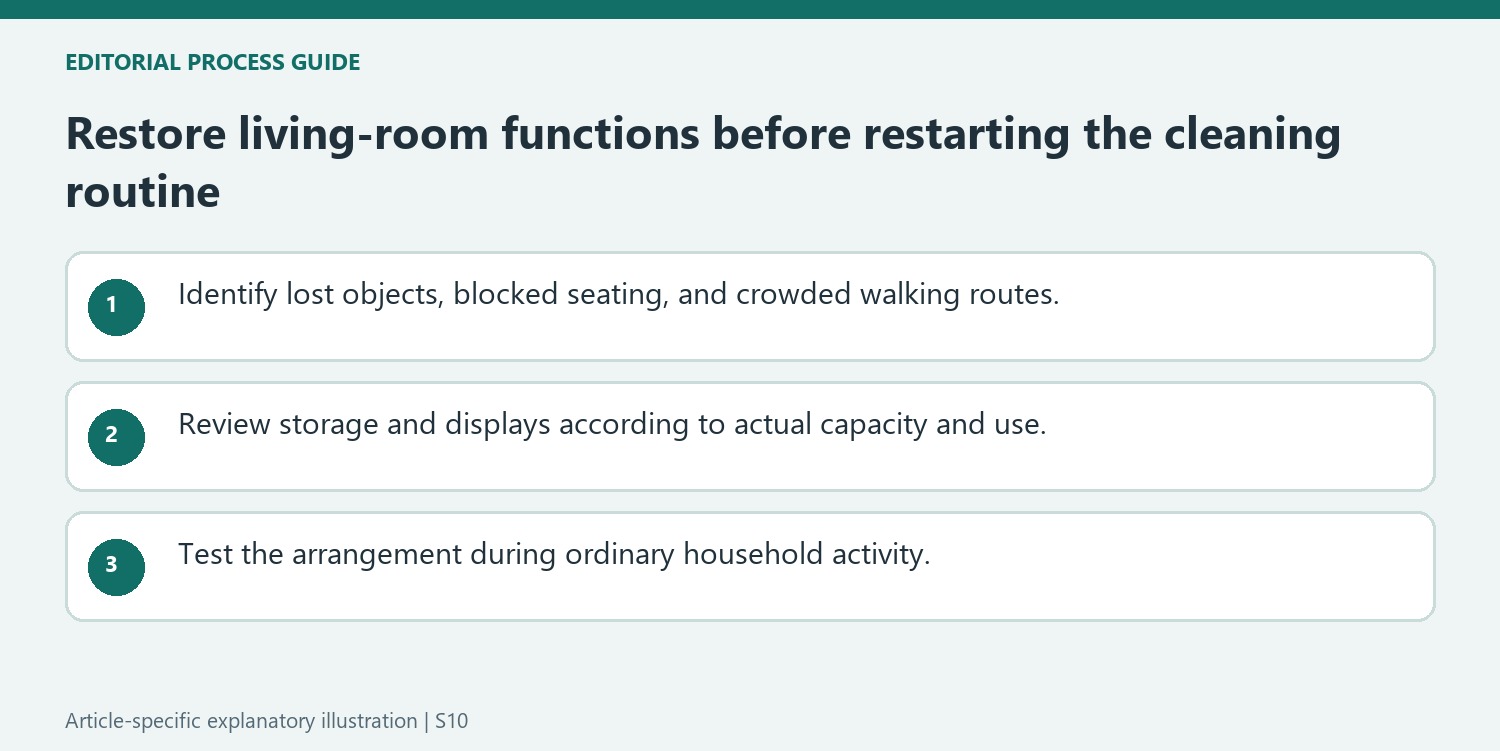
Homes & Gardens' organizing advice highlights missing remotes, piles on seating and items underfoot as signs that belongings lack a dependable home. Storage ottomans, baskets or accessible compartments can gather the things the household genuinely uses. The purpose is not to hide every object but to keep seating and walking routes usable.
Reduce the amount that needs moving
Overfilled shelves and excessive decorations add visual clutter and create more objects to shift during cleaning. The article suggests selecting favorite pieces and rotating others rather than displaying everything simultaneously. Toy storage should be reachable for children so putting items away can become part of normal use. Once the floor and surfaces are accessible, the room is easier to vacuum and dust, making an ordinary cleaning routine more realistic.
Notice when storage no longer matches the room's use
The article treats occupied seating and repeatedly blocked walking routes as functional warning signs, beyond whether a display looks busy. Ask which belongings are used here and whether their current storage can be reached by the people using them. Children's toy bins, for example, need to be accessible enough to support putting things away. For decorative items, rotating favorites can reduce the number moved during dusting without discarding meaningful pieces. A coffee-table tray can define a place for remotes or coasters, but should not become another overloaded surface. Adjust the system when clutter immediately returns, then rebuild the cleaning routine around the newly exposed space. Clear retrieval routes matter as much as the container itself.
Use lost objects and blocked surfaces as practical signals
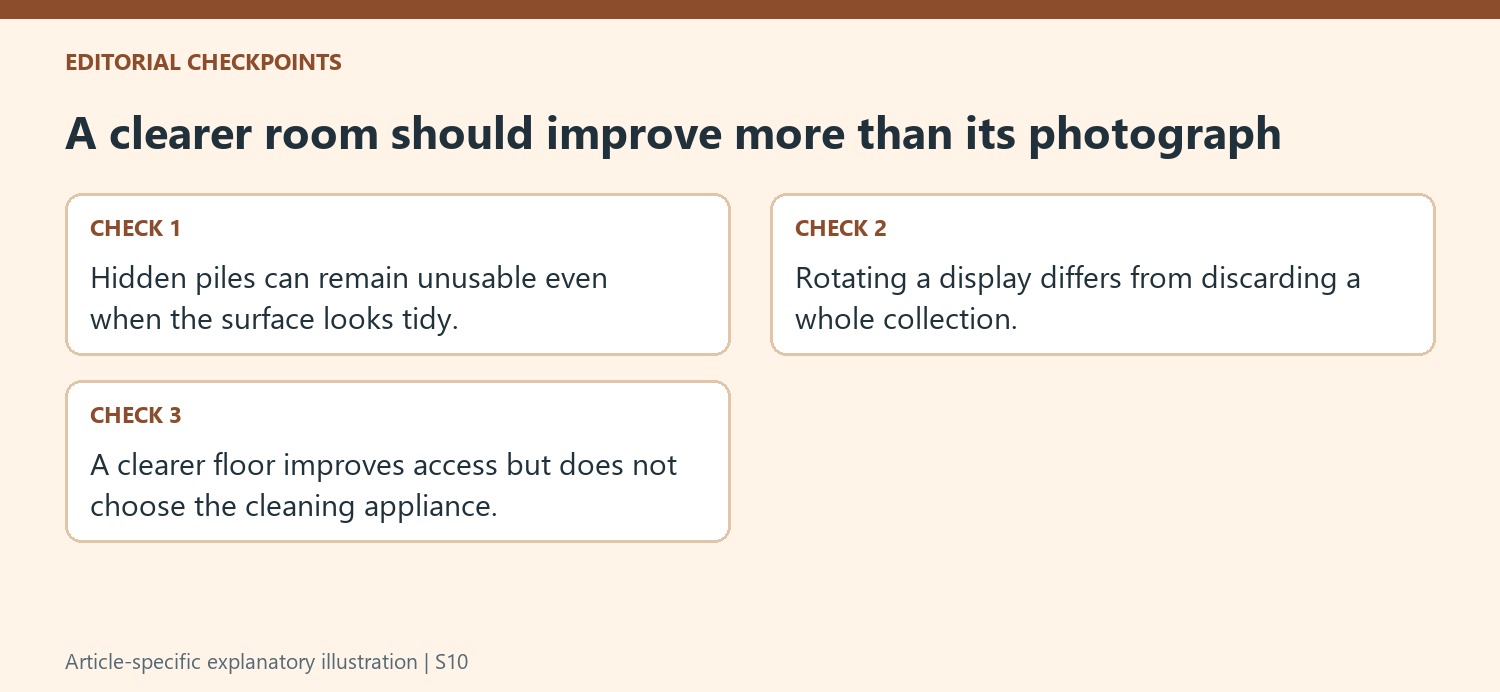
The source describes a remote repeatedly disappearing, seating becoming storage, and a coffee table losing its usable surface. These are useful observations because they identify functions the room can no longer perform easily. Start with one such problem instead of judging every possession as clutter. Give frequently used belongings a clear accessible home near where they are used. Remove objects that belong elsewhere and decide whether seldom-used items need to remain in the room. A container should support retrieval and return, not merely conceal an unresolved pile. Check whether the seating and walking routes work afterward before moving on to the next part of the room.
Separate display choices from storage capacity
The article discusses crowded walls and shelves alongside floor and table clutter. A display can be edited or rotated without discarding every sentimental piece. Choose what should be visible now and store retained alternatives appropriately, allowing enough space to clean around the displayed objects. On a table, a tray can define a small group of functional belongings, but it should not occupy the whole surface needed for ordinary use. Toys and games benefit from storage children can use appropriately, positioned away from walkways. If the room still feels cramped after belongings are reviewed, consider the furniture's actual dimensions and functions before assuming another basket will solve the problem.
Test the reset through the household's next normal evening
A useful arrangement should make it easier to sit, walk, find a remote, put away a blanket, and clean the exposed surfaces. Ask the people using the room whether those actions now work without shifting piles. If a storage location is consistently ignored, review its access and capacity rather than blaming the person each time. Keep floor-cleaning equipment compatible with the surface; a clearer floor improves access but does not determine which appliance or mop is suitable. Finish by returning displaced possessions to their real destinations. Revisit the setup when activities or household needs change. The source's product examples are optional design ideas, while the durable principle is to restore the room's everyday functions before restarting its cleaning routine. Use that practical test to decide whether a change helped, rather than counting new containers or measuring the amount of decorative empty space alone.
References
- 7 signs you have too much stuff in your living room – and how to 'instantly' make this space feel more organized. Homes and Gardens; Sophie Warren-Smith.
Repeatedly lost belongings and obstructed floors can signal that the room needs simpler storage before a cleaning schedule will be easy to maintain.


Leave a Comment
Comments (0)