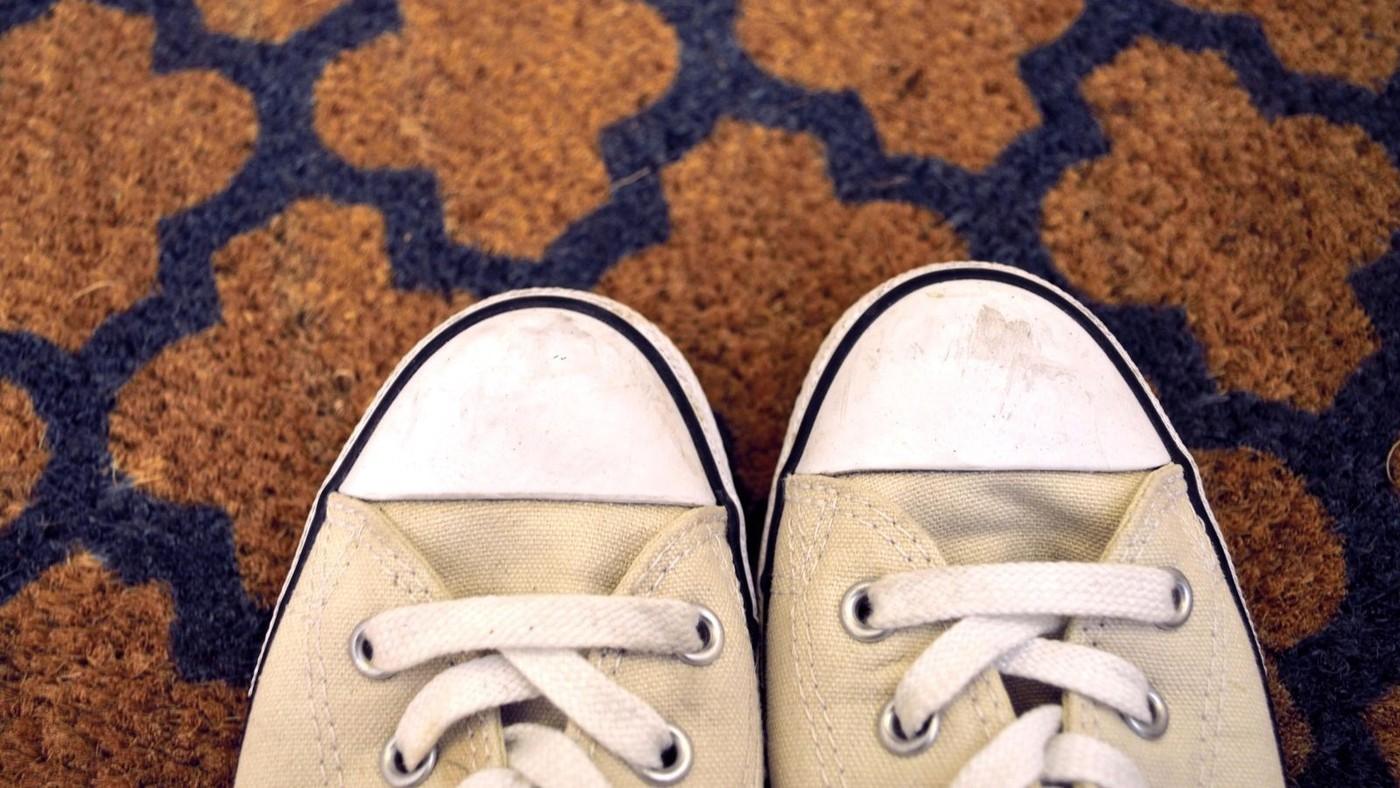
Separate coir rubber and washable fabric mats
Homes and Gardens divides doormat care by construction, distinguishing coconut-fiber bristles from rubber and potentially machine-washable fabric. That division changes more than the detergent choice: some mats can be scrubbed and rinsed, while others need debris lifted without soaking their fibers or backing. Its advice also includes loosening trapped pet hair before vacuuming, a separate problem from removing ordinary dry grit.
Remove loose dirt regularly
Homes and Gardens recommends shaking and vacuuming a doormat so accumulated grit is not repeatedly carried indoors. The mat is a collection point for soil from shoes, which makes its maintenance a useful part of an entryway checklist rather than an occasional decorative task.
Check the label before wet cleaning
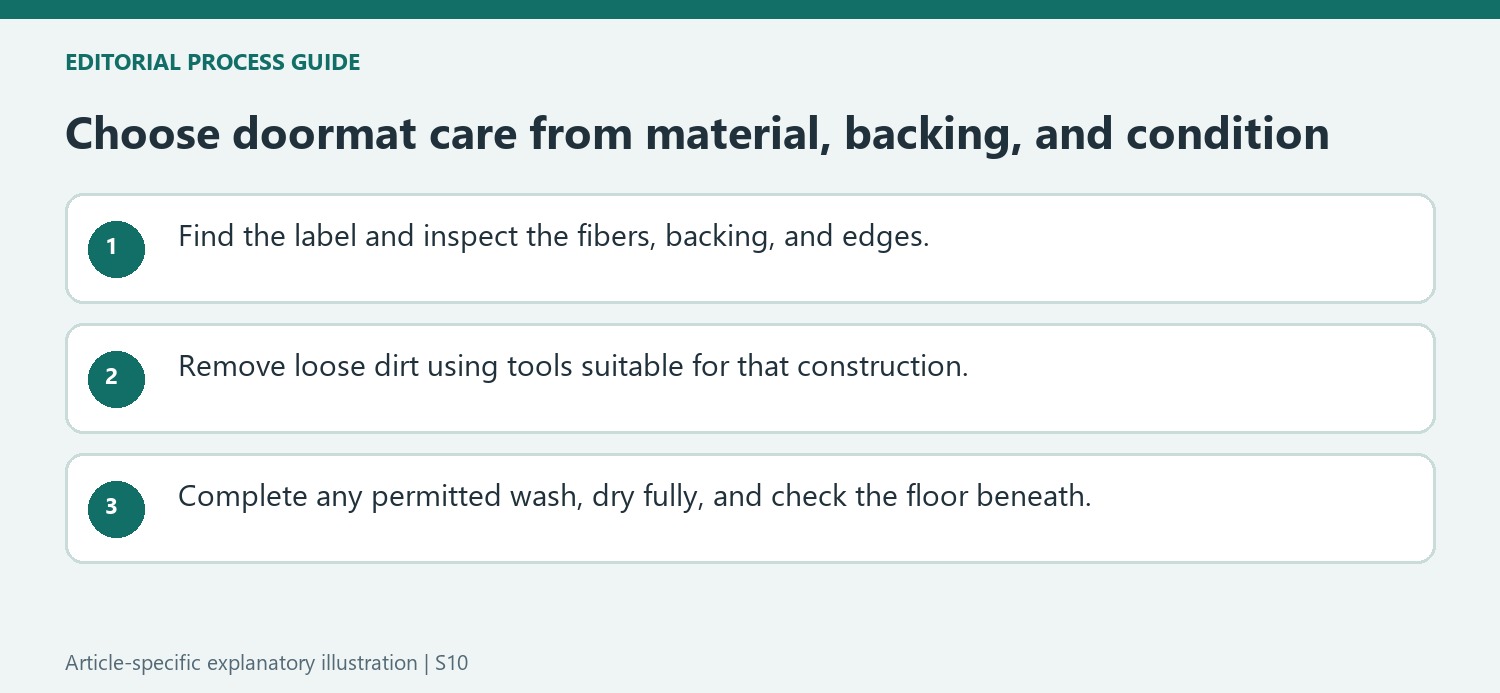
Fabric, natural fiber and other mat materials need different care. The guide explains that some mats can be machine washed, but that permission should come from the care instructions. Avoid assuming that a backing or fiber can tolerate an ordinary hot laundry cycle. After suitable cleaning, dry the mat thoroughly before returning it to service so trapped moisture does not become the next maintenance problem.
Read the fiber and backing together
Homes and Gardens distinguishes fabric mats, coconut-fiber coir and rubber designs. Its coir discussion cautions that detergent can discolor that material, while the rubber example uses a separate hand-cleaning route. Those distinctions make an unlabeled mat a reason to identify the product, rather than proof that a convenient washer cycle is safe. Check the backing as well as the visible face and follow the maker's instructions for drying, folding or sun exposure. For loose soil, use a compatible shake, brush or vacuum process without adding fine powder unless both the mat and vacuum permit it. Complete drying protects the floor beneath as well as the mat itself.
Identify the whole mat rather than only the visible fibers
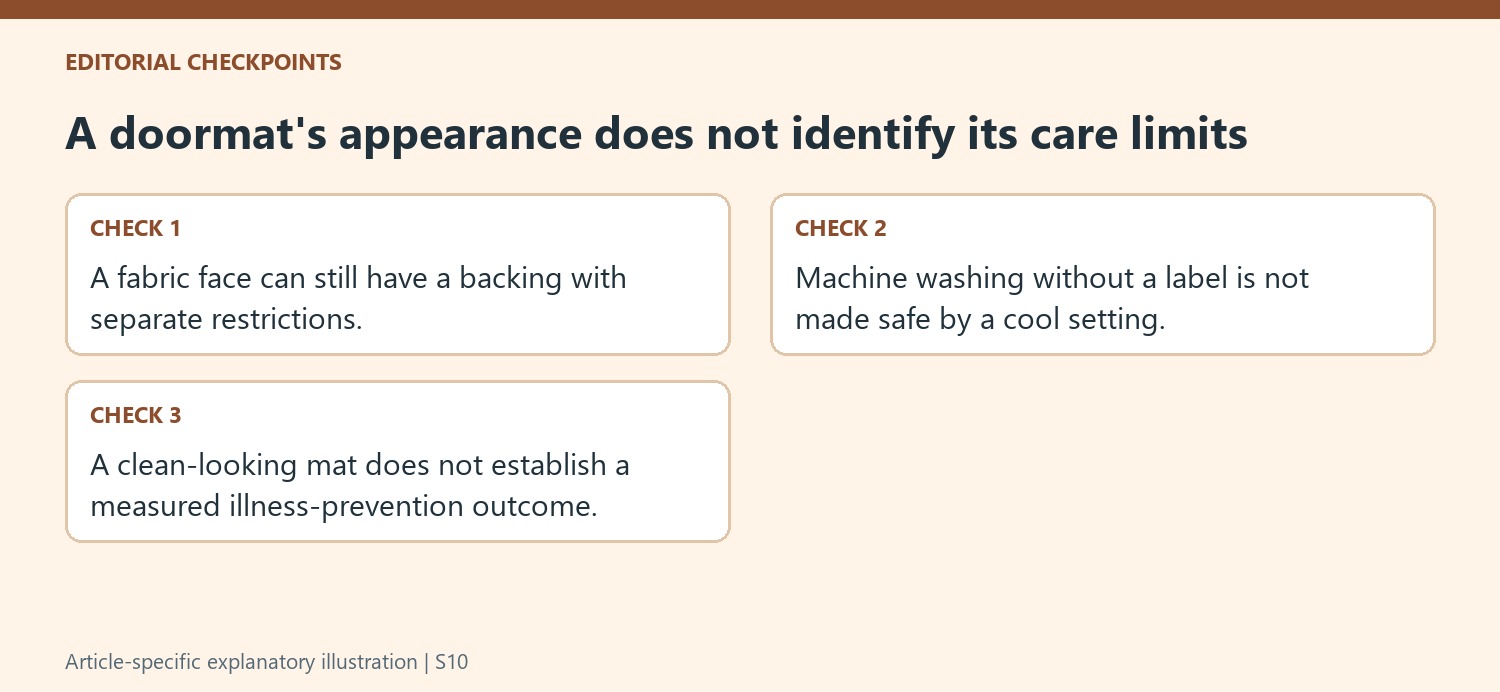
The source divides care among fabric, coir, and rubber, which is more useful than assuming all doormats can share a washer load. Look for the actual care label or manufacturer information, including restrictions associated with the backing. If those directions are missing, a cool cycle is not proof that machine washing will be harmless. Use suitable dry debris removal while resolving the care method instead of experimenting with saturation. Consider the mat's condition as well: a damaged backing, curled edge, or weakened construction can affect whether it remains fit for its location. Cleaning should not be used to conceal a mat that no longer lies securely.
Remove loose material before any permitted deeper treatment
Shake or brush the mat where appropriate and collect debris through a method suited to its material and the surrounding area. Choose a vacuum attachment and setting compatible with the mat rather than pulling aggressively at loose fibers or edges. Pet hair may need a suitable preliminary removal step, but avoid turning the source's foot-dragging suggestion into a requirement that could move the mat underfoot. Coir and other natural fibers should not automatically be soaked or treated with ordinary detergent. Rubber and fabric components also need their individual directions. The article's powder suggestions are optional claims, not a substitute for confirming compatibility with both the mat and the vacuum.
Dry and reposition the mat as part of the job
After a permitted wet-cleaning process, follow the specified rinsing and drying directions before returning the mat to its normal place. Check the surface underneath and avoid trapping water against vulnerable flooring. Do not assume a dryer is suitable simply because the mat tolerated washing. The source also notes that prolonged dampness and folding can create problems; preserve the mat's intended flat form and storage conditions. Reassess the interval during muddy weather or heavy use rather than relying on one monthly date. A cleaner mat can reduce carried-in dirt, but neither a visually refreshed surface nor a general household wash establishes a measured reduction in illness transmission. Keep the claim tied to the maintenance actually performed.
References
- How to clean a doormat – to keep mud, and illness, out. Homes and Gardens; Lola Houlton.
Homes and Gardens divides doormat care by construction, distinguishing coconut-fiber bristles from rubber and potentially machine-washable fabric. That division changes more than the detergent choice: some mats can be scrubbed and rinsed, while others need debris lifted without soaking their fibers or backing. Its advice also includes loosening trapped pet hair before vacuuming, a separate problem from removing ordinary dry grit.


Leave a Comment
Comments (0)