Plan for the sheets actually being slept in
Better Homes and Gardens distinguishes a bed used every night from one left empty during travel. Its weekly sheet-change baseline is therefore an appointment to review actual exposure, rather than a rule for every bedroom in the house. The article also identifies outdoor pollen as a consideration when drying bedding, giving the wash routine a connection to conditions beyond the bedroom itself.
Use a weekly starting point
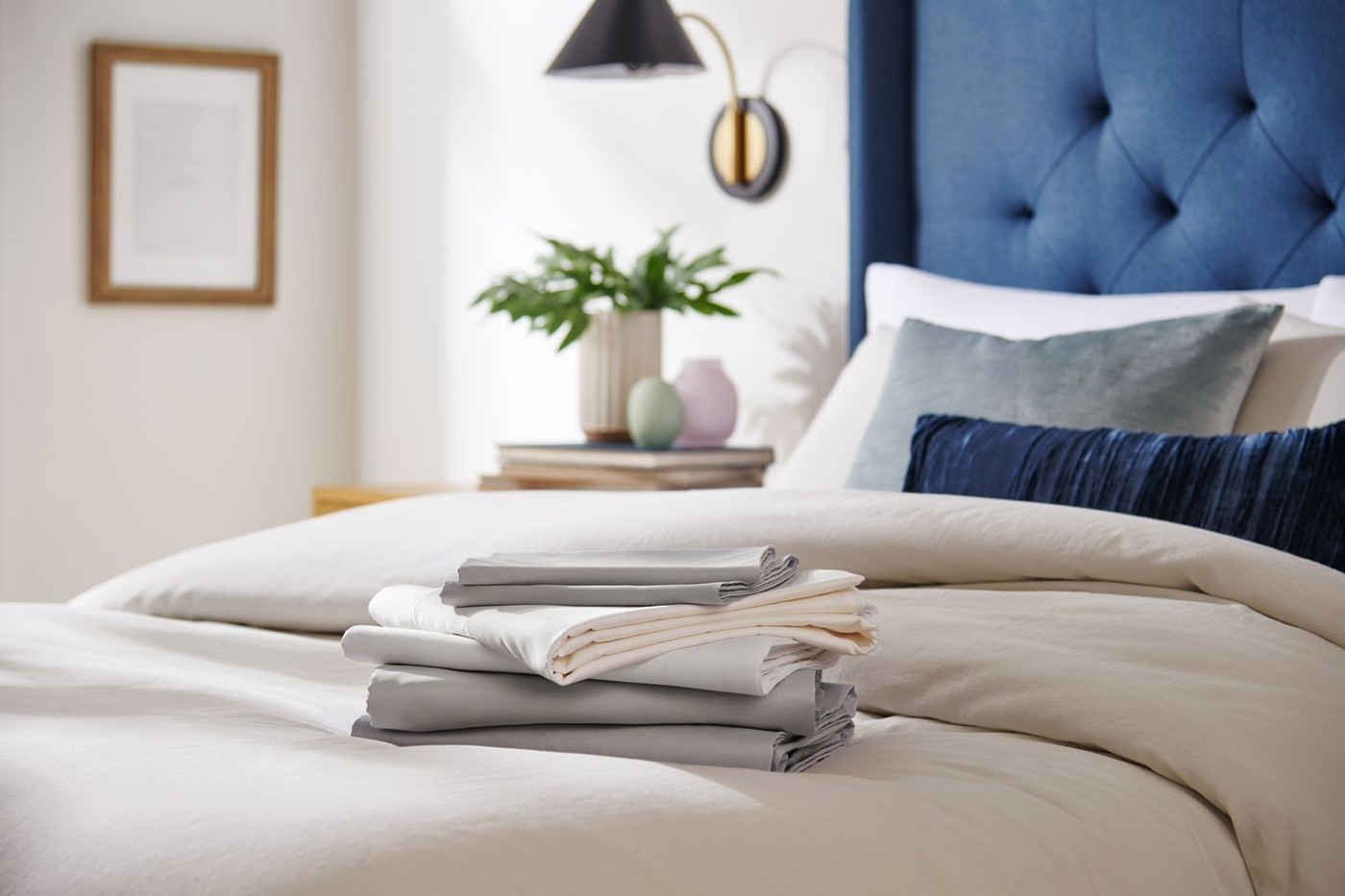
Better Homes and Gardens recommends washing sheets about weekly as a practical baseline, explaining that bedding accumulates sweat, skin cells and body oils. Keeping a spare set makes it possible to change the bed without having to finish the same load immediately.
Adjust for the way the bed is used
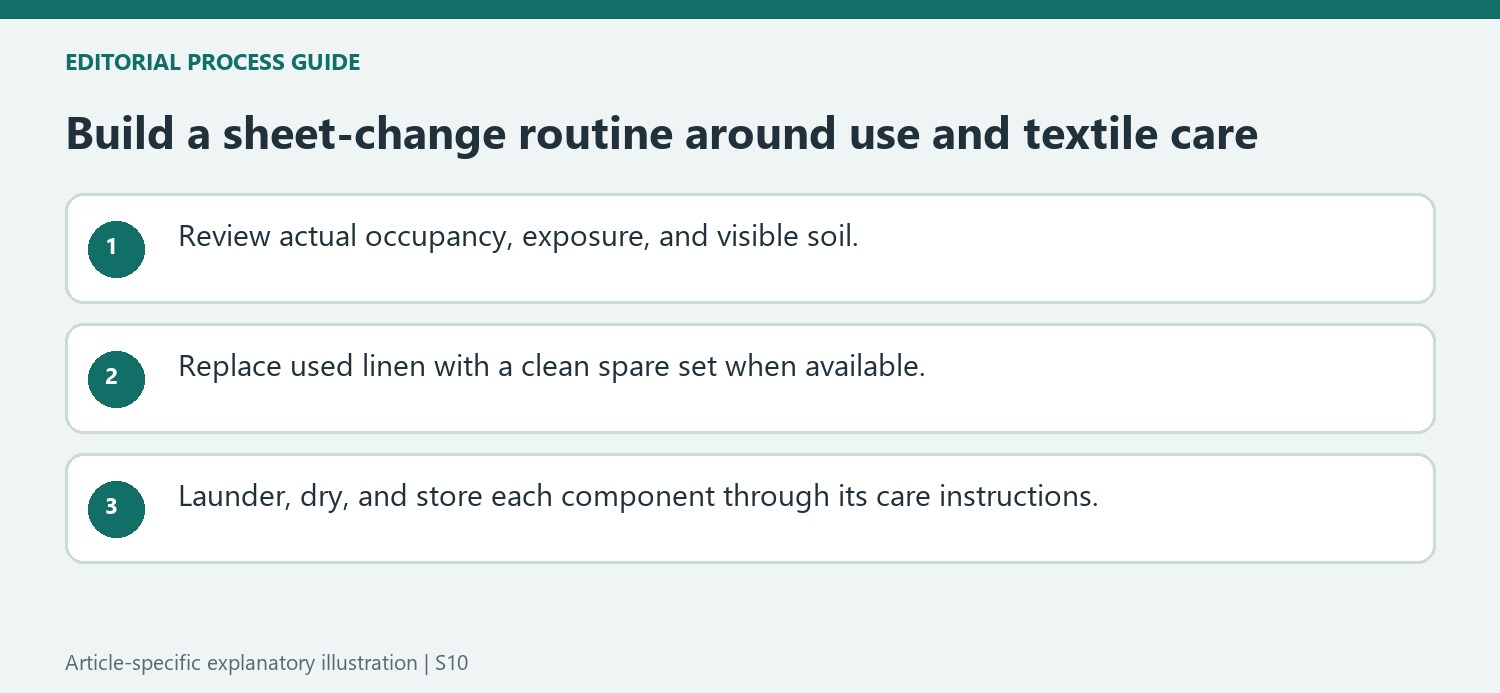
The article notes that sweating, pets and other circumstances can call for more frequent changes, while an unused bed has different needs from one slept in every night. Follow the fabric's care instructions for temperature and drying rather than choosing heat solely from a calendar rule. A routine should respond to visible soil and use as well as the number of days since the last wash.
Separate changing linen from completing its wash
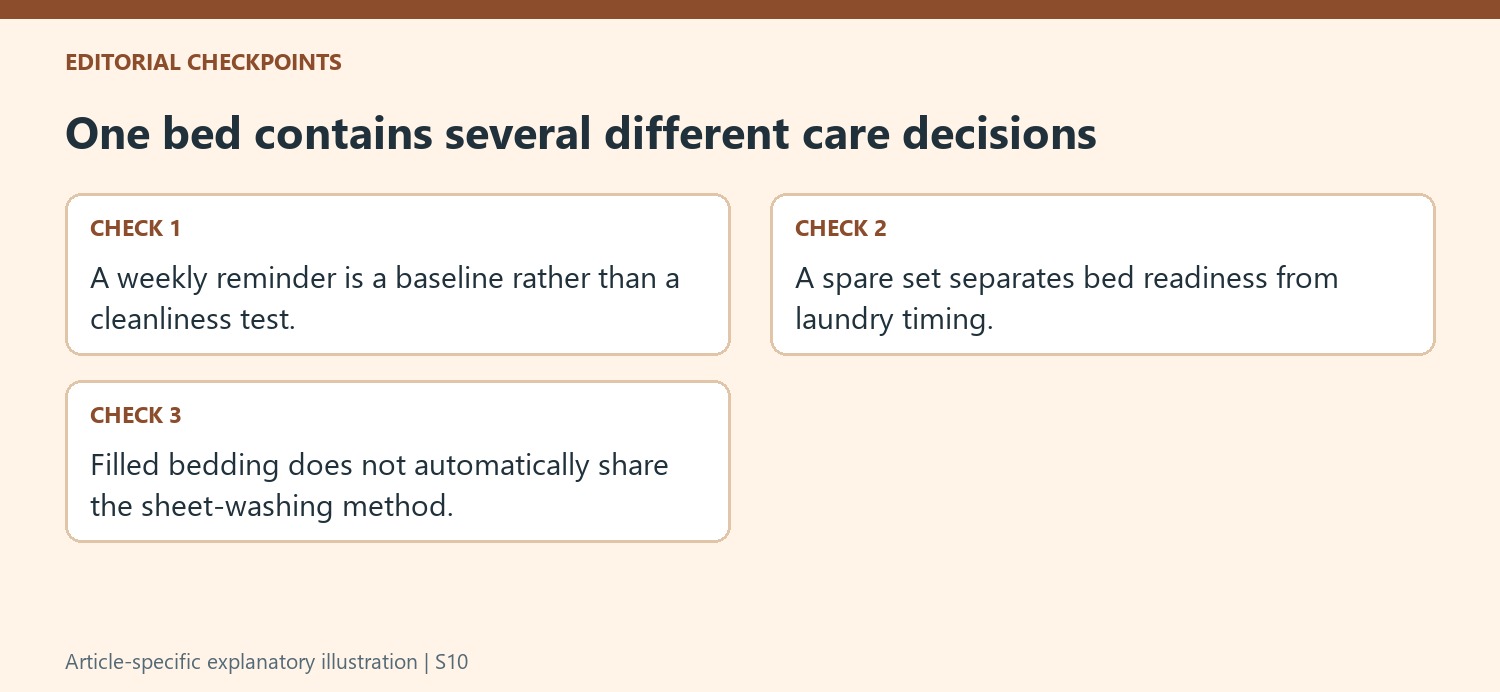
BHG's spare-set suggestion means a weekly change can happen even when laundry must be done later. Keep removed sheets in an appropriate laundry arrangement rather than mixing them into clean storage, and make sure replacement linen is dry. The source distinguishes direct-contact pillowcases and sheets from less exposed bedding such as covers or throws, whose needs vary. A whole-bed calendar should not imply every filled item can enter the same washer load. Check each tag for capacity, temperature and drying restrictions. If moisture or visible soil appears sooner, respond then instead of waiting for the chosen weekly day; a routine is a baseline rather than a cleanliness test.
Translate the weekly baseline into an actual household plan
The source uses a weekly sheet wash as a practical starting point while distinguishing a bed occupied every night from one unused during travel. Identify the bedding in active use and set a reminder that reflects those conditions. Sweating, pets, visible soil, and personal needs can require an earlier change. A calendar appointment helps prevent forgetting but cannot assess the fabric or the sleeper. Avoid turning a general article's timing into a medical promise about allergies or skin conditions. When a particular health-related laundering process is needed, use the relevant guidance together with the item's care instructions rather than relying only on the ordinary bedroom schedule.
Organize the change separately from washing the load
A spare clean set makes the bed available without forcing a full laundry cycle into the same short cleaning session. Keep the removed linen apart from the replacement set and from clean storage. Sort it for its own suitable care process instead of including rough clothing or towels by default. Check for marks that need compatible pretreatment before the wash. The source discusses cool gentle washing for ordinary care, but the individual sheet's label remains the controlling information for temperature, cycle, and drying. Cotton, linen, silk, and other sheet materials should not be treated as interchangeable because they all fit the same mattress.
Follow the textile through drying and storage
Allow the selected drying method to finish appropriately before folding or replacing the linen on the bed. Outdoor drying may be unsuitable when airborne pollen is a concern, a consideration the source raises separately from washing. Remove machine-dried sheets at the appropriate point to limit avoidable wrinkling, following their heat restrictions. Treat pillowcases, protective covers, comforters, and filled pillows as separate care decisions rather than washing every component at one universal interval. Keep a simple record of which set is in use and which is ready for the next change. A reliable sheet routine includes changing, suitable laundering, complete drying, and clean storage, not just starting a washer. Keep clean linen separate from the holding area used for the removed set.
References
- How Often Should You Wash Your Sheets? Probably More Than You Think. Better Homes & Gardens; Jessica Bennett.
Better Homes and Gardens distinguishes a bed used every night from one left empty during travel. Its weekly sheet-change baseline is therefore an appointment to review actual exposure, rather than a rule for every bedroom in the house. The article also identifies outdoor pollen as a consideration when drying bedding, giving the wash routine a connection to conditions beyond the bedroom itself.


Leave a Comment
Comments (0)