Use the bedroom section within the wider household plan
Better Homes and Gardens places bedroom care inside a room-by-room chore list rather than treating the sleeping space as an isolated project. Its plan also covers laundry, closets, kitchens and outdoor areas. For a bedroom, that framework makes it possible to distinguish putting clothes away from washing them, and to schedule storage reviews without attaching a whole-house clean to every linen change.
Use frequency to organize the work
Better Homes and Gardens divides household chores into daily, weekly and monthly categories. Bedroom examples include making beds and putting clothes away daily, floor care weekly, and more involved closet or drawer organization less often. This structure prevents every small reset from becoming a complete room overhaul.
Share a realistic list
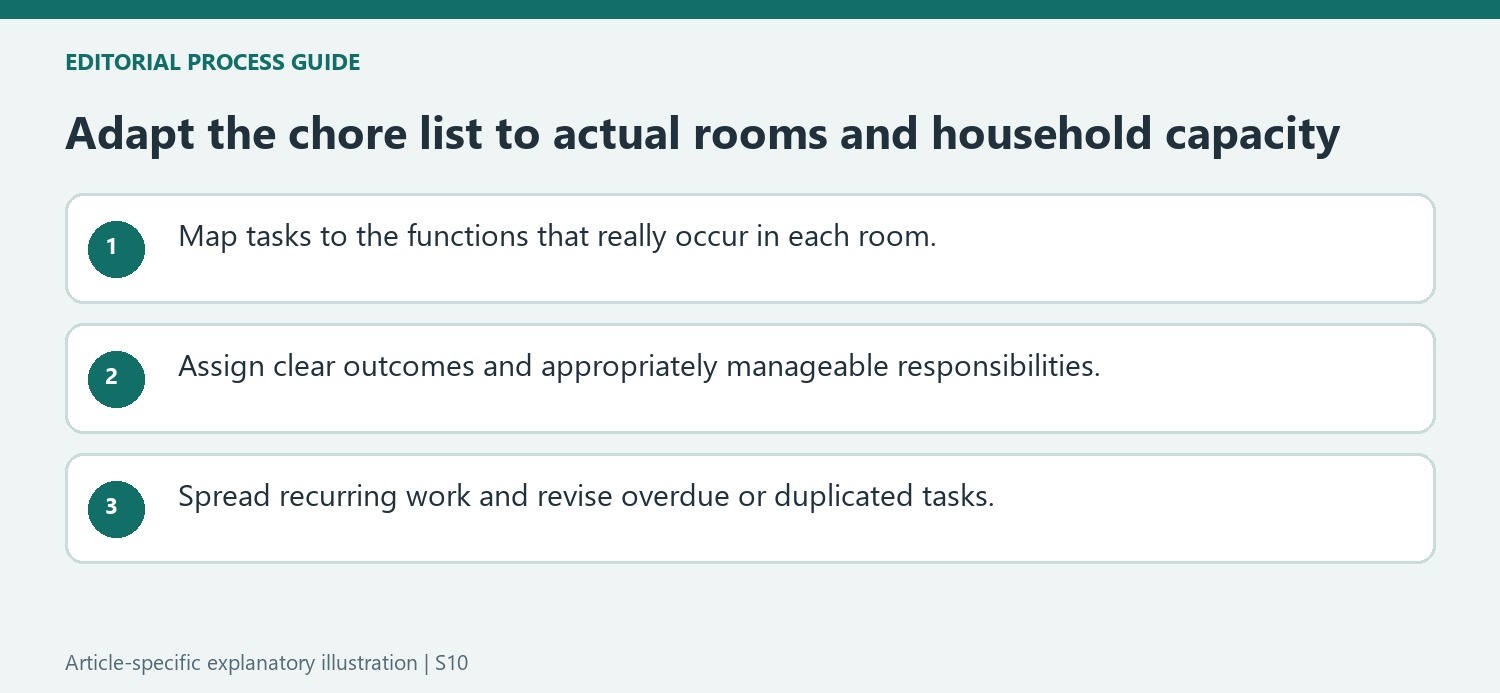
The article encourages adapting the checklist to the household and involving other family members where appropriate. A smaller home may combine functions in one room, while a larger household may need more frequent attention in busy areas. Start with a manageable set of tasks and revise it after seeing what gets dirty, rather than using an exhaustive printed list as a fixed standard for every home.
Distribute tasks without requiring one long cleaning day
BHG explicitly notes that weekly chores can be placed on different days, with its example linking refrigerator review, meal planning and shopping. Apply the same principle to a bedroom: linen changes, dusting and floor care can be separate manageable sessions. Assign shared tasks clearly and make children's responsibilities suitable for their age and abilities, without handing over hazardous chemical work. The article also recommends completing a laundry load rather than allowing clean unfolded clothing to become another pile. That closing step matters in the bedroom because put-away clothes expose the same surfaces the next cleaning session needs. Revise the schedule when a room's use changes.
Assign work to room functions rather than copied headings
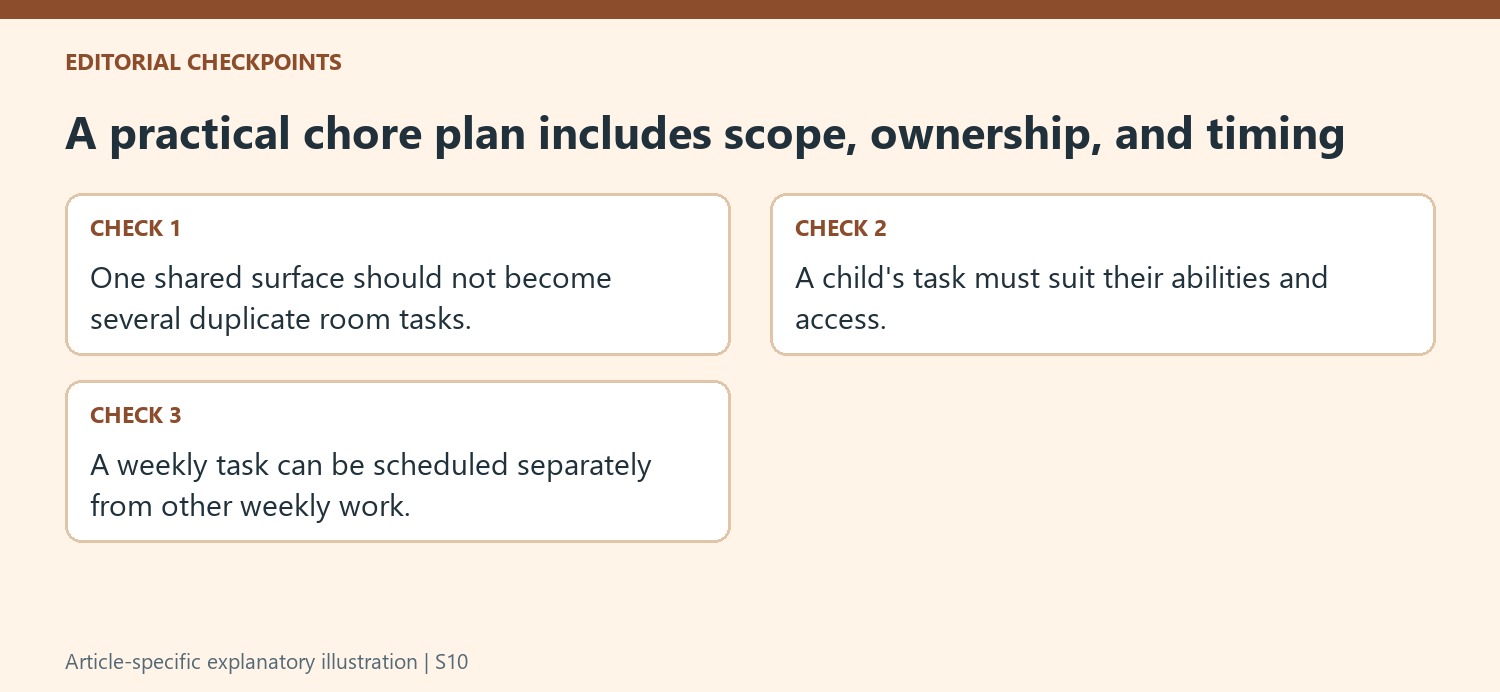
The source's room-by-room structure is a starting point for a home with its own layout. A bedroom may also contain a desk, and a living area may carry dining or children's play activities. Identify what actually happens in each space and list the resulting work once. Do not duplicate a shared surface under several room headings or assign a task to equipment the household does not own. Daily clothes storage, periodic linen care, and a less frequent closet review have different scopes. Keeping those distinctions makes it easier to finish a short bedroom reset without unintentionally committing to a complete household clean.
Write responsibilities that can be understood and completed
For a shared chore, identify the person responsible, the intended result, and any tools or care information needed. A child can take on a suitable organizational task without being assigned hazardous products, unsafe access, or work beyond their abilities. Demonstrate the process rather than relying on a single vague verb such as clean. The source encourages involving the household, but useful participation still depends on capacity and availability. Keep chemical and equipment work under appropriate control. Review whether a recurring task is unfinished because its scope is unclear, the supplies are inaccessible, or the assigned timing conflicts with normal use of the room.
Use the weekly review to redistribute effort
The article explicitly allows weekly work to fall on different days. Link tasks when that is useful, such as reviewing kitchen stock before meal planning, while keeping laundry manageable from collection through put-away. In a bedroom, clear the nightstand before dusting and plan a sheet change around the availability of clean replacements. A monthly storage reminder can be split into smaller sections if an entire closet would overwhelm the available time. Watch for repeated overdue jobs rather than constantly extending the daily list. Adjust frequency to actual use and material care requirements. The routine succeeds when needed work is completed consistently and shared spaces remain usable, not when every printed suggestion receives an identical interval.
References
- Our Free Chore Checklist Can Help You Keep Your Home Tidy. Better Homes & Gardens; Patricia Shannon.
Better Homes and Gardens places bedroom care inside a room-by-room chore list rather than treating the sleeping space as an isolated project. Its plan also covers laundry, closets, kitchens and outdoor areas. For a bedroom, that framework makes it possible to distinguish putting clothes away from washing them, and to schedule storage reviews without attaching a whole-house clean to every linen change.


Leave a Comment
Comments (0)