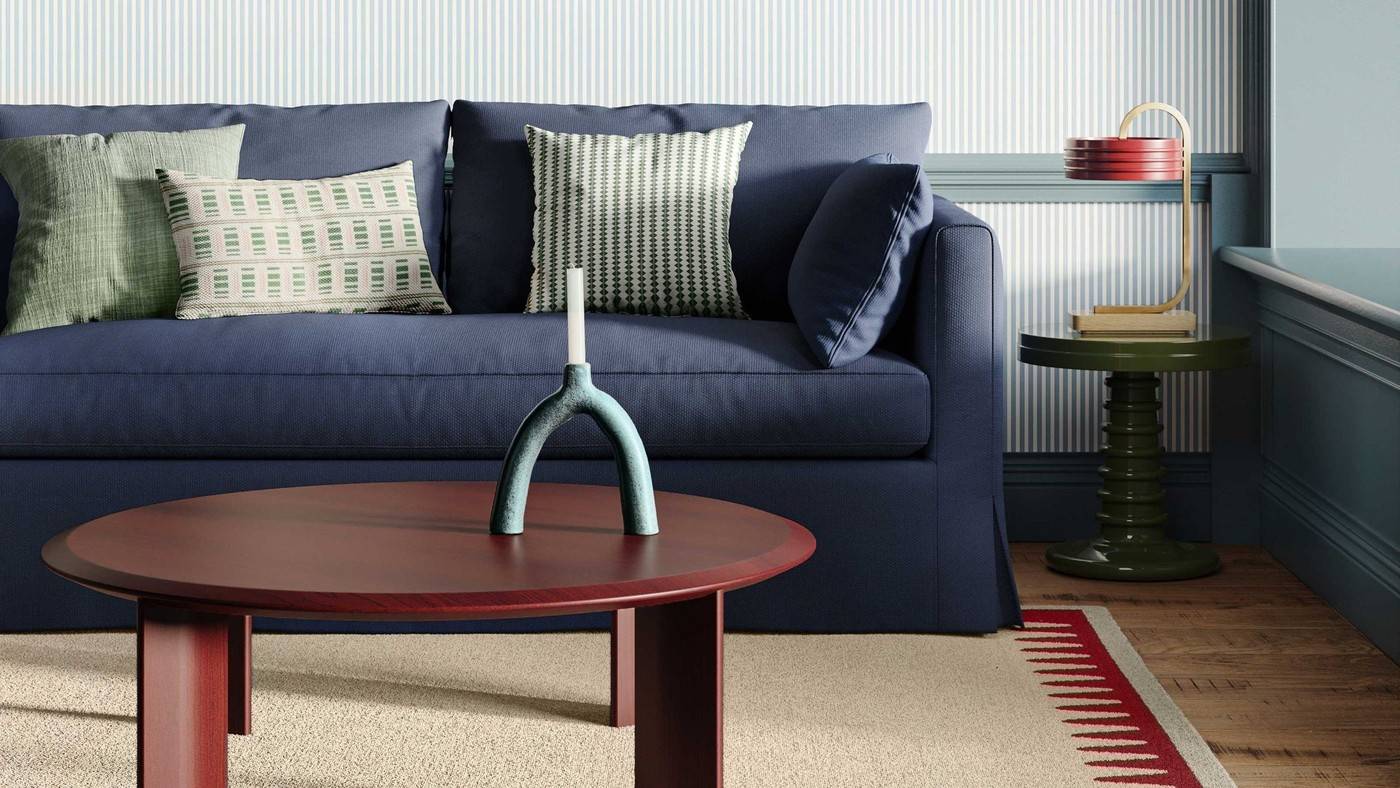
Clearer tables, accessible storage and managed cables reduce the small obstacles that interrupt an ordinary cleaning routine.
Contain the everyday belongings
Homes & Gardens' organizers suggest a coffee table with usable storage or a tray that gathers remotes and coasters. Throws can be folded into a basket near the sofa rather than spread across the room. The aim is to keep everyday items easy to retrieve while leaving enough open surface to dust without rearranging a large display.
Leave shelves and floors accessible
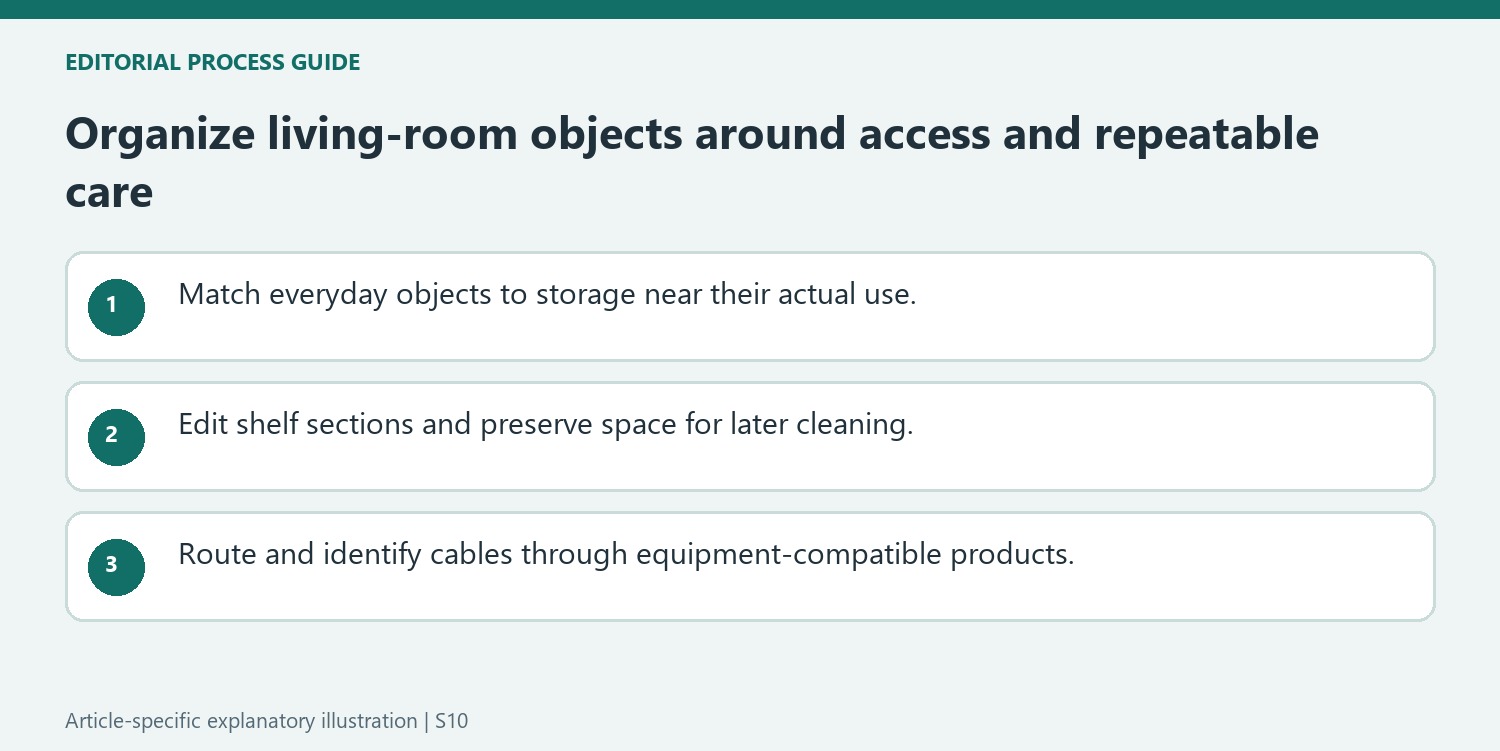
The guide advises editing overloaded shelves and keeping some space around displayed objects. It also notes that tangled cords collect dust and complicate cleaning. Cord clips can hold wires along a defined route, and labels near plugs make later identification easier. These are organization steps rather than substitutes for cleaning: tables still need dust and fingerprints removed, but a simpler arrangement makes that task less cumbersome.
Choose storage people can retrieve from and return to
Homes and Gardens' organizers distinguish useful compartments from hidden spaces that are awkward to open and easily forgotten. Test a proposed home for remotes or blankets during ordinary use before buying another container. A tray can gather several objects so the surface beneath is easier to wipe, but it still needs cleaning itself. Its cord-management advice also includes labeling near plugs, which helps identify a connection before moving equipment. Use routing and products compatible with the devices and their ventilation needs, without compressing or overloading electrical fittings. The practical goal is clear access for use and cleaning, alongside the room's preferred appearance. Keep cleanable space around shelf objects instead of placing every piece tightly against the next.
Choose storage by the action it should simplify
The source distinguishes a useful compartment from an attractive space that is difficult to open and easy to forget. Start with the objects that recur in the room: remotes, coasters, throws, books, and toys. Identify where each is normally used and test whether it can be returned without interrupting the room's other functions. A tray can gather table objects while leaving the surface beneath accessible, but the tray and its contents still need attention. A blanket basket should have enough usable capacity without blocking a walkway. Judge the arrangement through ordinary use before purchasing another storage piece that may create a new obstacle to cleaning.
Edit shelves in manageable sections before restyling them
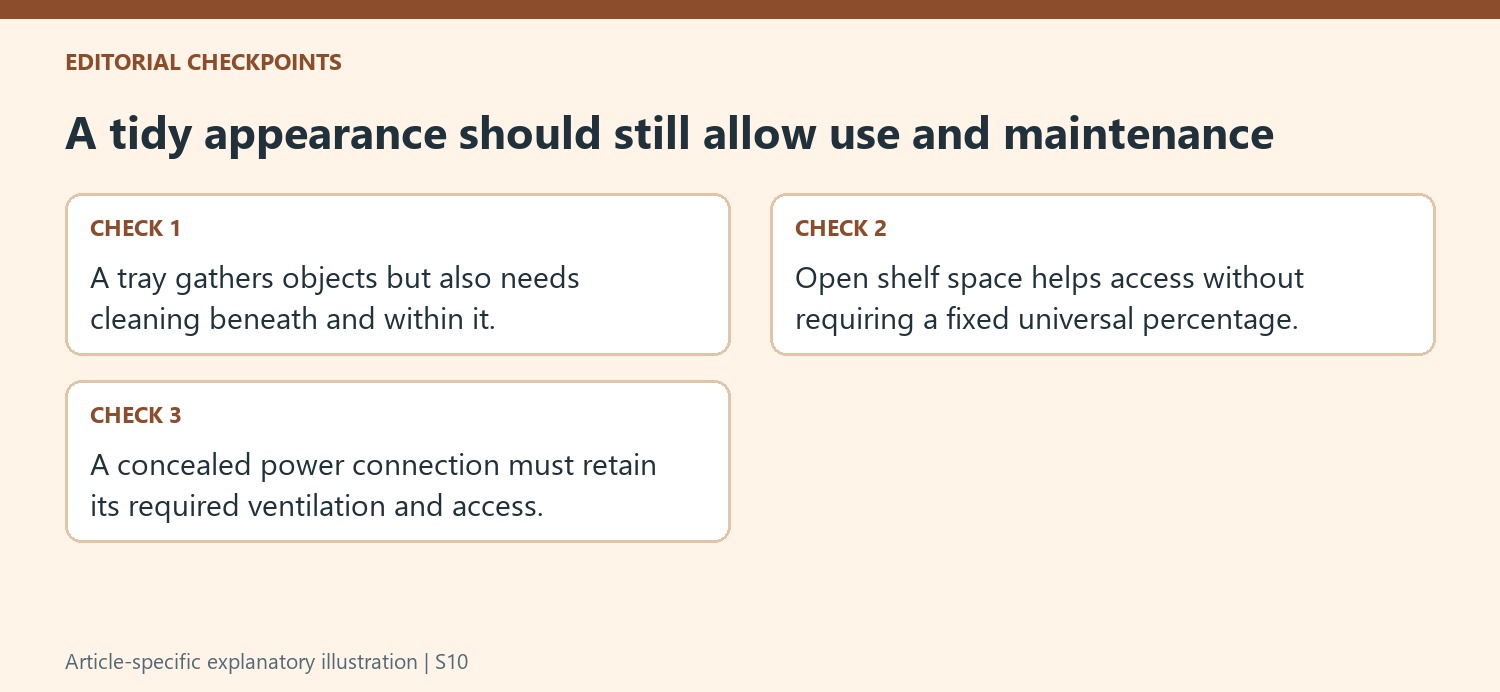
The article encourages leaving space around displayed items. Treat that as an opportunity to decide what belongs on the shelf rather than a requirement to achieve one fixed percentage in every home. Remove a manageable group, clean the surface through its finish instructions, and return selected objects with enough access for later dusting. Keep sentimental pieces if they are wanted, while considering rotation rather than displaying an entire collection at once. Avoid creating unstable stacks or putting heavy objects where retrieval is awkward. A visually quieter arrangement is useful when it also supports safe access and the way the room is actually used.
Make cable routing serviceable as well as discreet
Tangled cables can obstruct floor care and make a connection difficult to identify. Follow a defined route using products suitable for the equipment, cable, and mounting surface. Label near the plug where that helps later identification. Concealment should not compress cords, cover equipment ventilation, overload a connection, or remove the access required by the device. Check those requirements before putting a power strip into a decorative box. Keep routes away from walking paths and avoid moving connected equipment by its lead. After organizing, test whether the floor and surfaces can be cleaned without dismantling the system. Storage and cable management support room maintenance, but neither replaces the actual dusting, compatible surface cleaning, and textile care still required. When the arrangement is finished, lift a sample group from the table and check whether the area beneath is genuinely reachable. Revise a system that makes routine wiping more difficult.
References
- Professional organizers reveal 8 ways to banish visual clutter from your living room for a streamlined and stress-free space. Homes and Gardens; Andy van Terheyden.
Clearer tables, accessible storage and managed cables reduce the small obstacles that interrupt an ordinary cleaning routine.


Leave a Comment
Comments (0)