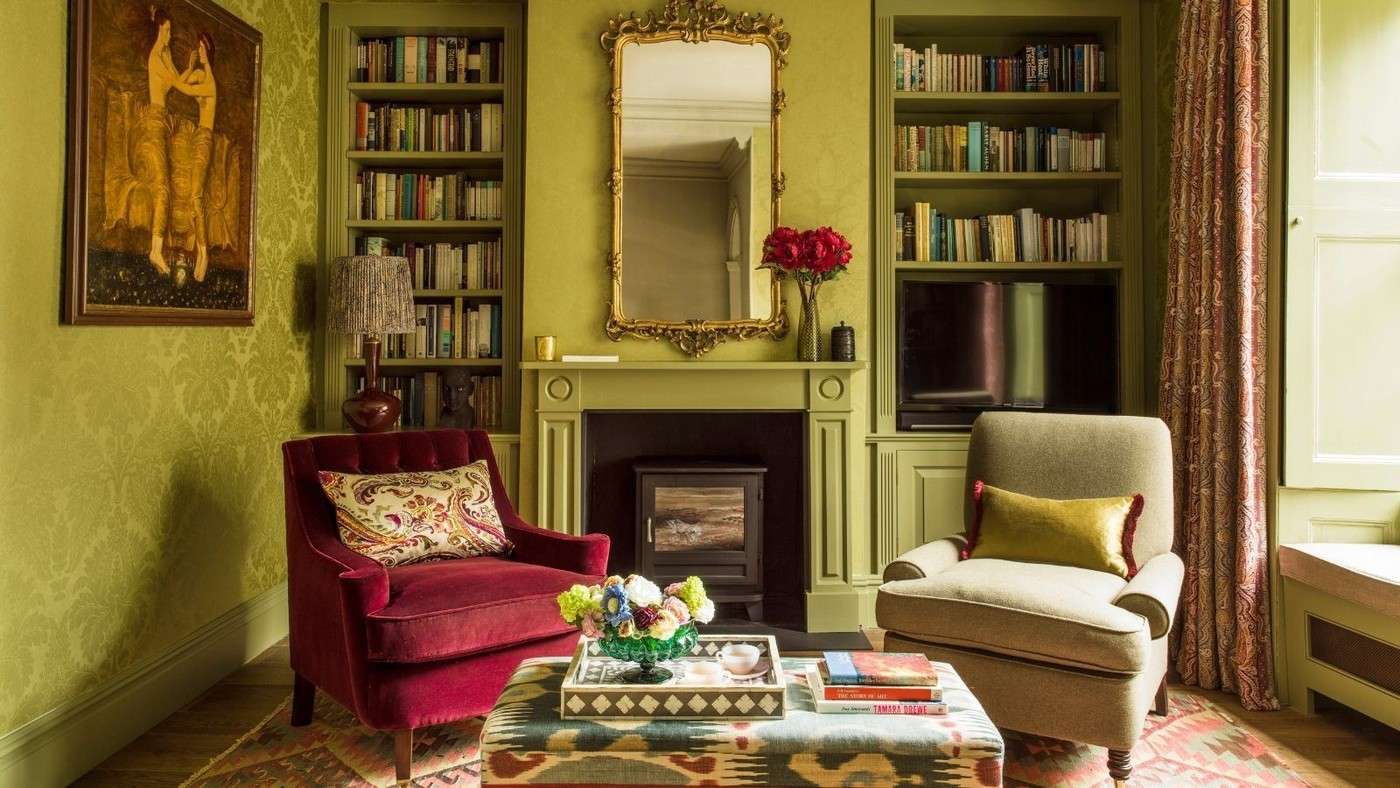
Putting items away, removing dust regularly and responding to floor mess can keep a comfortable sitting area from becoming a major cleaning project.
Give the room a daily reset
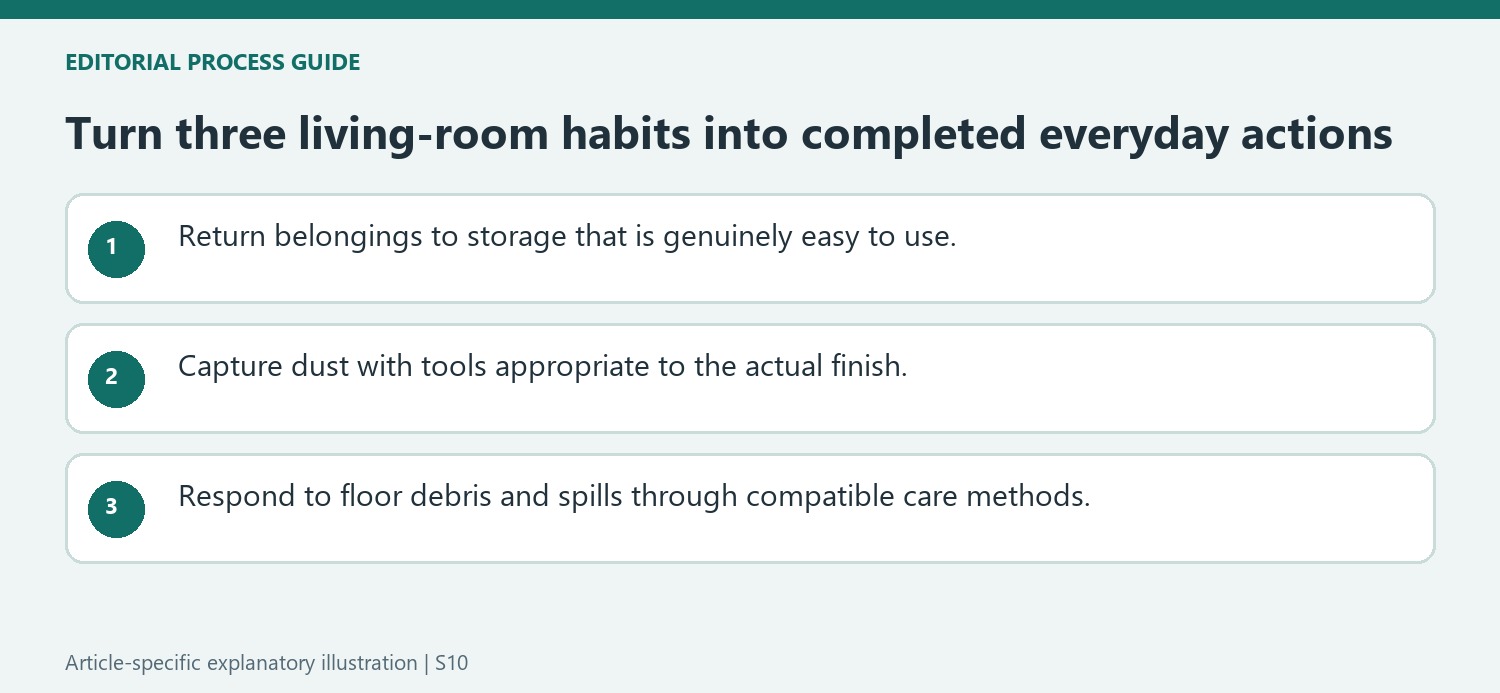
In Homes & Gardens' advice from professional cleaners, clutter control begins with returning remotes, books and other belongings when they are no longer being used. A short end-of-day reset prevents those objects from covering tables and seating. Baskets or storage furniture help only when they give frequently used items an accessible home.
Keep dust and spills from accumulating
The article recommends regular surface cleaning with a microfiber cloth or dust-catching tool rather than simply moving particles around. Floors and rugs also need attention to crumbs, dirt and pet hair, with the frequency adjusted to how the room is used. Spills should be addressed promptly using a treatment suitable for the material. These repeatable habits make later, more thorough cleaning easier because the room remains accessible.
Make the small habits easy to finish
The source's examples place remotes back in a drawer after viewing and books back in order after reading. Those are concrete put-away steps rather than a requirement to hide every personal object. Choose a basket or storage compartment that is easy to access and leave enough room to return the item without rearranging a pile. For dust, use a clean tool that captures particles and suits the finish; a homemade repellent spray should not be copied onto every furnishing. For spills, start with the fabric's permitted method and gentle blotting. The three habits support later deep cleaning because they reduce obstacles, not because they eliminate the need for it.
Make each put-away action possible during ordinary use
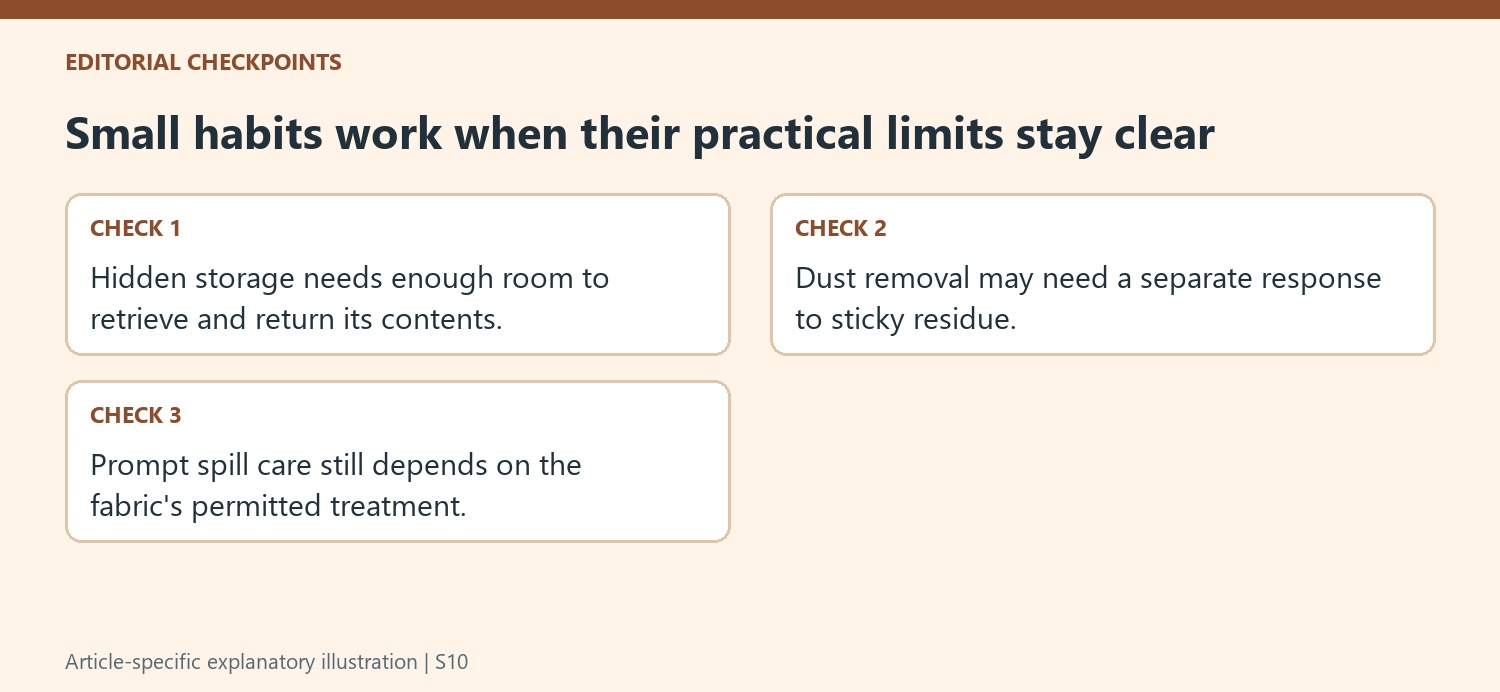
The first habit in the source is returning belongings, and that depends on having somewhere practical to return them. Test the route from the sofa to the remote's drawer or the blanket's basket. If opening the storage requires moving several unrelated objects, the system may encourage another pile on the table. Use existing accessible storage before buying a new container. Keep the intended contents limited enough that an item can be returned without compressing or rearranging everything else. A short daily reset then becomes a series of completed actions rather than a transfer of clutter from the visible table into an unusable hidden compartment.
Let regular dust removal expose what needs further care
The source's second habit focuses on collecting surface dust with suitable tools. Identify the finish before deciding whether a cloth should be dry or appropriately damp, and replace or clean a loaded cloth rather than spreading collected material. Lift small display items when safe so the surface beneath is included. A table may also have fingerprints or sticky residue that needs a compatible cleaning step beyond dusting. Do not copy the article's homemade oil-and-vinegar suggestion onto every furnishing. It is the actual surface guidance that determines product suitability. Keep spray away from screens and powered fittings, and avoid misting nearby fabrics while cleaning a hard surface.
Use floor conditions to set a realistic response
Crumbs, tracked dirt, and pet hair can require attention sooner than a printed weekly appointment. Match the vacuum or other tool to the floor and keep its relevant attachments and maintenance in order. When a drink spills, identify the material and its permitted method before applying a spot treatment. Gentle blotting with an appropriate clean cloth is different from scrubbing a wet mark across a wider area. A product praised in a general feature may still be unsuitable for a particular rug or upholstery. Finish the response through the specified removal and drying process, then reassess. The three habits keep the room accessible for deeper work; they do not establish that hidden upholstery soil, all allergens, or every stain has been eliminated. Note a mark that returns after drying and reassess its permitted care method rather than repeatedly applying more product. Keep that follow-up distinct from the short daily put-away routine.
References
- 'It's all about little habits' – 3 easy things people with clean living rooms always do for a relaxed sanctuary worthy of spending time in. Homes and Gardens; Ottilie Blackhall.
Putting items away, removing dust regularly and responding to floor mess can keep a comfortable sitting area from becoming a major cleaning project.


Leave a Comment
Comments (0)