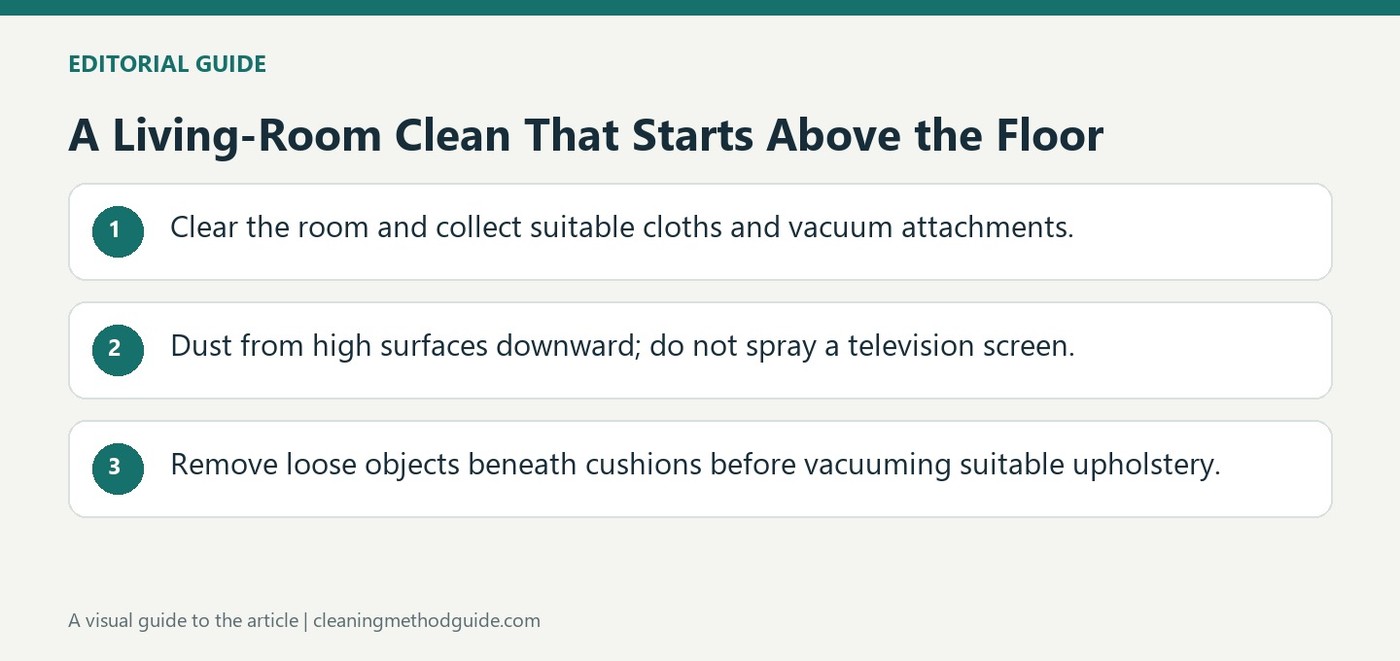
Gathering supplies, clearing surfaces and removing high-level dust first gives the room a more efficient cleaning sequence.
Prepare the room for cleaning
Homes & Gardens' living-room guide recommends collecting cloths, suitable surface products and vacuum attachments before beginning. A container for belongings that belong elsewhere can prevent constant trips out of the room. Throws and removable cushion covers should be checked against their care labels before being sent to the laundry.
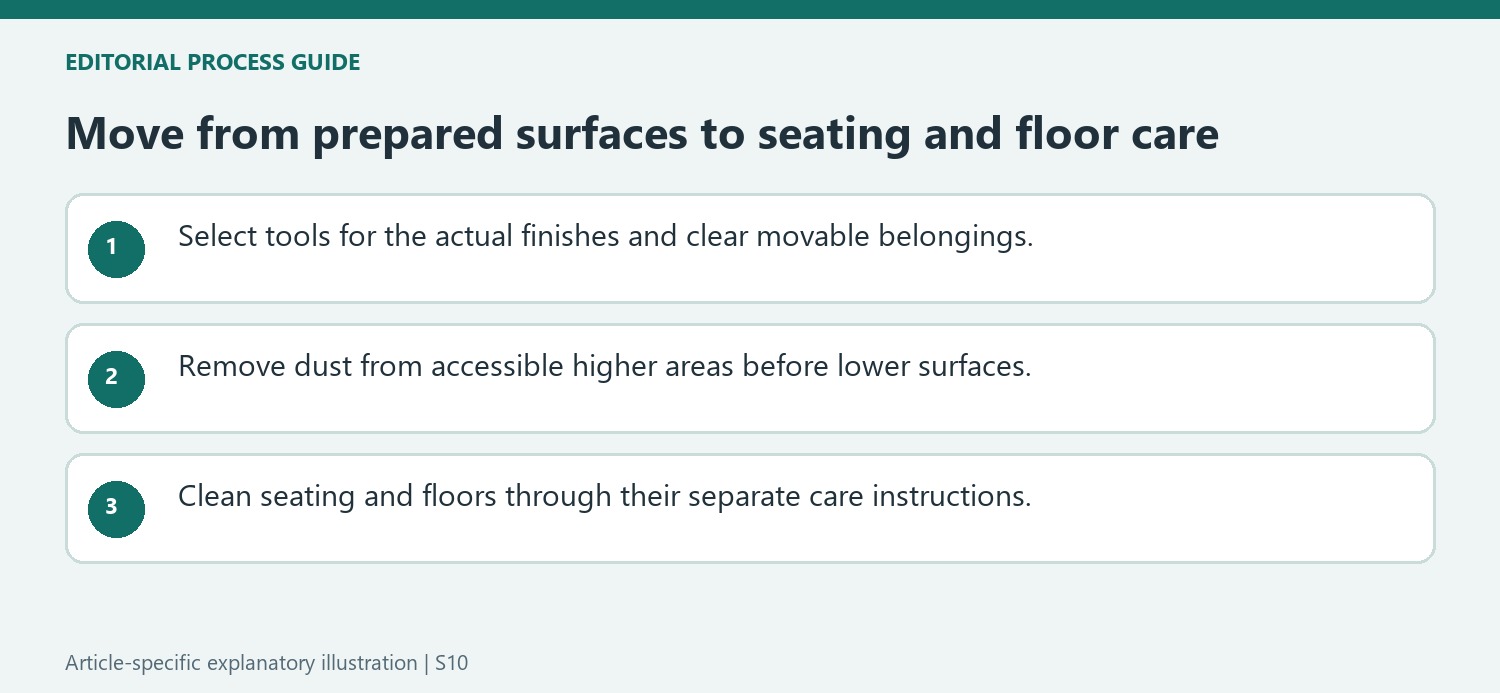
Dust downward, then finish below
High shelves, curtain rods and light fittings come before lower furniture so loose dust does not fall onto finished surfaces. The guide treats the television separately: use a fresh microfiber cloth and never spray water or cleaning product directly on the screen. Wood finishes may require specialist advice, particularly for antiques, and unfamiliar products should be tested discreetly. With the upper surfaces addressed, upholstery attachments and the appropriate floor-cleaning method can complete the room.
Check beneath cushions before using suction
Homes and Gardens recommends lifting seat cushions and collecting larger items such as pencils or coins before vacuuming the gaps. A crevice head can then reach corners, while an upholstery attachment covers the broader fabric. Check suction and brush suitability for the weave, and do not assume a removable cover can be machine washed just because it unzips. The article also distinguishes window treatments by type, with curtains, shutters and blinds needing different approaches. Add those only when their labels or makers permit the method. When the room is accessible, a measured sequence can collect dust and crumbs without turning a routine clean into unplanned fabric damage or device cleaning.
Prepare for the actual furnishings rather than a universal kit
The source lists possible living-room tools, but the right selection depends on what is in the room. Identify delicate finishes, electronic screens, upholstery, glass, and flooring before collecting products. A wood polish is not automatically appropriate for every wood-looking surface, and an upholstery cleaner needs to match the fabric's permitted method. Put belongings that belong elsewhere into a temporary collection arrangement, then return them before the session is considered complete. Check throws and removable covers individually before sending them to laundry. This preparation should make the room easier to clean without turning a short task into an unnecessary shopping list or a complete rearrangement of furniture.
Follow dust downward without treating every surface alike
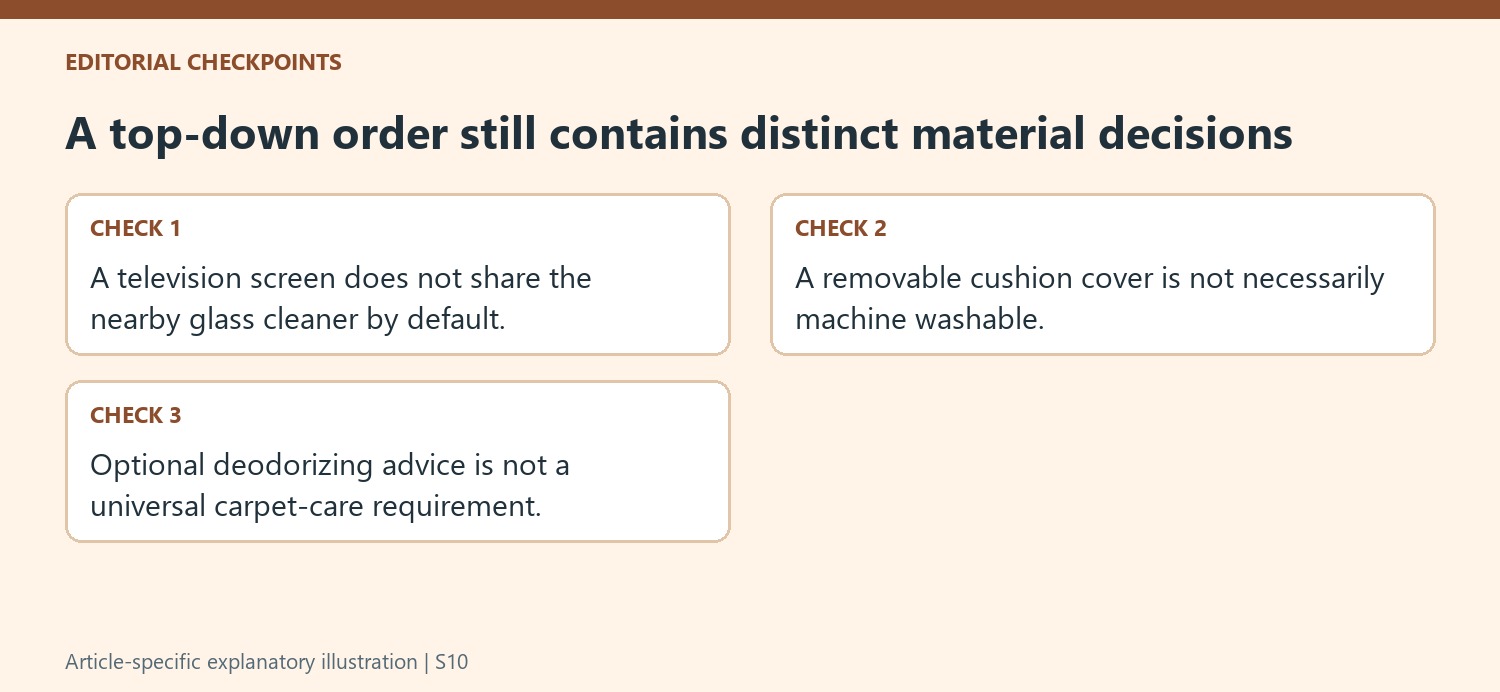
The guide's higher-to-lower order aims to avoid dropping material onto areas already finished. Use safe access and suitable tools for high shelves, curtain hardware, and light fittings; do not improvise a climbing platform. Equipment should be off and appropriately cool before approved cleaning around it. Treat a screen through its manufacturer's directions rather than the same spray used on nearby glass. Avoid spraying liquid directly onto electronic equipment. Window treatments may need light dust removal, washing, or professional care depending on their construction. A general vinegar recipe should not override a coating restriction, neighboring material, or the specific care instructions for a mirror or glazed component.
Give seating and floor care their own final stages
Remove loose objects from sofa crevices before using the appropriate vacuum attachment. Inspect upholstery instructions before applying a spot product, and avoid forceful rubbing on a finish that can mark. Removable does not necessarily mean machine washable. Allow any appropriately wet-cleaned item to dry as directed before returning it to normal use. Finish the floor after the higher work, using the care method suited to each surface and rug. Move only furniture that can be handled safely or clean through the access available. The source contains optional deodorizing and product suggestions; they are not required steps for every carpet or vacuum. Close the session by returning belongings, maintaining used tools, and noting marks or access problems that need a separate decision. Before replacing a rug or allowing normal traffic, check the floor has reached the drying condition required by its care process. Keep damp upholstery unavailable until its own drying requirements are satisfied.
References
- How to clean the living room – 7 simple steps for tackling all chores, from dusting to vacuuming. Homes and Gardens; Ottilie Blackhall; Linda Clayton.
Gathering supplies, clearing surfaces and removing high-level dust first gives the room a more efficient cleaning sequence.


Leave a Comment
Comments (0)