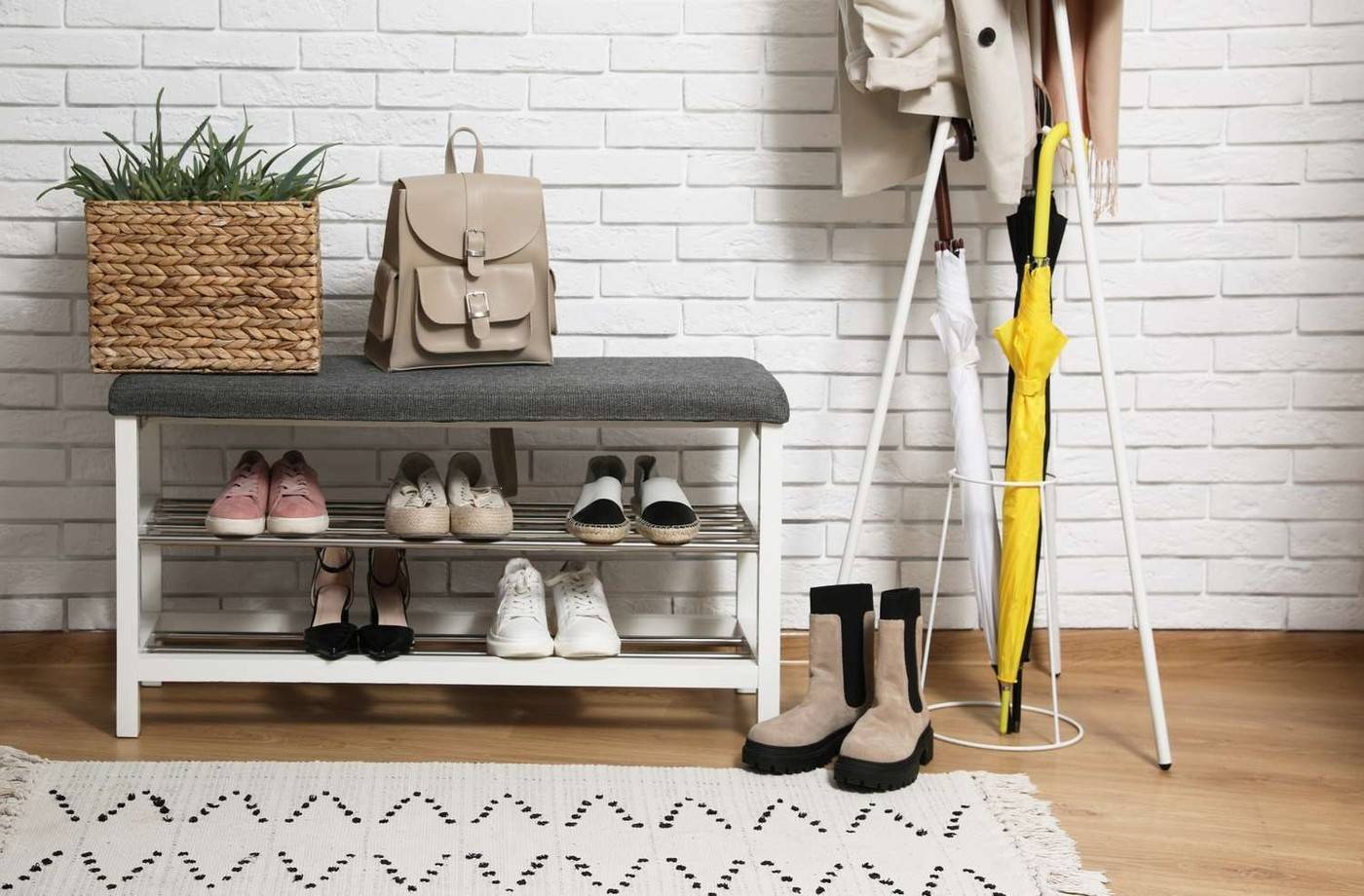
Follow the different routes of incoming clutter
Real Simple's entryway guide separates paperwork requiring action from junk mail, and frequently worn shoes from out-of-season footwear. It also identifies returns, donations and unopened deliveries as belongings that can stall near the door. These categories need different exits or storage destinations; a larger catchall basket can conceal them without resolving why each item is still occupying the entrance.
Deal with items before they accumulate
Real Simple identifies mail, packages and shoes among common sources of entryway clutter. Its paper advice includes a place for recycling and a separate tray for items requiring action. These decisions reduce the tendency for every incoming object to become a permanent resident on the entry console.
Leave the floor accessible
An entrance is easier to clean when everyday storage is limited to what belongs there. Review the objects that repeatedly gather, return them to their appropriate places and keep the walking route clear. This is the organizing part of an entryway cleaning checklist: it exposes dusty surfaces and tracked-in dirt, while avoiding the unproductive cycle of shifting the same piles around during each cleaning session.
Give outgoing items an actual departure plan
Real Simple notes that donations, shopping returns and library books can remain by the door long after they were moved out of another room. Set a practical next action for those objects instead of allowing the entrance to become their permanent holding area. The guide also recommends rotating seasonal shoes and coats so everyday storage is not filled with unused summer or winter items. Review reusable bags and broken umbrellas as separate clutter sources. Once those decisions are made, clean the emptied console, shoe area and exposed floor. Moving every pile into a new basket makes the space look different but leaves the same unresolved objects in circulation.
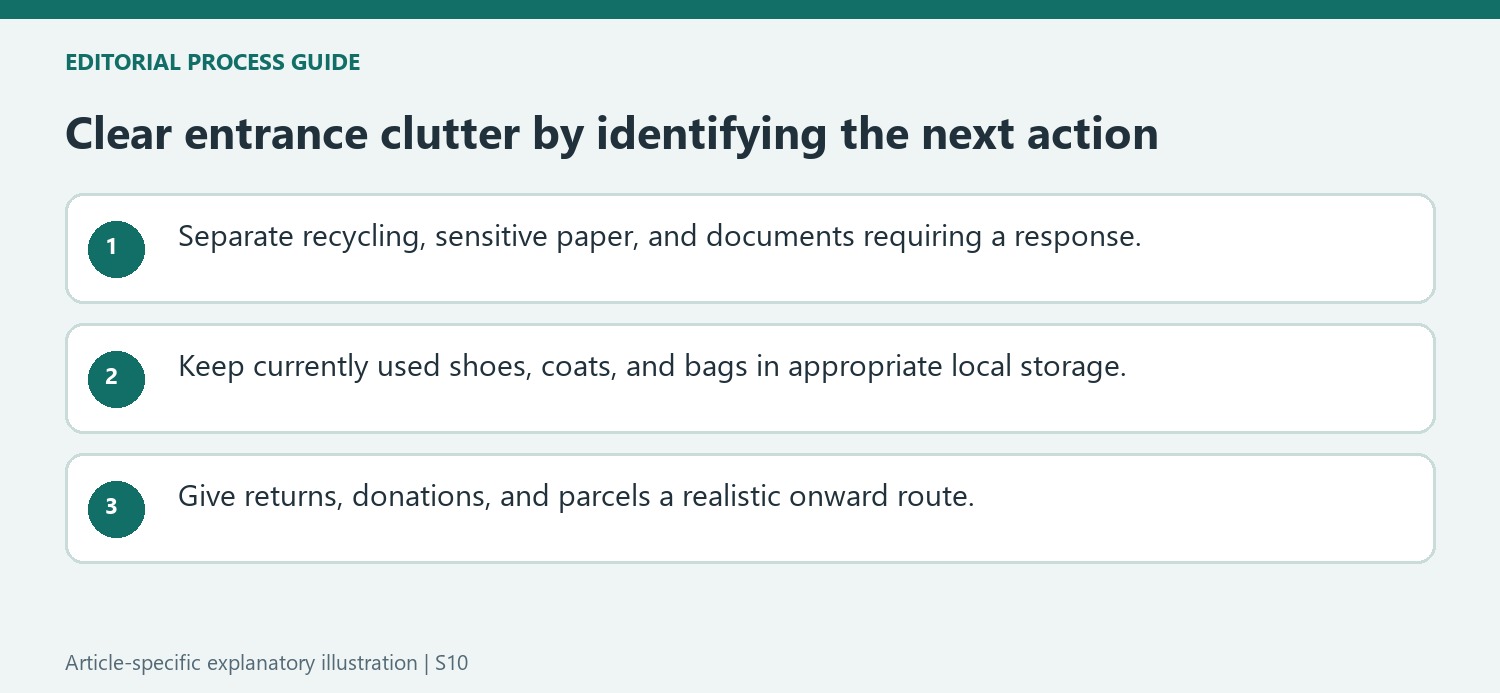
Separate incoming paper by its next action
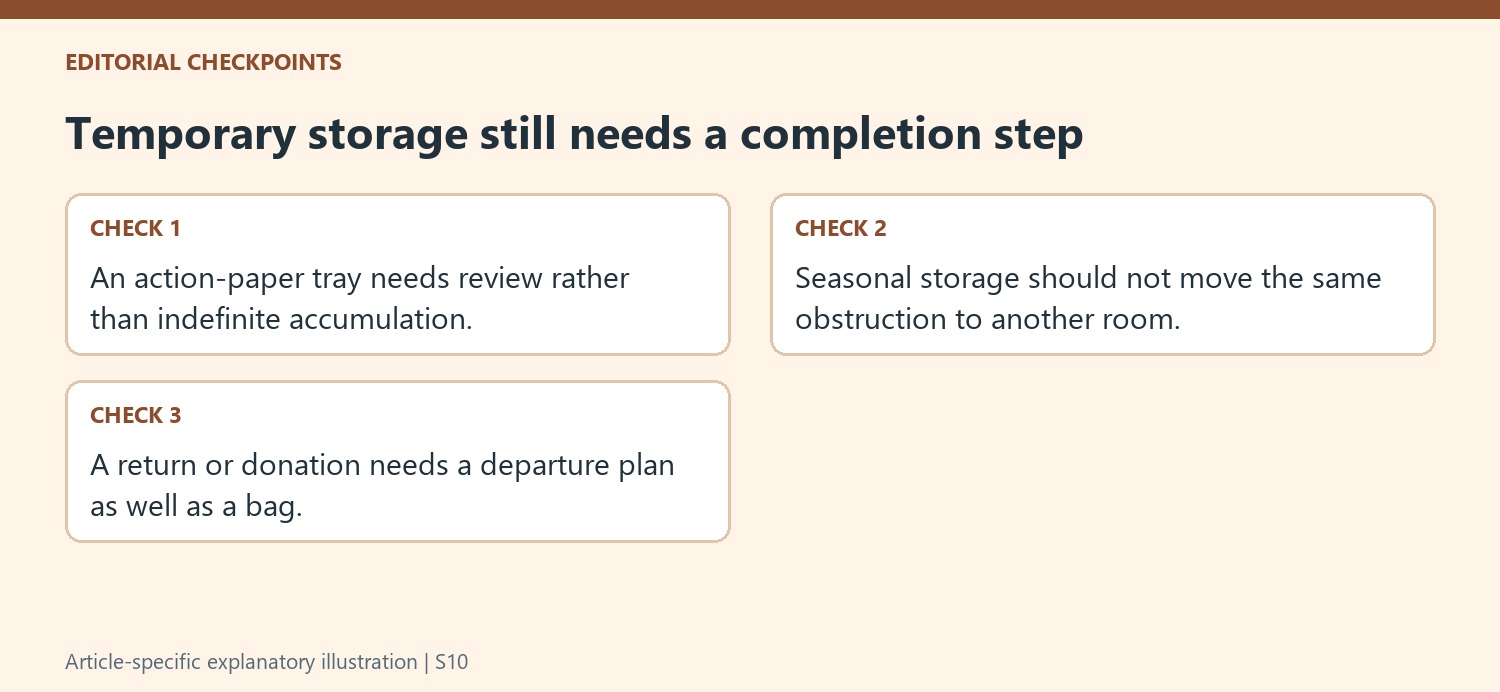
The source distinguishes unwanted mail from papers that still require a response. Set a practical sorting point so those categories do not become a single growing pile on the entrance table. Recycle suitable unwanted material, handle sensitive documents through an appropriate secure route, and keep action papers in an identifiable location. The location is only useful when paired with a regular review; a tray full of overdue bills is organized storage without completed administration. Consider reducing unnecessary incoming paper through appropriate mailing preferences and paperless options where wanted. Keep the arrangement manageable enough to use immediately after arriving rather than requiring a separate elaborate sorting session.
Limit the entrance to belongings needed for current use
Review shoes, coats, and bags according to the season and household routine. Store less-used items elsewhere when space is limited, but keep the destination defined so the clutter is not simply transferred into a bedroom walkway. Wet or soiled belongings need their suitable care before longer storage. Retain a practical number of reusable shopping bags and place some where they will actually be available for the next shopping trip. Inspect umbrellas for usable condition instead of storing broken ones indefinitely. The aim is to make everyday departure easier while keeping enough space for visitors and the normal movement through the door.
Give outgoing items a departure plan
Returns, donations, library books, and unopened parcels can all appear temporary while remaining in the entrance for weeks. Identify the required action and a realistic date for moving each category onward. The source proposes clearing such items promptly; use that as a cue for a workable errand plan rather than a reason to leave a permanent staging pile in the doorway. Open packages appropriately and direct contents, packaging, and any returns to their real destinations. Check that the action-paper tray, bag storage, and outgoing group remain separate. After the reset, test whether keys can be found and the door route is clear. Revise a system that repeatedly allows a supposedly short-term pile to become the entrance's default storage.
References
- 8 Things That Are Cluttering Up Your Entryway (and Making Your Home Look Messy to Guests). Real Simple; Lisa Milbrand.
Real Simple's entryway guide separates paperwork requiring action from junk mail, and frequently worn shoes from out-of-season footwear. It also identifies returns, donations and unopened deliveries as belongings that can stall near the door. These categories need different exits or storage destinations; a larger catchall basket can conceal them without resolving why each item is still occupying the entrance.


Leave a Comment
Comments (0)