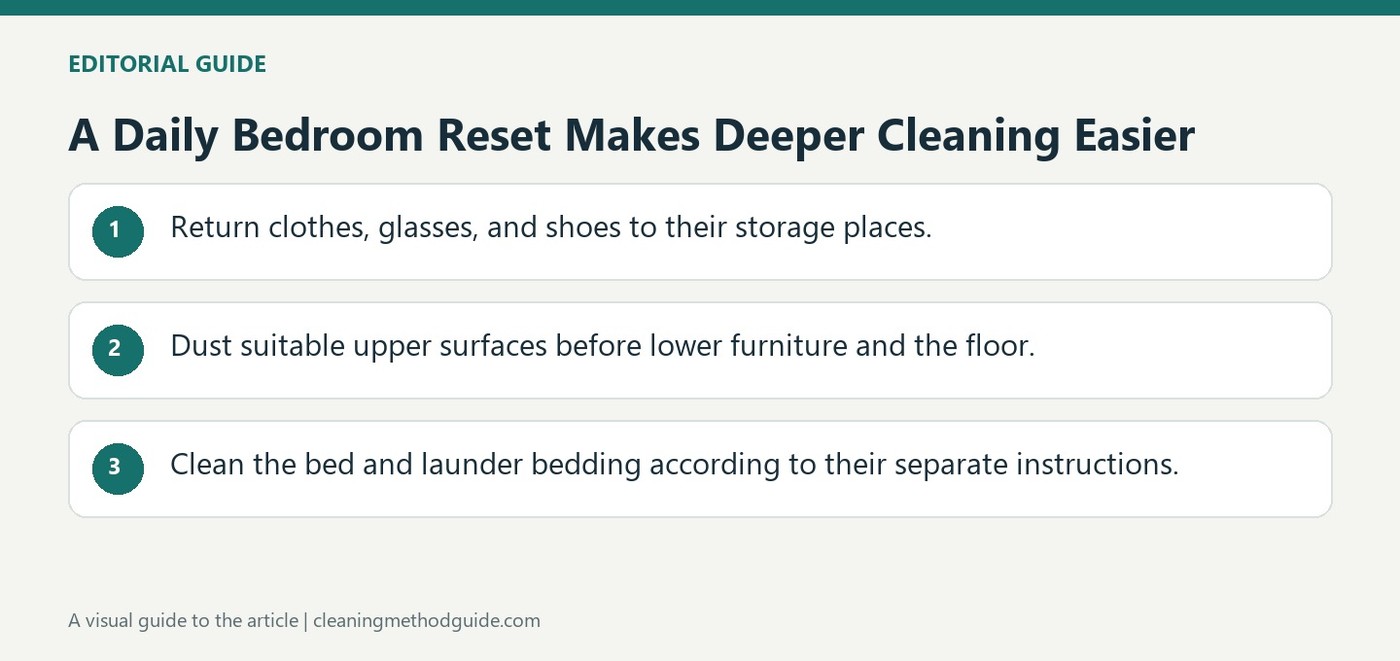
Homes & Gardens' bedroom routine begins with putting clothes away, removing used glasses and returning shoes to storage. Those small steps clear the surfaces and floor before scheduled dusting, bedding care and more thorough cleaning.
Give frequently displaced items an obvious storage location so the routine is quick enough to repeat. Work from higher surfaces toward the floor during the larger session, and follow textile labels for bedding. A tidy room can support a calmer environment without guaranteeing a particular sleep outcome.
Keep everyday storage easy to use
Homes and Gardens recommends returning shoes, clothes and used drinkware to their homes before cleaning. Its nightstand advice keeps only everyday essentials within reach instead of covering the top with stored belongings. Choose an arrangement that fits the room and its users, so resetting a surface does not require moving an entire collection each morning. Tidying is the preparation stage, not dust removal itself.
Move from the upper dust to floor debris
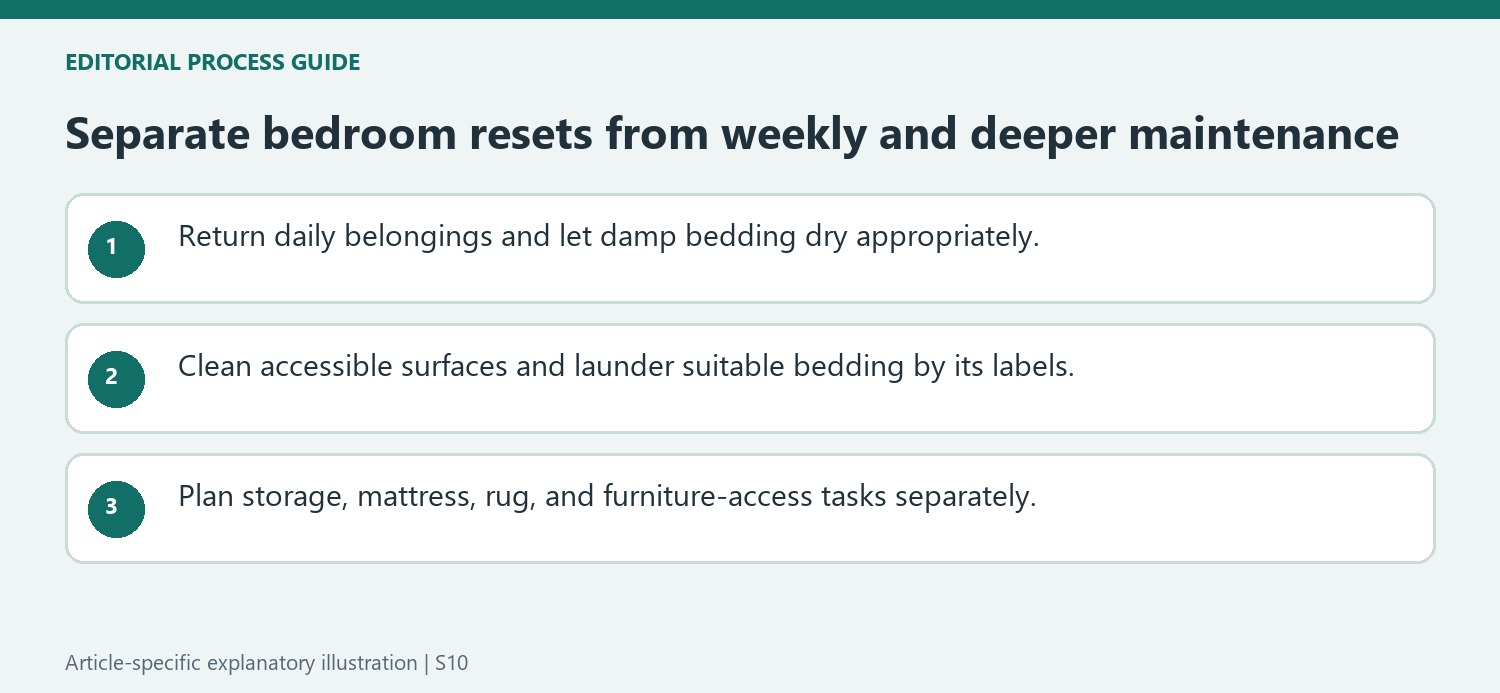
The weekly section starts with higher areas and includes shades, frames, blinds and baseboards before the floor. Use tools and moisture levels suited to each finish, and follow equipment directions around lights and electronics. A strong vacuum setting is not appropriate for every furnishing. Clear access beneath the bed where practical without dragging or tipping heavy pieces to imitate an idealized checklist.
Separate bed cleaning from fabric washing
The deeper-cleaning section includes the mattress, frame and headboard while bedding is removed. Follow their specific instructions and only rotate a mattress where the manufacturer permits it. Sheets, pillow protectors and filled bedding may have different wash requirements. Allow clean items and surfaces to dry appropriately before reassembly. Airing can help with moisture, but it should not be described as a substitute for washing or a guaranteed improvement in sleep.
Keep the daily reset small enough to repeat
The source separates returning belongings from the more involved weekly and deep-cleaning tasks. Remove used cups, put footwear in its intended place, and direct worn clothing toward the laundry arrangement. Keep only genuinely useful items on the bedside surface instead of moving clutter between visible areas. If bedding is damp from ordinary use, allow appropriate drying rather than enclosing the moisture immediately. Airing is not a substitute for laundering and should not be described as a guaranteed disinfecting treatment. The practical goal of this short reset is a room with accessible surfaces and a sleeping area ready for the next period of use.
Plan the larger session around material-specific work
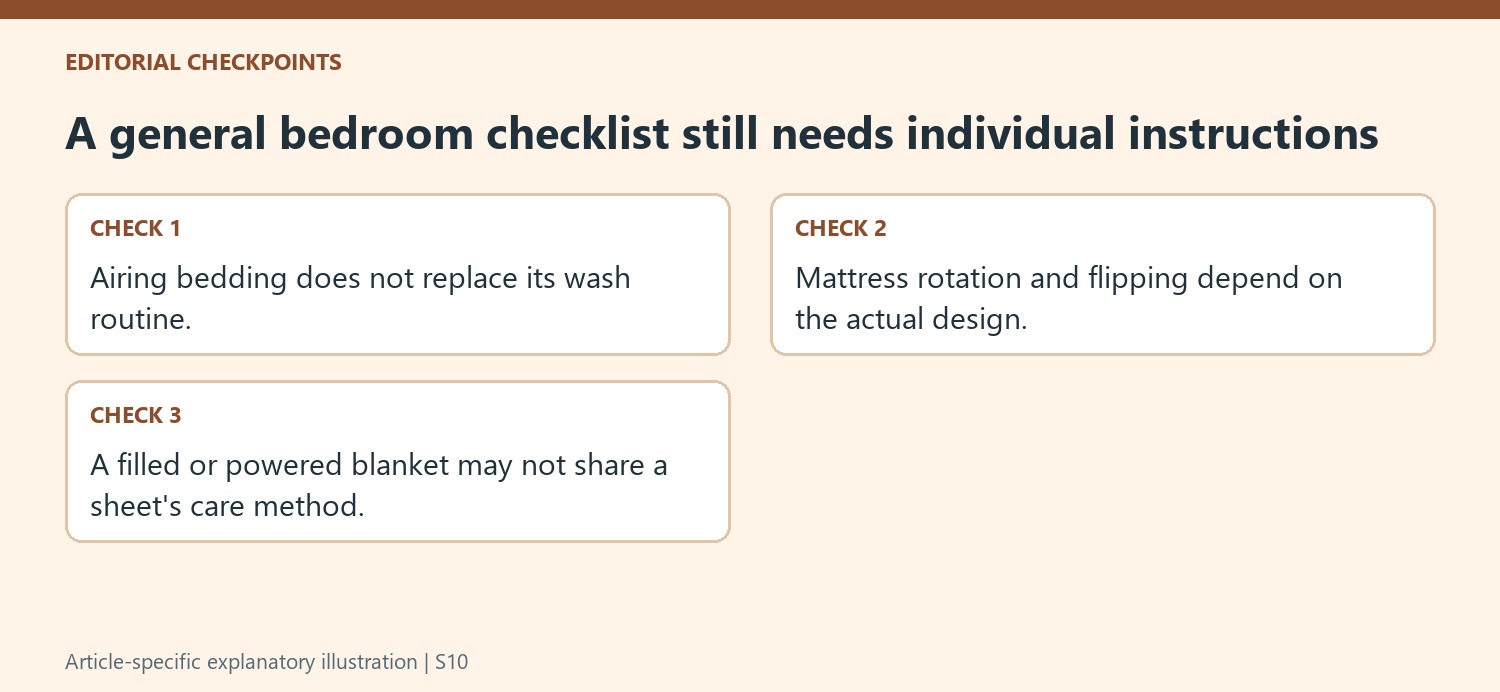
For weekly attention, work through accessible higher dusting before the floor. Check the suitability of a vacuum attachment or cloth for lampshades, curtains, furniture finishes, and glass. A general recommendation to wipe touch points does not justify wetting an electrical outlet or using an unsuitable product on a decorative plate. Follow appropriate equipment and product guidance. Change bed linen through its care instructions, recognizing that a sheet, pillow, weighted blanket, or powered blanket may have different requirements. The source's broad bedding list should not become an instruction to place every component in the same machine load or use one temperature regardless of labels.
Define the deep-cleaning tasks before moving furniture
Closets, drawer interiors, mattress care, and space beneath furniture need more planning than a daily tidy. Review what belongs in storage and choose an accessible section rather than emptying the entire bedroom without time to finish. Follow the mattress manufacturer's instructions before vacuuming, rotating, or turning it; not every design is intended to be flipped. Move furniture only through a safe method with suitable help where needed. A rug likewise requires its own care instructions. Record unresolved dampness, damaged materials, or cleaning access problems. These tasks can improve room upkeep, but the article's general sleep discussion does not establish a guaranteed individual sleep outcome or a measured reduction in allergens. Judge the routine by completed care tasks and the actual condition of the room.
References
- How to clean a bedroom like a pro – daily, weekly and deep-cleaning tips for a relaxing space that 'improves chances of a good night's sleep'. Homes and Gardens; Ottilie Blackhall; Linda Clayton.
Returning ordinary items to their homes keeps the room accessible for its regular care.


Leave a Comment
Comments (0)