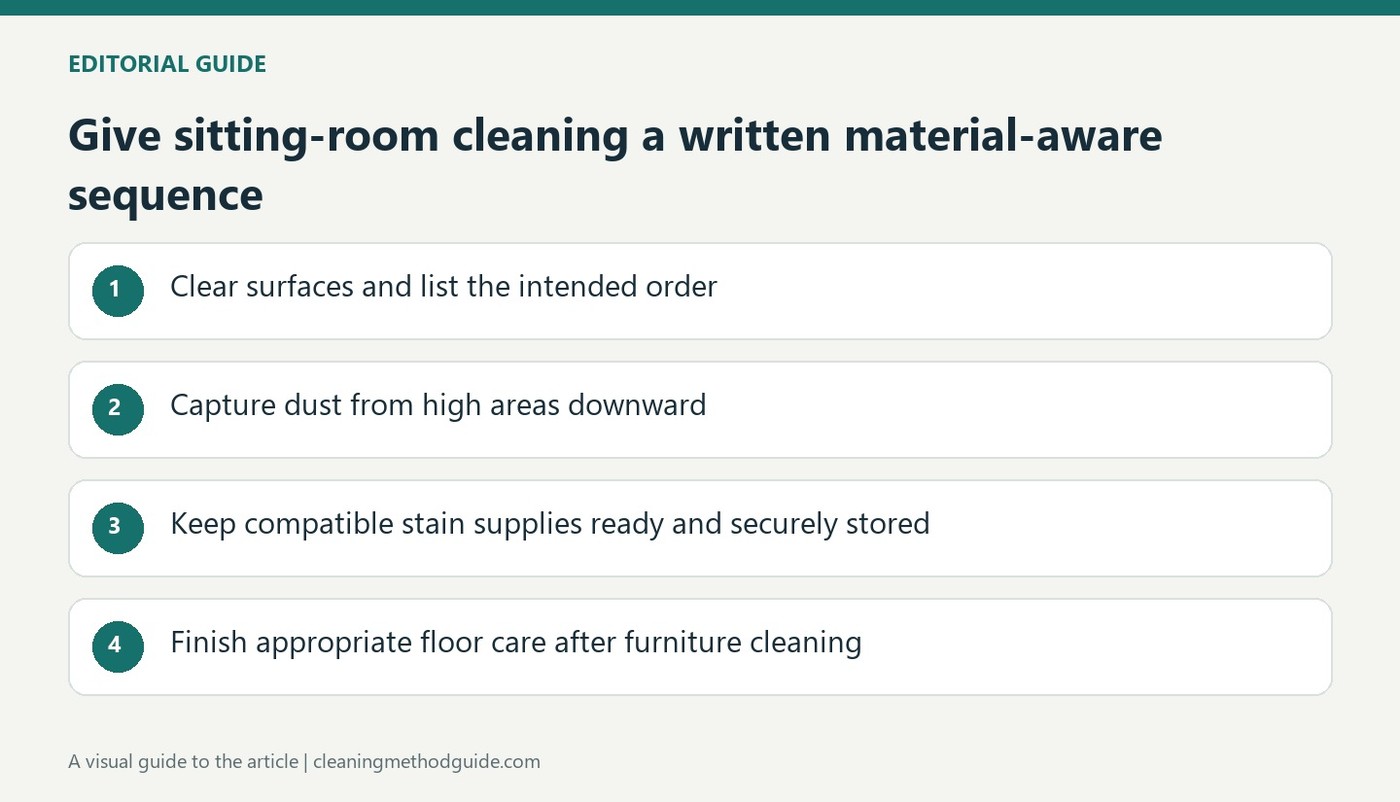
A written plan and dust-catching tools can simplify the transition from scattered living-room chores to a repeatable routine.
Remove obstacles before starting
Homes & Gardens' broader cleaning guide recommends tidying before attempting a room clean. In a living room, that means collecting rubbish, putting away laundry or toys and clearing the surfaces that need attention. A short list in the intended order reduces the need to remember several unfinished tasks at once and makes it easier to divide the work into separate sessions.
Capture dust and treat spills carefully
The guide favors a damp microfiber cloth for collecting dust and recommends moving from higher areas down toward the floor. It also suggests keeping stain-treatment supplies ready so accidents can be addressed promptly. For textiles, its advice is to blot rather than scrub a spill, avoiding the force that can push a mark deeper into fibers. Choose a treatment appropriate to the particular fabric and follow its care instructions.
Use the plan to separate different care requirements
Homes and Gardens' broader tips include lampshades, plants, woodwork and cleaning equipment itself, each needing its own method. In a sitting room, a fabric shade, coated screen and polished table should not receive the same spray because they sit nearby. Check care directions and use clean suitable tools, with power off and lamps cool before approved cleaning around fixtures. The source's stain-station idea is useful when the compatible product and a clean white cloth are already available. Store that kit securely and do not let readiness become indiscriminate treatment. A quick response still needs the material identified, especially on an unfamiliar cushion or rug.
Write a short route through the sitting room
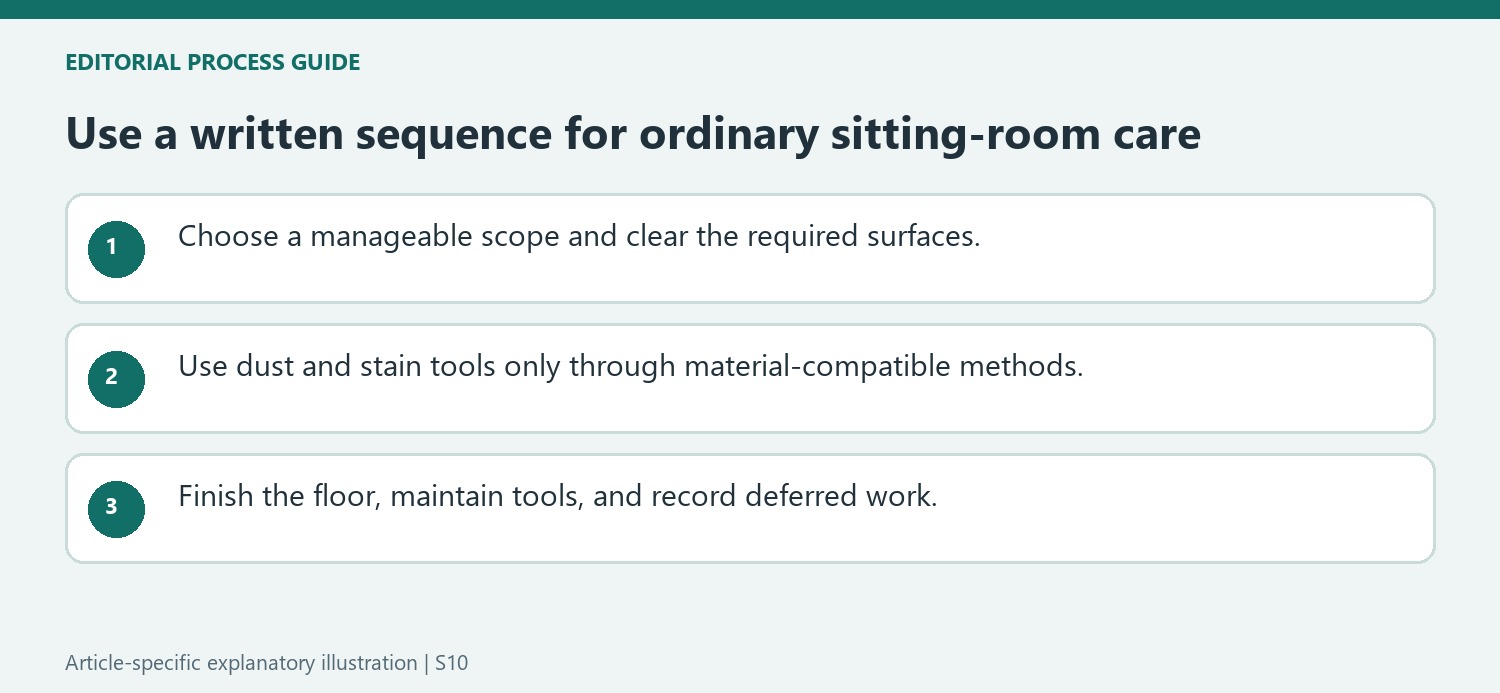
The source's first organizational step is a written plan. For a sitting room, list the surfaces and furnishings that actually need attention rather than importing the entire whole-house feature. Begin by removing rubbish and returning belongings, then identify accessible higher dusting, table care, seating, and the floor. Split the list if the available session cannot reasonably include everything. Mark a separate task for an unfamiliar stain or a piece requiring professional care instead of allowing it to stop all ordinary work. A written order reduces decisions during the session, but it should still change when the room's condition or an item's care requirements make a different sequence necessary.
Check the method before using the prepared stain kit
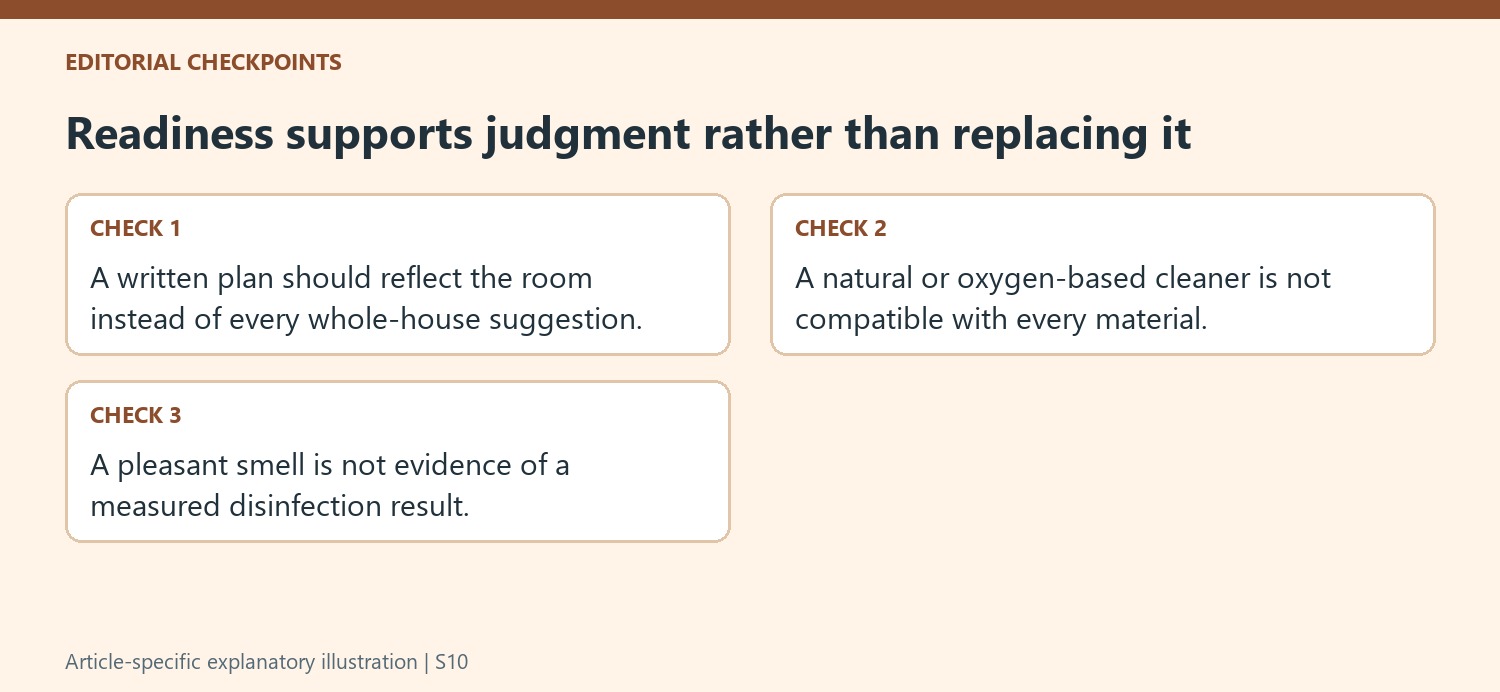
Having a clean cloth and an appropriate product ready can shorten the response to a spill. Read the fabric's care information first, identify the substance if possible, and check the product restrictions before application. Blotting and scrubbing are different actions; excessive friction can spread moisture or damage a delicate surface. Use a suitable clean white cloth to avoid adding dye from the tool. The source includes broad endorsements of household ingredients and stain products, but neither natural origin nor an oxygen-based label makes every treatment compatible with every fabric. Keep the kit identified and securely stored so readiness supports an informed response rather than indiscriminate spraying.
Finish the planned work without expanding its claims
Remove dust from accessible higher areas before collecting debris from the floor. Use the right method for each object, including any plants, fabric shades, screens, or finished wood. A houseplant's leaves and an artificial plant do not automatically accept the same washing method, and electrical equipment needs its own care directions. Maintain the cloths and equipment used during the session instead of putting dirty tools straight back into the kit. Return moved belongings and note any deferred care. The final review should identify what was cleaned and what remains, without equating a pleasant smell or a visually tidy surface with measured disinfection. This keeps the routine clear enough to repeat and prevents an ordinary sitting-room session from becoming an unbounded promise to make the whole home spotless. Keep the checklist where it can be reviewed before the next session, with the unresolved stain or specialist-care item identified rather than buried among completed routine jobs.
References
- 50 of the best cleaning tips that will leave every room spotless with ease – whether you live alone, with pets, or have a very busy household. Homes and Gardens; Chiana Dickson.
A written plan and dust-catching tools can simplify the transition from scattered living-room chores to a repeatable routine.


Leave a Comment
Comments (0)