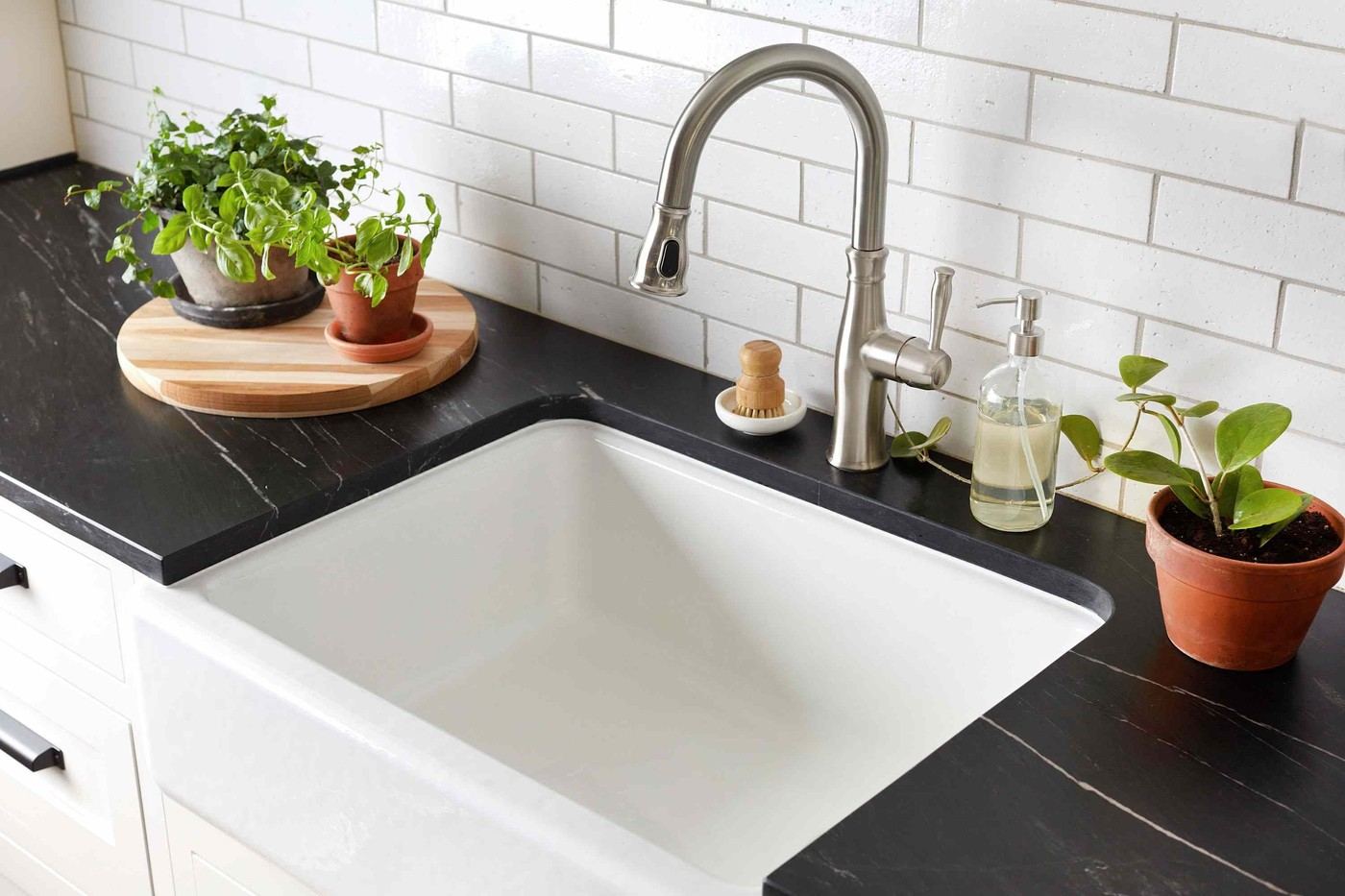
Better Homes and Gardens describes a weekly closing routine that moves through several rooms and includes accumulated kitchen tasks, laundry preparation, high-contact details, and trash. The breadth of that list makes prioritizing more useful than trying to finish every item within a headline's short time estimate. Moving a coffee maker or utensil crock can expose residue missed during a daily wipe. Select a realistic section and prepare what it needs so the reset produces a finished area rather than many interrupted jobs.
Choose a consistent time
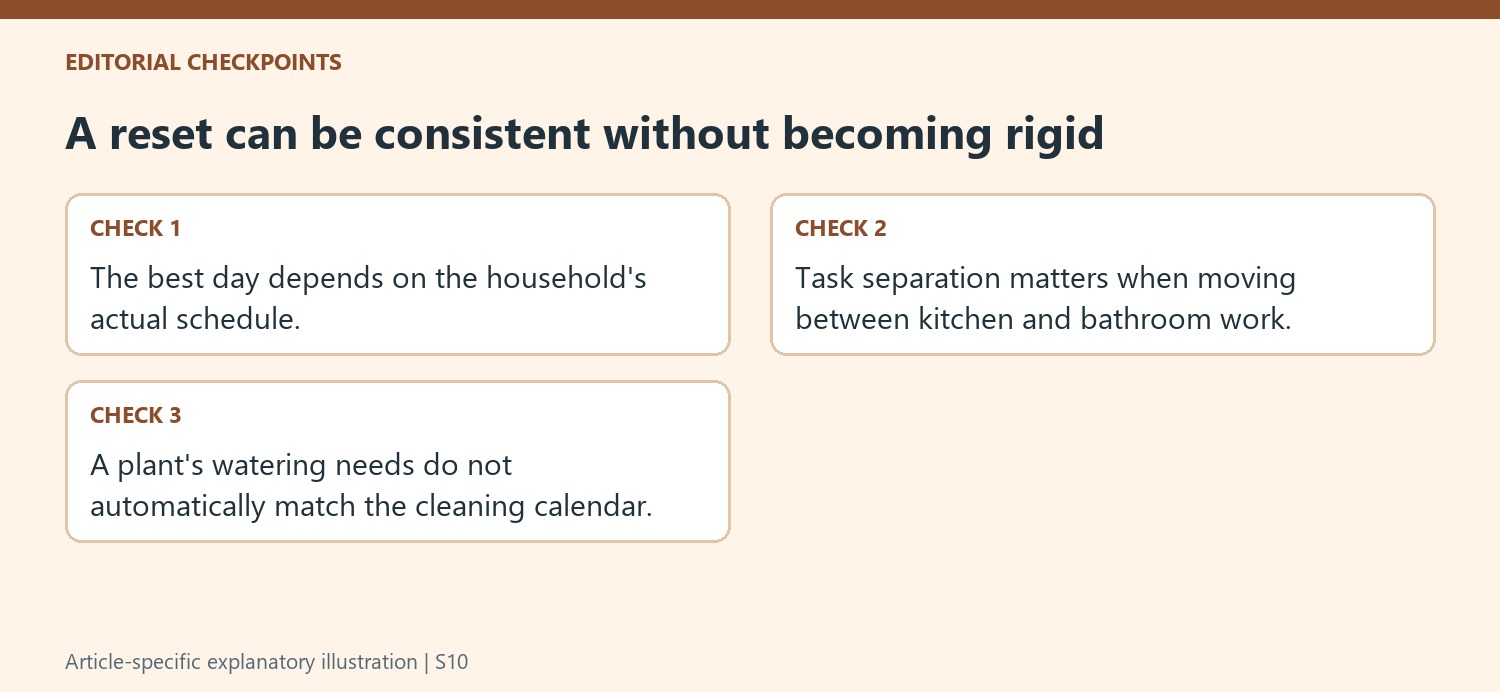
Better Homes and Gardens describes a weekly closing routine that can be done before the workweek or weekend, depending on the household. Consistency matters more than a specific named day. Daily habits keep the home usable, while the weekly session adds tasks that need more deliberate attention.
Start with the kitchen's accumulated jobs
The guide includes reviewing stored food, cleaning appliance surfaces and other kitchen maintenance before moving to additional rooms. Break the work into sections if only a short period is available. Its full routine is longer than a quick daily reset, so completing one section should not be described as finishing every weekly task in a few minutes.
Make the reset fit the available time
BHG's routine moves through the kitchen, bathrooms, bedrooms and living room, then adds high-contact details and trash. That is a menu of related work, not evidence that every household can finish every listed task in the headline's short period. Choose priority sections and prepare clean towels, tools or replacement bed linen before starting. In the kitchen, moving the coffee maker or utensil crock exposes residue missed by a daily wipe, while reviewing food can inform the grocery list. Keep those concrete benefits as the goal. If time ends, record the next section rather than rushing appliance maintenance, disinfectant contact time or wet-floor drying.
Define what should feel ready when the routine ends
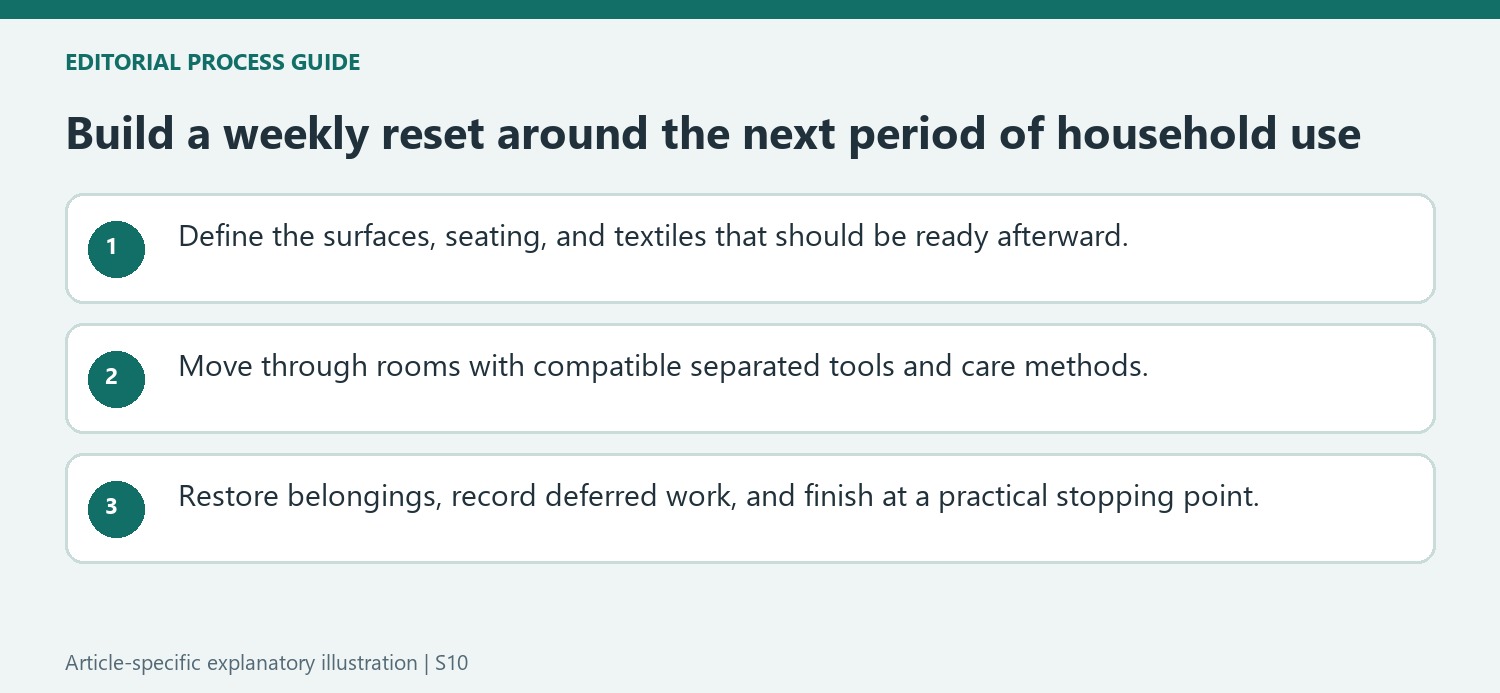
The source adapts a closing-shift idea to a weekly household reset. Decide what the next morning or rest period needs: usable counters, clear seating, fresh appropriate textiles, or a bedroom with belongings returned. Choose a time that fits the household rather than assuming Sunday evening is the only useful slot. A reset can include real cleaning as well as putting things away, but it should have a defined stopping point. List the tasks most likely to improve the next period of use and separate overdue large maintenance work that would otherwise consume the whole session.
Link room transitions with the tools and materials involved
The article moves through kitchen, bathrooms, bedrooms, and living areas. Prepare task-appropriate cloths and cleaners so efficiency does not become carrying one used cloth across incompatible areas. Follow surface guidance for counters, fixtures, appliance fronts, and flooring. If a sanitizing or disinfecting step is appropriate, use a compatible labeled procedure rather than treating every general wipe as that result. Textile laundering depends on individual care instructions, not merely its place on a weekly checklist. A blanket, removable cover, towel, and sheet may need different treatment. Keep suitable dry replacements ready so the room can return to use while laundry is being completed.
Use the final sweep to support tomorrow's routine
Return remotes, toys, personal items, and loose paperwork to places that remain easy to use. Review food stock and the shopping list where relevant without leaving perishable contents exposed while other tasks proceed. Empty appropriate waste containers and address spills through their suitable methods. The source's final plant-care suggestion also needs the individual plant's actual requirements rather than automatic watering every reset day. Record unfinished work and return equipment to secure storage. A successful closing shift has a clear practical result for the next day, with the important spaces usable and the household able to stop. It should not become an indefinitely expanding promise to make every room perfect before resting. Keep that stopping point visible on the checklist.
References
- This 30-Minute Weekly Cleaning Routine Will Set You Up for Better Mornings. Better Homes & Gardens; Mary Cornetta.
Better Homes and Gardens describes a weekly closing routine that moves through several rooms and includes accumulated kitchen tasks, laundry preparation, high-contact details, and trash. The breadth of that list makes prioritizing more useful than trying to finish every item within a headline's short time estimate.


Leave a Comment
Comments (0)