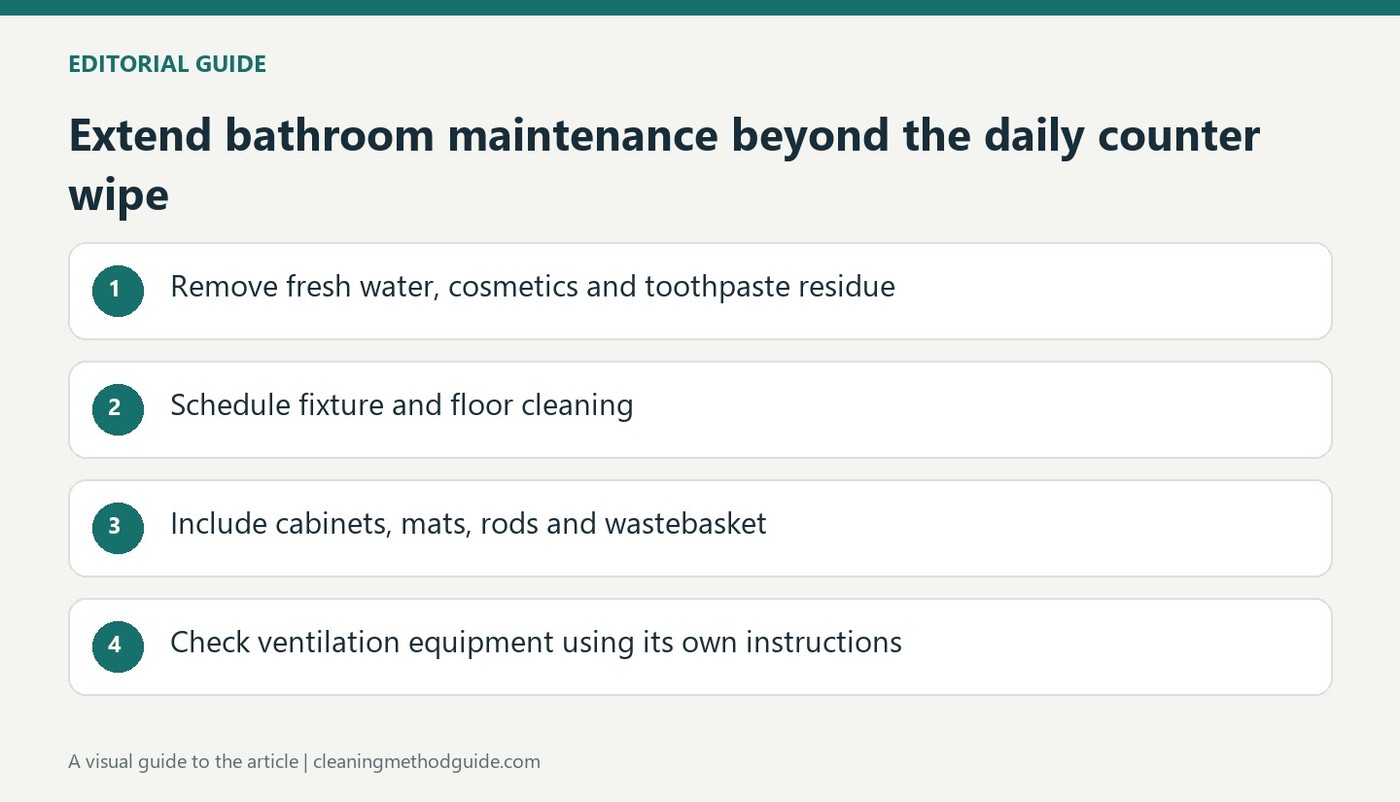
Real Simple's bathroom schedule starts with water droplets, toothpaste, cosmetics, and towels, then brings fixtures and hidden collection points into later sessions. Wastebaskets, shower rings, cabinet interiors, and bath mats can retain residue even when the counter is regularly wiped. Assign those areas a place in the plan without applying one bathroom product to all of them. The source's longer ventilation checks further distinguish a visible surface clean from textile laundering and maintenance of powered equipment in a damp room.
Handle small messes before they harden
Real Simple recommends regular attention to water droplets, toothpaste, cosmetics and other residue on bathroom counters and fixtures. A clean microfiber cloth and a suitable surface cleaner help remove the material before it builds up. Hanging towels properly and changing hand towels regularly support the routine between deeper sessions.
Reserve time for weekly fixtures
The checklist moves toilet cleaning, the sink and other more substantial jobs into a weekly pattern. Clean and rinse surfaces as directed by the chosen product rather than using one method for every material. Daily maintenance reduces the size of that weekly task, but does not eliminate the need to clean fixtures that accumulate soap residue and bathroom grime.
Use the longer checklist to notice hidden collection points
Real Simple's monthly examples include wastebaskets, cabinet interiors, bath mats and shower rods or rings. Those details accumulate residue even when the counter is wiped every day. Empty one storage area at a time so its contents do not prevent the cleaning itself, and use the finish's permitted method. Washable mats need their care tags checked, particularly for drying and backing restrictions. The article also includes annual ventilation checks, showing that the room routine covers more than visible ceramics. Keep fixture cleaning, textile laundering and powered-equipment maintenance as distinct jobs, with their own directions rather than one formula applied across the whole room.
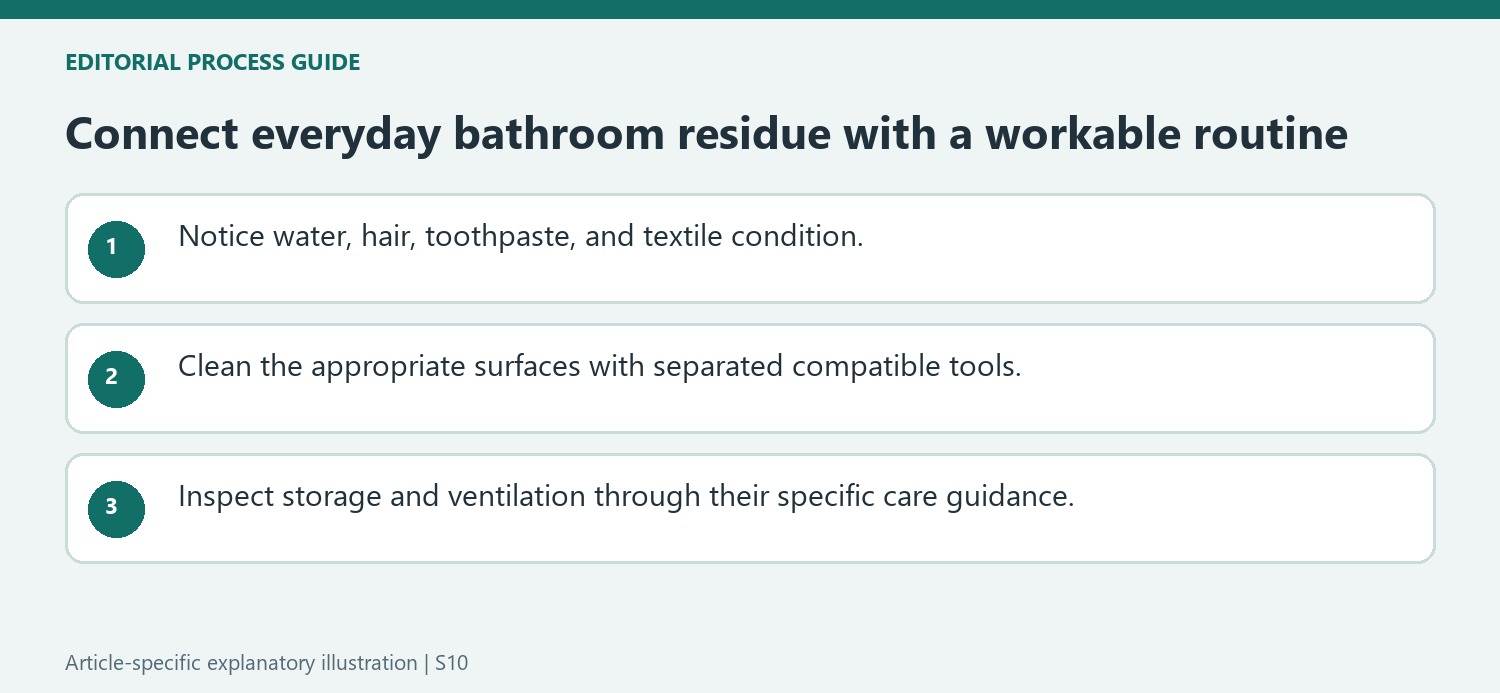
Use daily residue to decide where attention belongs
Water around a basin, toothpaste on a counter, and loose hair are practical signals for a small daily reset. Address them through a method compatible with the surface instead of allowing a calendar to determine every response. Hang towels so they can dry and replace or launder them according to their actual use and condition. Clearing personal items makes these short tasks easier and exposes the area beneath them. This daily work supports the larger checklist but does not mean the room has undergone every possible cleaning or disinfecting procedure. Keep that distinction clear when choosing the next job and the equipment needed for it.
Plan weekly work around compatible tools and surfaces
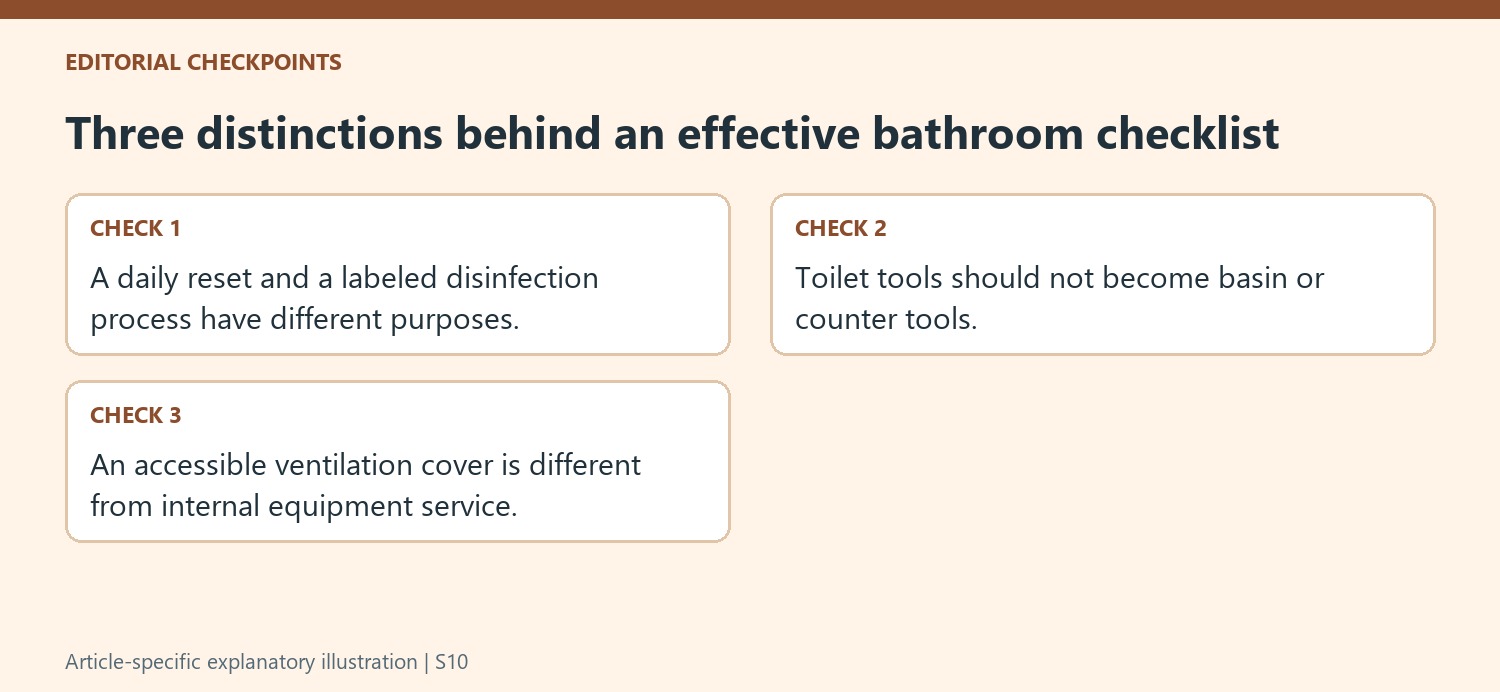
The source's wider routine covers fixtures, the toilet, tub or shower, mirrors, and the floor. Separate tools used on the toilet from those intended for other contact points. Check decorative finishes before choosing a pad or cleaner; extra pressure is not a reliable substitute for compatibility. Remove loose debris and work in an order that leaves the floor until falling dust and residue have been addressed. Where a labeled disinfectant is appropriate, its directions control the process, including any required wet contact time. A household mixture or a quickly dried wipe should not automatically be described as equivalent. Keep cleaners identified and avoid combining them.
Make longer intervals a prompt for inspection
Cabinets, mats, waste containers, curtain components, and ventilation covers may benefit from a separate reminder because they are easy to overlook during a fast wipe. Follow textile labels and equipment guidance rather than giving every item the same treatment. An accessible fan cover is different from the powered mechanism behind it; cleaning access and power isolation depend on the actual installation. Use storage checks to remove unsuitable or unwanted items through appropriate routes. If moisture repeatedly returns, look for the condition responsible instead of simply adding another wipe to the schedule. The useful checklist connects daily residue, periodic cleaning, and necessary maintenance without promising that one cleaning formula suits the entire room.
References
- The Complete Bathroom Cleaning Checklist. Real Simple; Leslie Corona.
Real Simple's bathroom schedule starts with water droplets, toothpaste, cosmetics, and towels, then brings fixtures and hidden collection points into later sessions. Wastebaskets, shower rings, cabinet interiors, and bath mats can retain residue even when the counter is regularly wiped.


Leave a Comment
Comments (0)