
Ideal Home's daily checklist includes making the bed and wiping kitchen worktops. It advises allowing bedding to air before arranging it, rather than treating immediate bed-making as the only valid habit. Worktop cleaning responds to a surface used repeatedly for food preparation.
Choose suitable cleaners and keep the list realistic for the household. A brief daily plan can support weekly deeper work without duplicating it. Prioritize actions that improve hygiene or make the next activity easier instead of adding tasks solely to fill a checklist.
Connect tasks to actual daily use
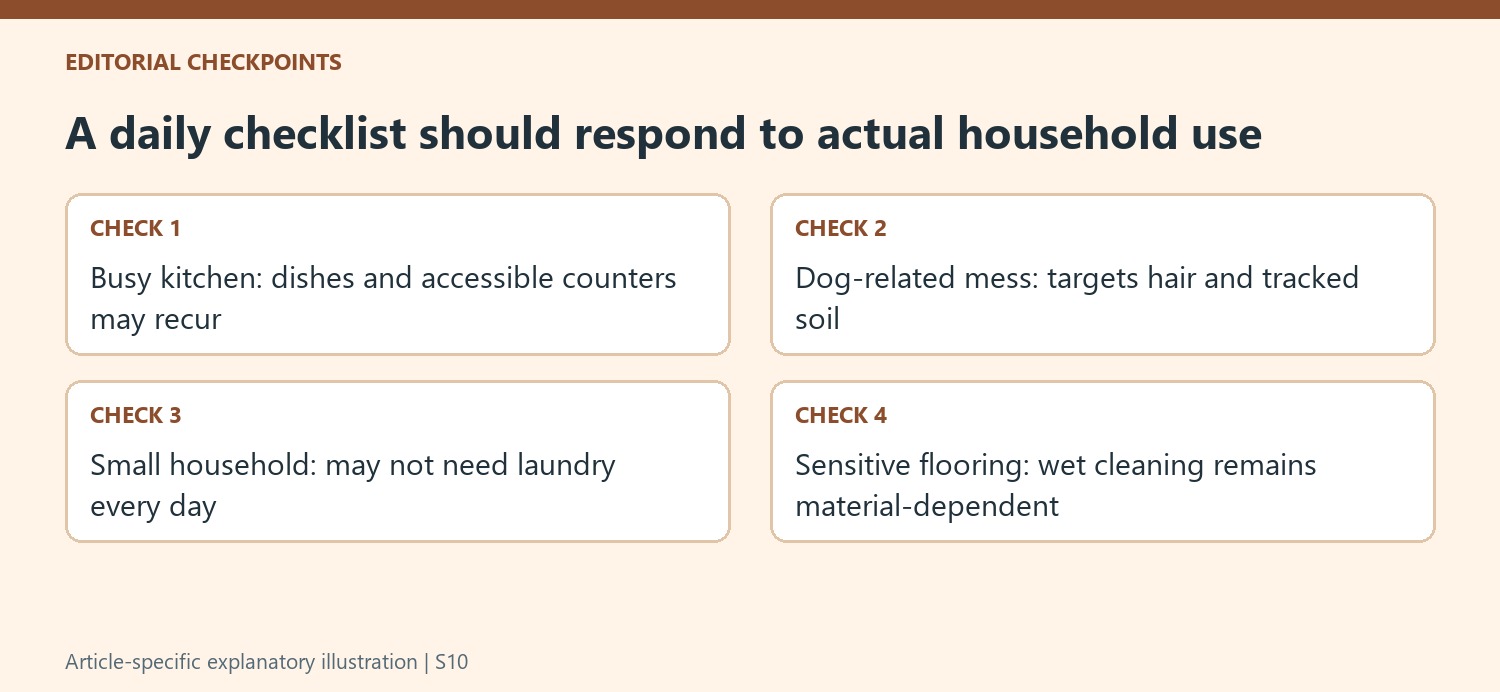
The checklist combines meal-related cleanup with high-traffic floor care and a small amount of clutter collection. That gives a practical way to choose priorities: address the spaces that received crumbs, mud or repeated handling today. Select the cleaning method for the surface, rather than assuming every floor needs the same mop treatment or every worktop accepts the same spray.
Include laundry only when the household needs it
The source describes a daily load as one option for a busy household, not a universal requirement to run an underfilled machine. Consider whether compatible laundry is ready and whether it can be dried and put away. If a tumble dryer is used, keep its lint checks in the routine. The aim is to prevent backlog without creating a queue of unfinished wet loads.
Give clutter a destination
Returning toys, papers and clothes to their proper places is different from pushing them aside before wiping. The article highlights bedrooms and bedside areas as useful small targets. Pick a destination for the collected items and stop when that limited area is reset. Keep the daily list connected to the next use of the room so it remains manageable alongside weekly cleaning.
Treat six suggestions as a menu for the actual day
Ideal Home's experts propose familiar tasks such as dishes, counters, clutter and high-traffic floors. Use those examples to select an achievable daily baseline, not a compulsory full-house routine regardless of use. A person living alone may not generate a sensible daily laundry load, while a busy household may need several dish-handling stages. Match frequency to the actual work instead of copying another home's output or its most intensive example.
The article's floor discussion includes one contributor who cleans frequently because of a dog. Preserve that context rather than turning it into a claim that every floor must be wet-mopped every day. Pet hair, tracked mud and crumbs can justify targeted dry pickup or spot care under the flooring instructions. A daily inspection helps select the necessary action without repeatedly exposing a moisture-sensitive surface to an unneeded treatment.
Make the repeatable routine compatible with each surface
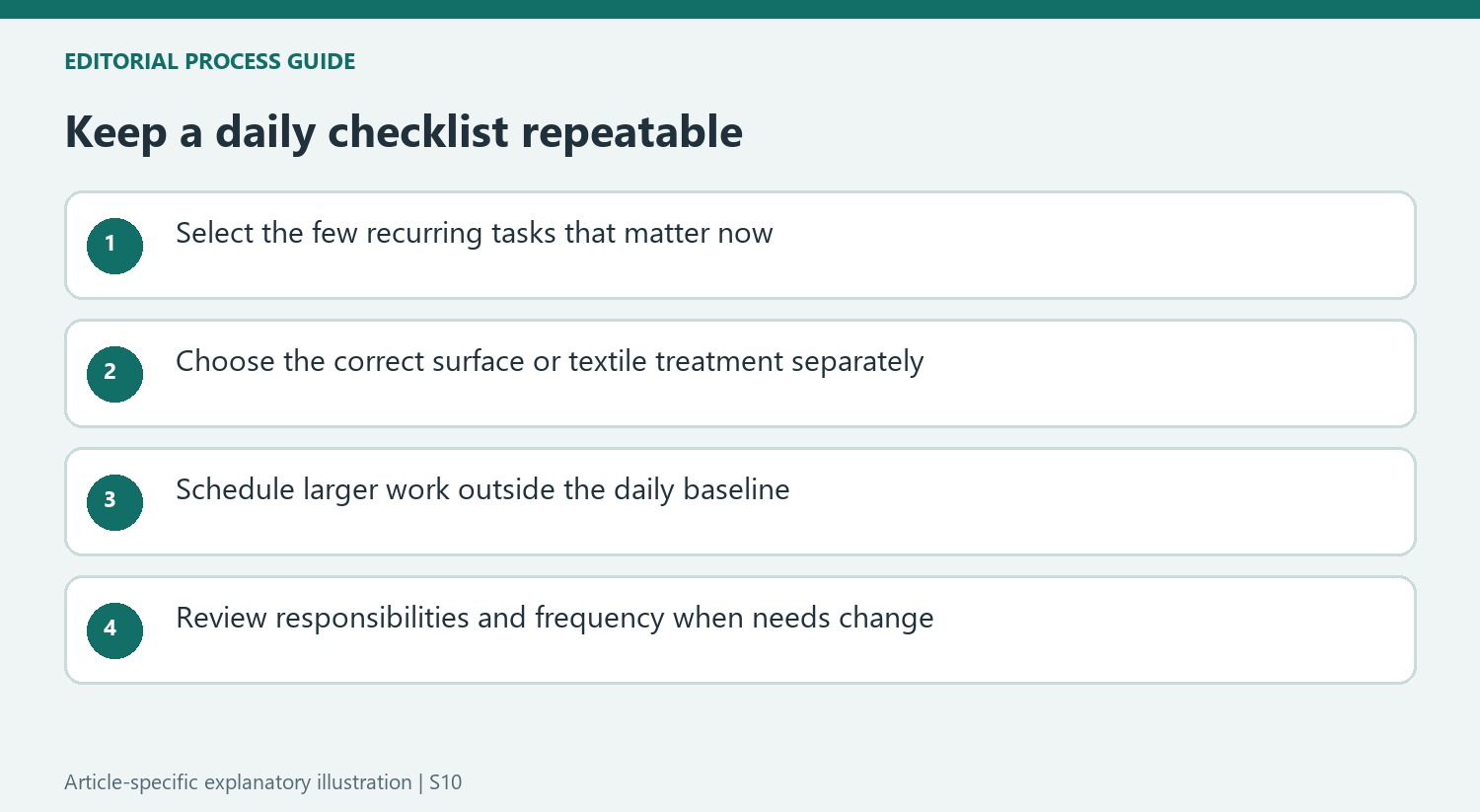
For kitchen counters, the source emphasizes that product suitability matters. Identify the actual material and current care directions before using a convenient general spray. A daily task repeated with an incompatible cleaner can be more damaging than an occasional mistake. Use the appropriate cloth, product and completion steps even when the cleaning itself takes only a few minutes. A quick wipe and a validated disinfection process should remain distinct descriptions.
Dishes and laundry also need more than a scheduling reminder. Follow appliance, textile and product directions, including the dryer's maintenance requirements where relevant. Putting a load on the list does not decide whether the textiles belong together or how they must dry. Keep planning separate from treatment selection so the habit makes the job easier to start without bypassing the information needed to carry it out correctly.
Keep the list helpful when the household changes
The guide separates daily tasks from weekly and larger monthly work. Use that structure to avoid inflating every evening reset with a new deep-cleaning project. If a daily clutter hotspot repeatedly returns, consider whether its items have usable storage rather than simply adding more minutes of tidying. A small recurring obstruction may reveal an organizing problem that repeated surface wiping cannot solve.
Review the routine when schedules, occupancy or capacity change. The article presents the potential sense of order as expert opinion and household experience, not a guaranteed psychological outcome for every reader. Leave room to move tasks and share responsibility appropriately. A sustainable checklist records what needs attention, uses methods compatible with the home and makes the next day easier; it does not need to reproduce every example or measure success by an immaculate appearance at all times.
References
- A daily cleaning checklist – 6 cleaning tasks you should be doing every day, according to experts. Ideal Home; Lauren Bradbury.
A few routine actions can restore useful spaces without making each day a deep-cleaning appointment.


Leave a Comment
Comments (0)