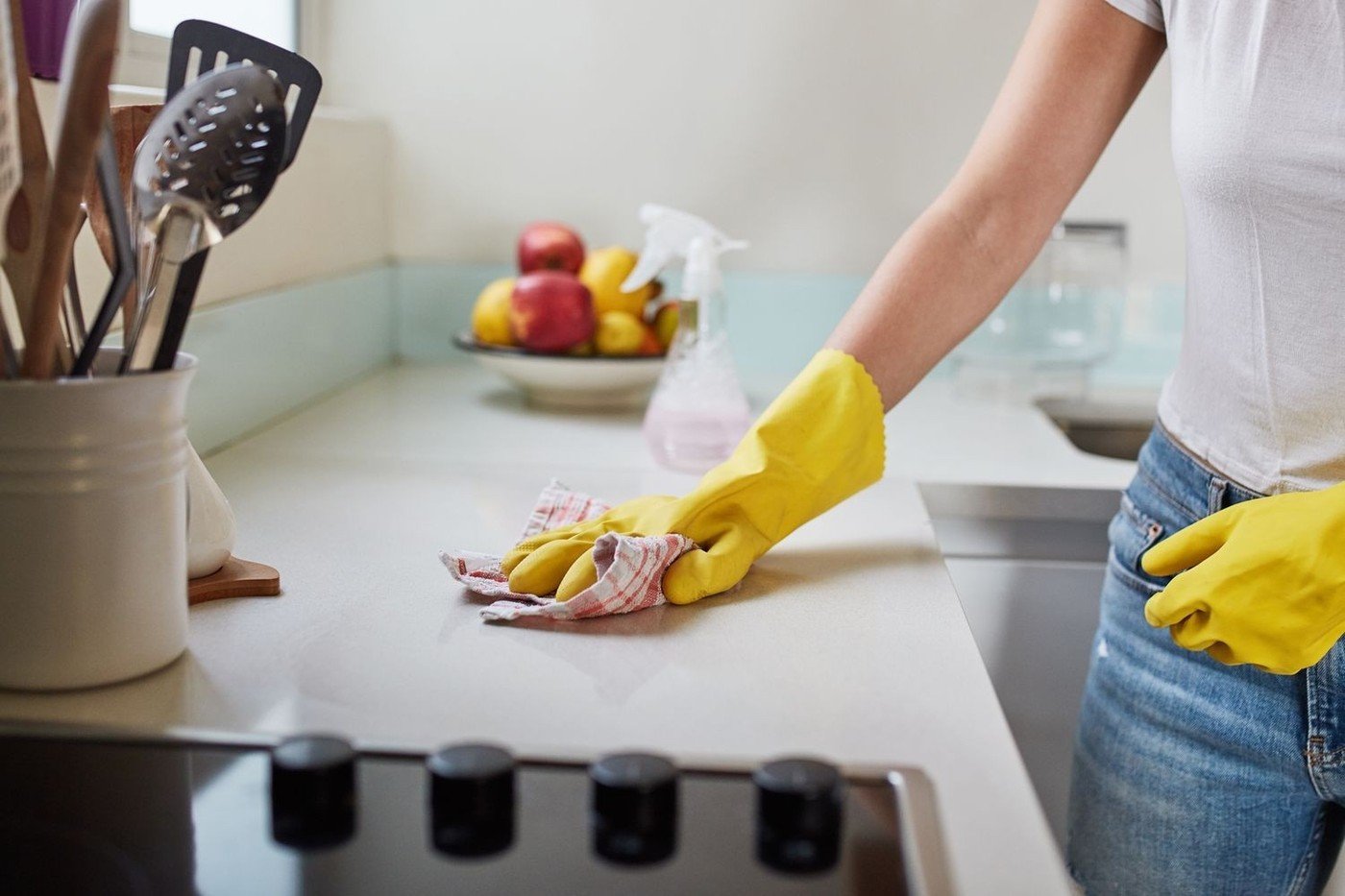
Use the available minutes deliberately
Real Simple gathers short reset routines for rooms such as kitchens and living spaces. The kitchen example begins with dishes so the counters become accessible, then deals with remaining piles and a wipe-down. Living-room work focuses on returning stray objects, arranging textiles and clearing frequently used surfaces.
Keep the goal narrow
A 10- or 15-minute period is useful for restoring order without letting the task expand indefinitely. It is not a substitute for every deeper cleaning job. Choose a small group of priorities and repeat the routine consistently, adjusting for the day's mess. Several household members can share the work, but each still needs a clear task to avoid merely moving clutter between rooms.
Match the reset to the room that needs it
Real Simple's bathroom example focuses on everyday splashes, frequently touched controls, and a fresh hand towel, while the bedroom example returns clothes and other objects to their proper places. The entryway reset gathers dropped shoes, coats, bags, and papers. These are room-specific ways to restore ordinary function. Use suitable cleaning products and separate cloths where needed rather than transferring a bathroom wipe to a kitchen surface simply because the session is short.
Give recurring clutter a destination
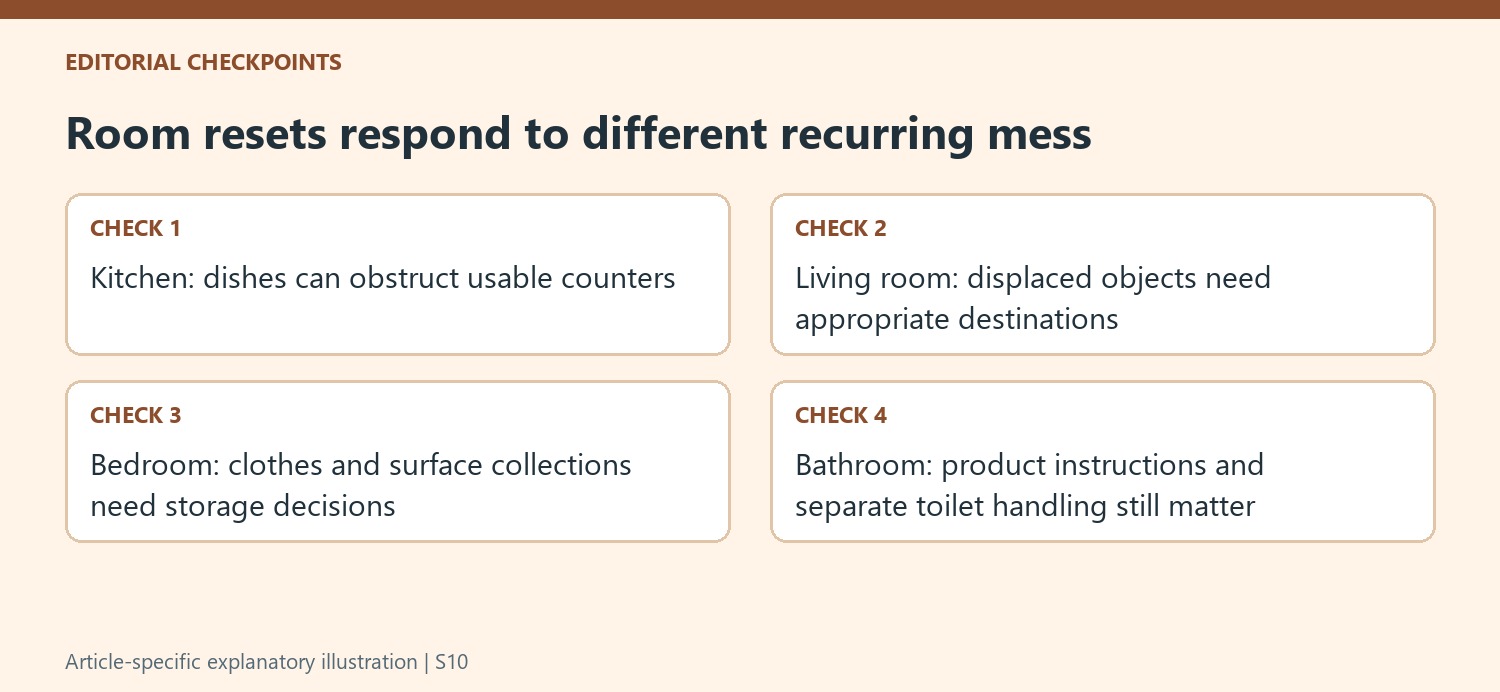
A quick reset works better when objects have somewhere to return. If the same pile appears on a bedroom surface every day, identify what it contains and establish a useful storage place instead of moving it out of sight temporarily. Laura Wittmann's examples include clearing counters through dish handling, while Jennifer Yang emphasizes collecting misplaced objects in living areas. Assign the household a few definite actions and finish those before adding more. The routine maintains order between larger cleaning appointments; it does not eliminate the need for periodic appliance care, thorough bathroom work, or the time required by a product label.
Match the reset to how the room collects ordinary mess
Real Simple's room examples identify different patterns: dishes occupy kitchen counters, mugs and toys collect in a living room, clothes gather in a bedroom and incoming objects fill an entryway. Use the pattern to select a useful short reset. One room may need objects returned more than it needs a spray cleaner. Another may have actual spills that require compatible soil removal before its tidy appearance means it is ready for use.
Keep the ten-to-fifteen-minute description as a planning scale rather than a result guarantee. The article gathers professional preferences, not a controlled test of identical homes. A larger mess or a person needing a slower pace can require a different duration. Define the practical endpoint, such as an accessible worktop or a clear walkway, so the selected room has a useful outcome even when the entire house remains outside that session.
Give repeated clutter a practical home
The source's bedroom and living-room suggestions emphasize putting objects back where they belong. If the same items repeatedly remain on the surface, check whether that destination actually works. A basket or shelf that is inaccessible during ordinary use can make the nightly reset harder than necessary. Creating an appropriate location is an organizing decision that supports later cleaning by keeping the surface reachable without repeated temporary piles.
Shared areas need agreement about both belongings and responsibilities. Invite appropriate help without moving or discarding another person's possessions unilaterally. A room reset can return toys, coats or dishes to accessible places while leaving broader sorting for a separate agreed task. The source's positive language about rest and mood describes potential experience, not a guarantee that every tidy bedroom resolves sleep problems or that visible clutter carries the same meaning for everyone.
Keep bathroom and food-area methods separate
The article includes convenient disinfecting-wipe suggestions for bathroom surfaces. Use the actual product's permitted surfaces, wet contact requirements and disposal directions rather than a single quick swipe treated as proof of disinfection. Keep toilet handling separate from the sink and food-area cleaning tools. A small room still contains several surfaces and exposure levels, so speed should not erase the distinction between them.
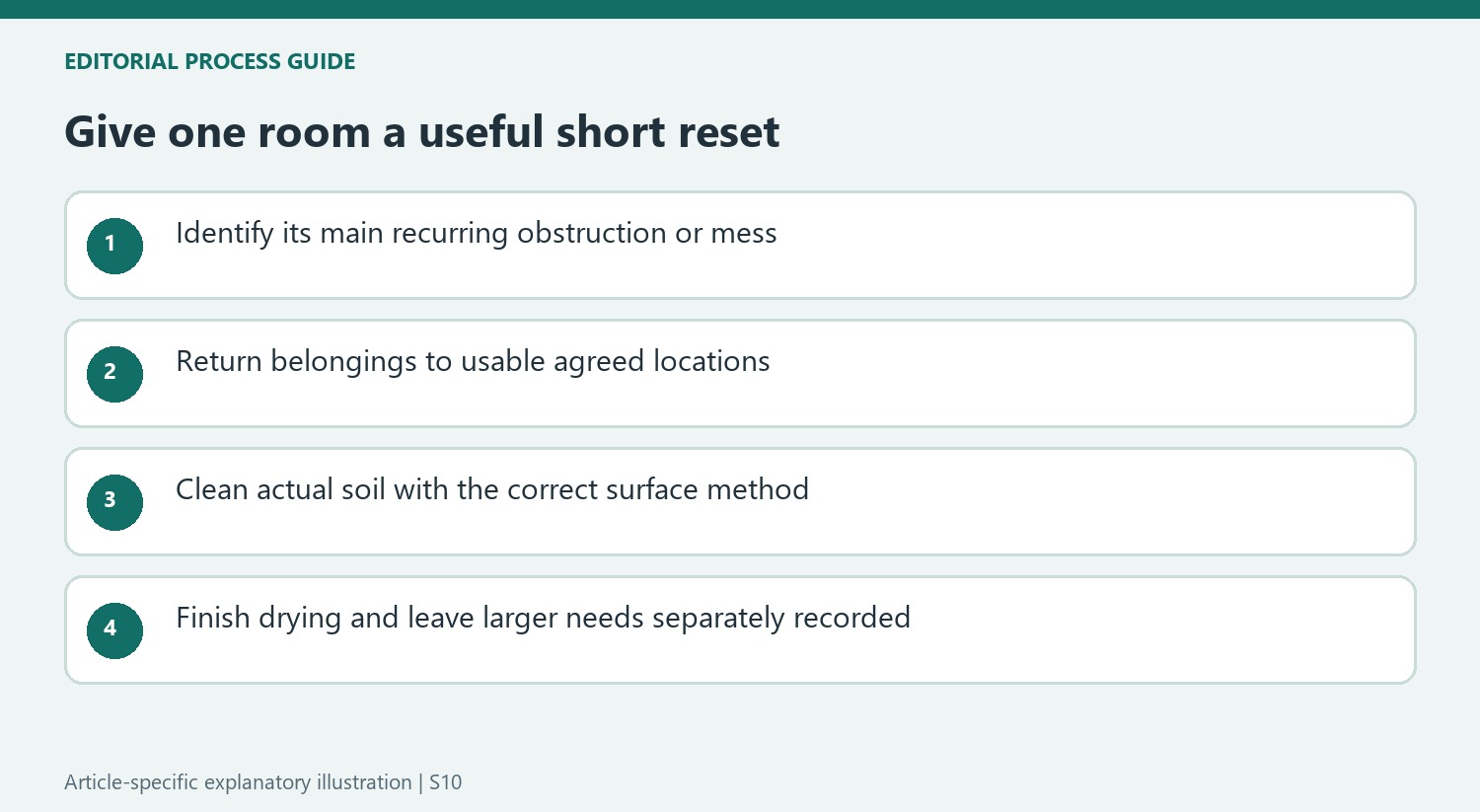
For entryway floors and kitchen counters, choose the material's appropriate care instead of automatically adding wet mopping or an all-purpose spray at the end of every reset. Complete required drying or residue removal before use resumes. A well-bounded room session can combine returned objects, suitable local cleaning and a clearly recorded larger need. That makes the daily habit repeatable without pretending that the same cloth, product or brief timer provides a complete procedure for every room.
References
- 5 Quick Ways to Tidy Your Home When You Only Have 15 Minutes. Real Simple; Wendy Rose Gould.
Real Simple gathers short reset routines for rooms such as kitchens and living spaces. The kitchen example begins with dishes so the counters become accessible, then deals with remaining piles and a wipe-down. Living-room work focuses on returning stray objects, arranging textiles and clearing frequently used surfaces.


Leave a Comment
Comments (0)