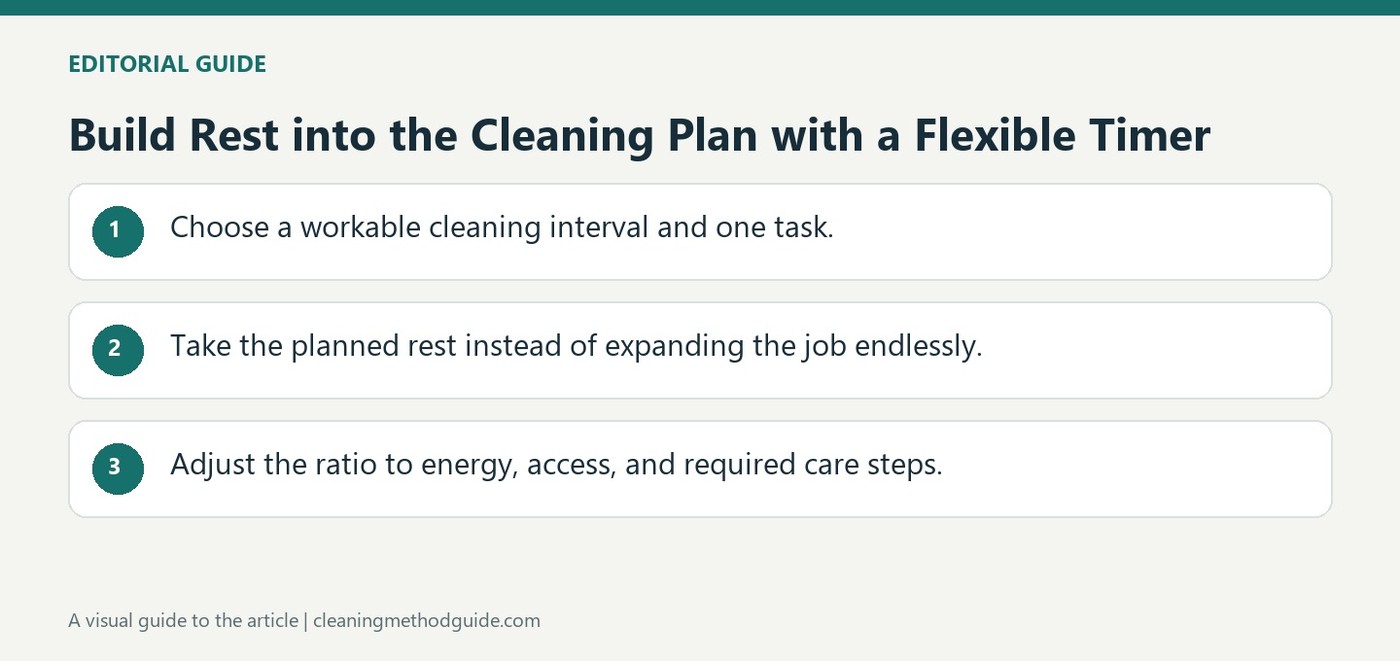
Homes & Gardens explains the 20/10 cleaning method as twenty minutes of focused work followed by a ten-minute break. Experts describe the rhythm as useful for larger spaces or detailed jobs, because the next rest point is decided before the task begins.
The article explicitly says those numbers can be reduced for limited energy, pain or other constraints. Choose a smaller task and a shorter interval if needed rather than forcing the original ratio. A repeatable schedule should preserve a clear pause and realistic goal, not turn a suggested timer into another obligation.
Give the first block a specific job
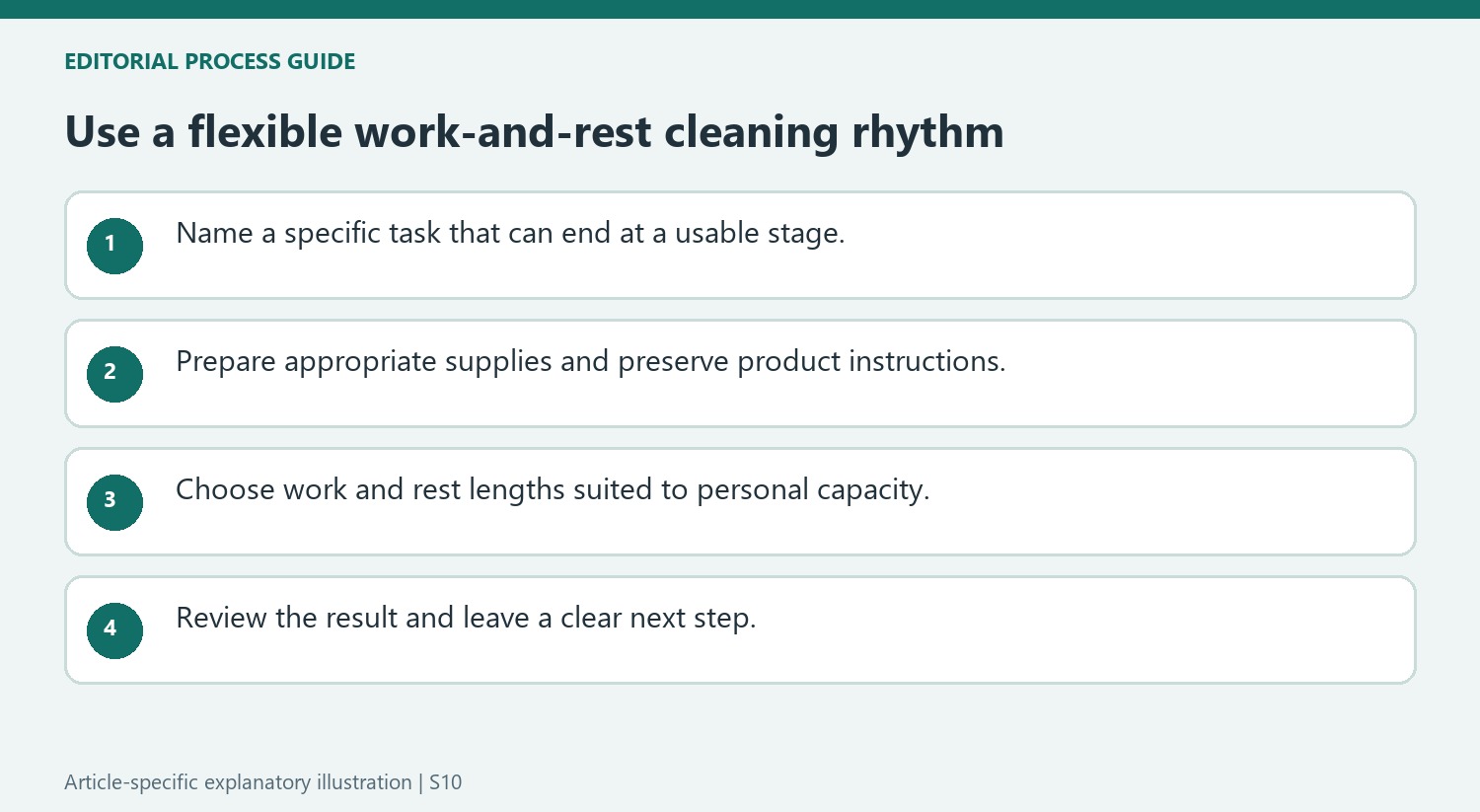
Galia Ivanova recommends deciding the work in advance and assembling the supplies so that the timer is not spent looking for a cloth. Alex Varela favors a named purpose such as wiping countertops over an undefined goal of cleaning the entire kitchen. That makes the next rest point predictable and the completed work visible. Large shared rooms can be divided into clutter removal, suitable surface care, and floor work across separate appointments.
Adjust the rhythm to the person and task
The article explicitly allows shorter work intervals or different breaks for pain, fatigue, and other limits. Its suggested ratio is a starting framework rather than a target that must be endured. Stop at a usable stage, keep walkways clear, and make sure any product still receives its labeled handling and contact time. A pause does not justify leaving a hazardous setup unattended. Review whether the selected block was realistic before scheduling the next one. The method can also give mentally tiring decisions a boundary, but its reported usefulness is not a medical claim or a guarantee that it suits every household.
Choose a block that ends at a usable stage
The source favors named tasks over a broad instruction to clean a room. Before starting the timer, decide what can be completed and left in ordinary use. Clearing one section of a counter or sorting one drawer can provide a clearer ending than taking everything out of a large cupboard with no time to return it.
Have suitable supplies ready, but preserve the care requirements of the actual products. A fixed timer does not change contact time, rinsing or drying instructions. If a process extends beyond the work block, plan the remaining steps explicitly so the rest period does not leave an unsafe or confusing setup for another household member.
Let the rest period provide actual recovery
The ten-minute pause is presented as part of the method rather than a reward earned only after exhausting work. Adapt both work and rest lengths to the person's circumstances. The feature explicitly allows a shorter interval, so the numbers should not become a measure of success or a target to endure despite discomfort.
Use the pause to step away from the task and reassess the next useful action. Avoid silently turning it into another round of carrying supplies or sorting a different pile. If the first block proved too ambitious, reduce the next one or stop for the day. Repeatability is more valuable than completing several cycles merely to preserve the original ratio.
Review what the timing structure actually improves
The experts describe reduced overwhelm and more consistent momentum, but these are reported practical benefits rather than a medical guarantee. Notice whether the structure helps this household begin, remain focused and finish manageable areas. A different interval or room-based approach may be more useful for a particular person or task.
Keep the completed work visible on a simple list and leave a clear next step for another appointment. Large communal rooms can be divided into separate sessions for clutter, suitable surface care and floor work. The method then becomes a flexible boundary around effort and rest, with actual material requirements and personal capacity guiding the work inside that boundary. A useful block can be repeated later without making the whole day dependent on cleaning.
References
- What is the 20/10 cleaning method? Experts say it makes tasks 'less overwhelming and more sustainable'. Homes and Gardens; Ottilie Blackhall.
Homes & Gardens explains the 20/10 cleaning method as twenty minutes of focused work followed by a ten-minute break. Experts describe the rhythm as useful for larger spaces or detailed jobs, because the next rest point is decided before the task begins.


Leave a Comment
Comments (0)