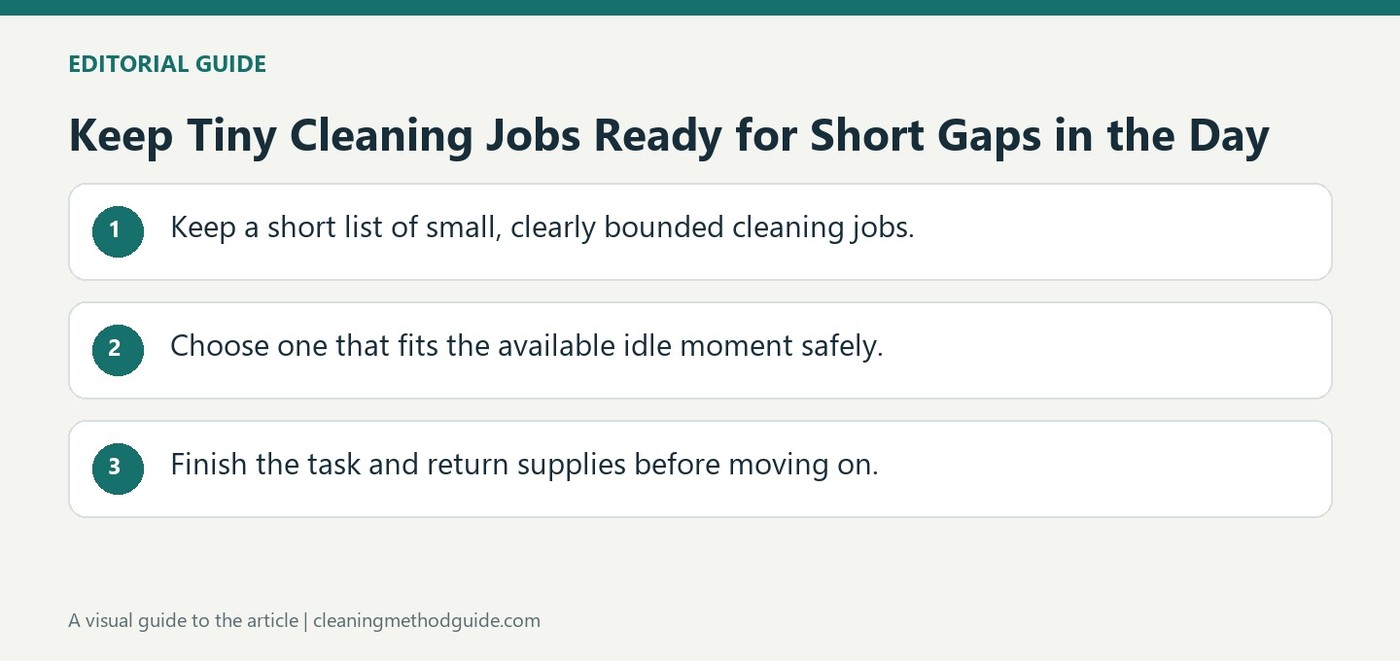
Homes & Gardens discusses cleaning tasks small enough to fit into a few spare minutes. Examples include emptying a dishwasher and dusting a frequently used tabletop with a nearby microfiber cloth. The purpose is handling limited maintenance before it joins a larger backlog.
Choose genuinely bounded jobs and avoid multitasking that distracts from cooking or other safety-critical activities. A cloth stored in a convenient place should still be clean and appropriate for its surface. Short sessions support the schedule, while jobs requiring product contact time, careful handling or uninterrupted attention deserve a separate block.
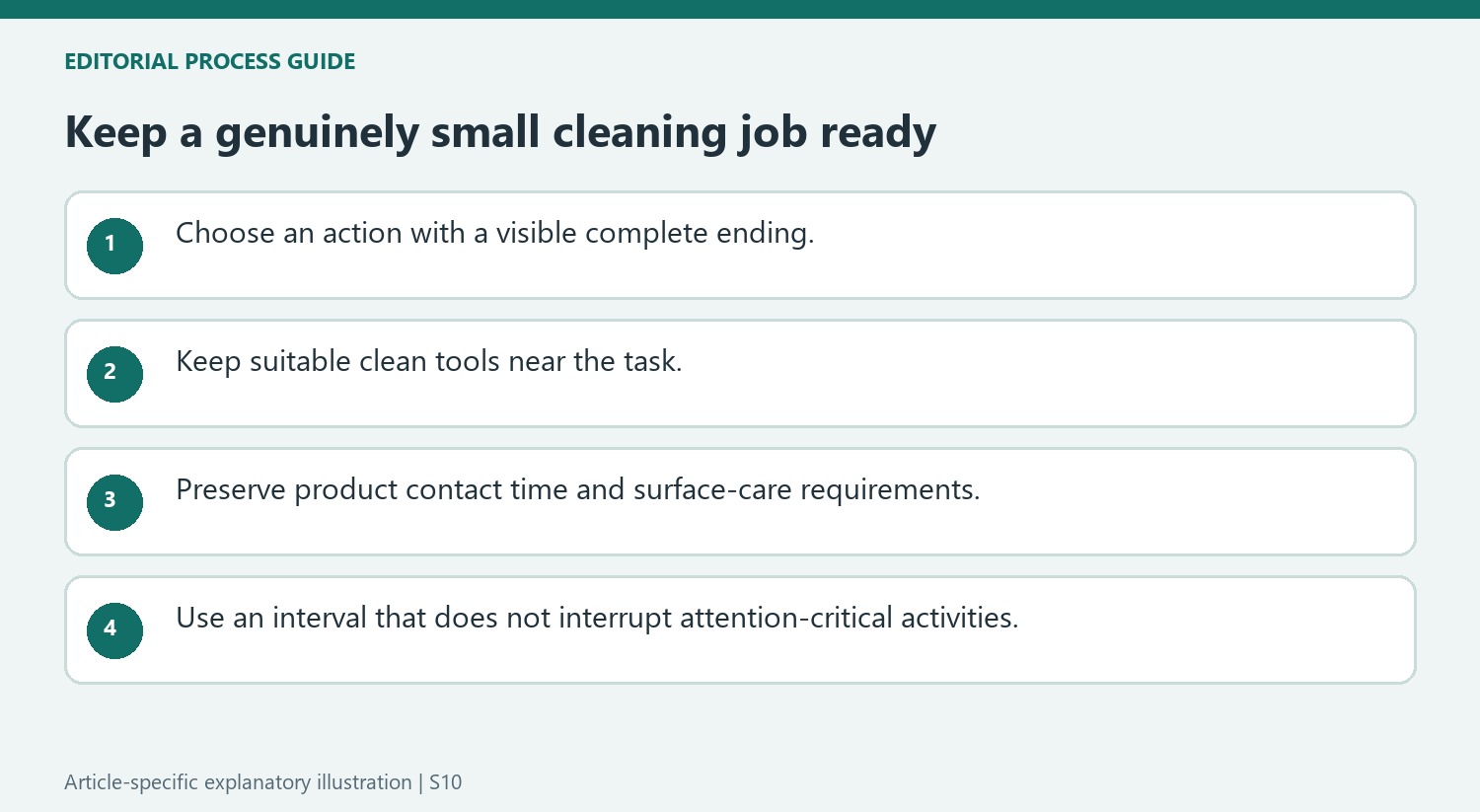
Build a list of jobs with small, observable endings
The source includes unloading dishes, collecting coffee-table clutter, and checking fridge contents as examples of micro-moments. Their common feature is a limited action that can be finished without opening several new projects. Choose one shelf, one tabletop, or one set of items with an established destination. A full appliance cycle or thorough bathroom clean may be initiated quickly, but that does not mean the complete process takes three minutes.
Keep convenience from creating cross-contamination or distraction
Karina Toner recommends nearby microfiber cloths and also stresses washing them regularly. A conveniently placed dirty cloth can simply move particles to another surface. Keep task-appropriate clean tools available and put used ones aside for laundering. Likewise, an idle interval around a meal is not a reason to step away from active cooking or handle cleaning chemicals while preparing food. Reserve jobs requiring product contact time, careful chemical handling, or uninterrupted attention for a separate appointment. The quick-task idea works as support for a broader routine, reducing small backlogs while leaving deeper maintenance and hygiene requirements intact.
Define a micro-task by its complete ending
The article's examples work when they have a clear boundary: a tabletop is cleared or a small group of dishes is put away. Decide that boundary before beginning. If the job requires emptying an entire cupboard or finding new homes for many objects, it may belong in a longer session rather than an unexpectedly expanding gap in the day.
Starting a cleaning cycle is also different from completing the whole maintenance process. The cycle may continue long after the initial preparation, with rinsing, drying or reassembly still required. Keep those later steps visible in the schedule instead of reporting the job as fully complete simply because the first action took a few minutes.
Reduce setup friction without lowering the care standard
The source recommends keeping microfiber cloths near useful locations. Choose suitable clean cloths and keep used ones separate until they are laundered. Convenience helps only if it makes an appropriate method easier; a dirty cloth moved between several rooms can undermine the purpose of the quick wipe.
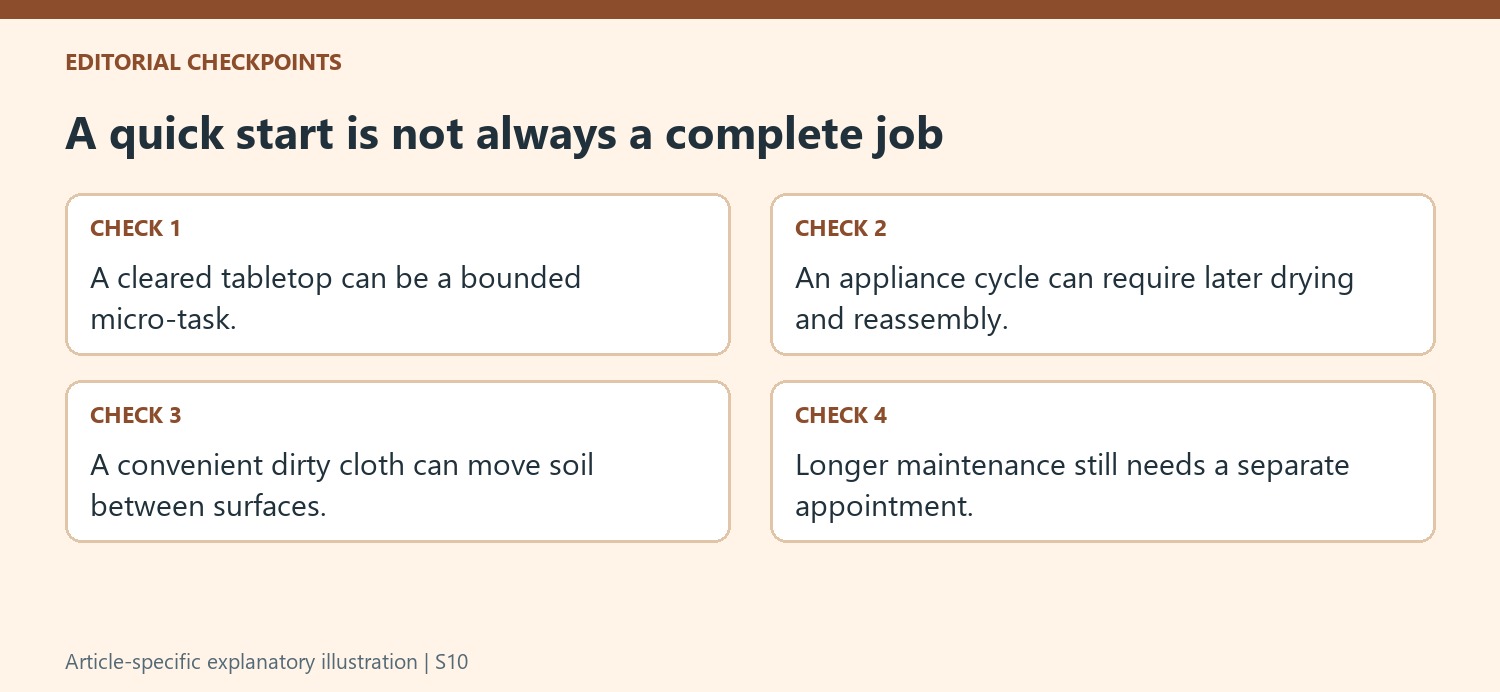
Use the actual surface and appliance instructions when selecting a product. A short time allowance does not shorten a disinfectant's labeled contact time or make direct spraying appropriate for electronics. A quick visual tidy and a hygiene procedure are different tasks, even if they involve the same visible counter. Choose the one that can be finished correctly in the time available.
Protect attention when the surrounding activity matters
The feature places some chores alongside ordinary routines, but those pairings need judgment. Do not turn a spare moment near active cooking into a reason to leave it unattended or handle cleaning chemicals beside food preparation. Select an interval where the small job can receive the attention and handling it needs.
Keep a short list of suitable tasks for that household rather than trying to fit every chore into three minutes. Review which ones consistently end cleanly and which create unfinished work. The approach can reduce small backlogs, while deeper cleaning and maintenance still receive their own appointments. Its benefit is a more accessible routine, not a promise that frequent tiny actions remove the need for all longer sessions.
References
- 6 quick cleaning tasks that take less than 3 minutes – and why the experts love these ‘micro-moments’. Homes and Gardens; Chiana Dickson.
Homes & Gardens discusses cleaning tasks small enough to fit into a few spare minutes. Examples include emptying a dishwasher and dusting a frequently used tabletop with a nearby microfiber cloth. The purpose is handling limited maintenance before it joins a larger backlog.


Leave a Comment
Comments (0)