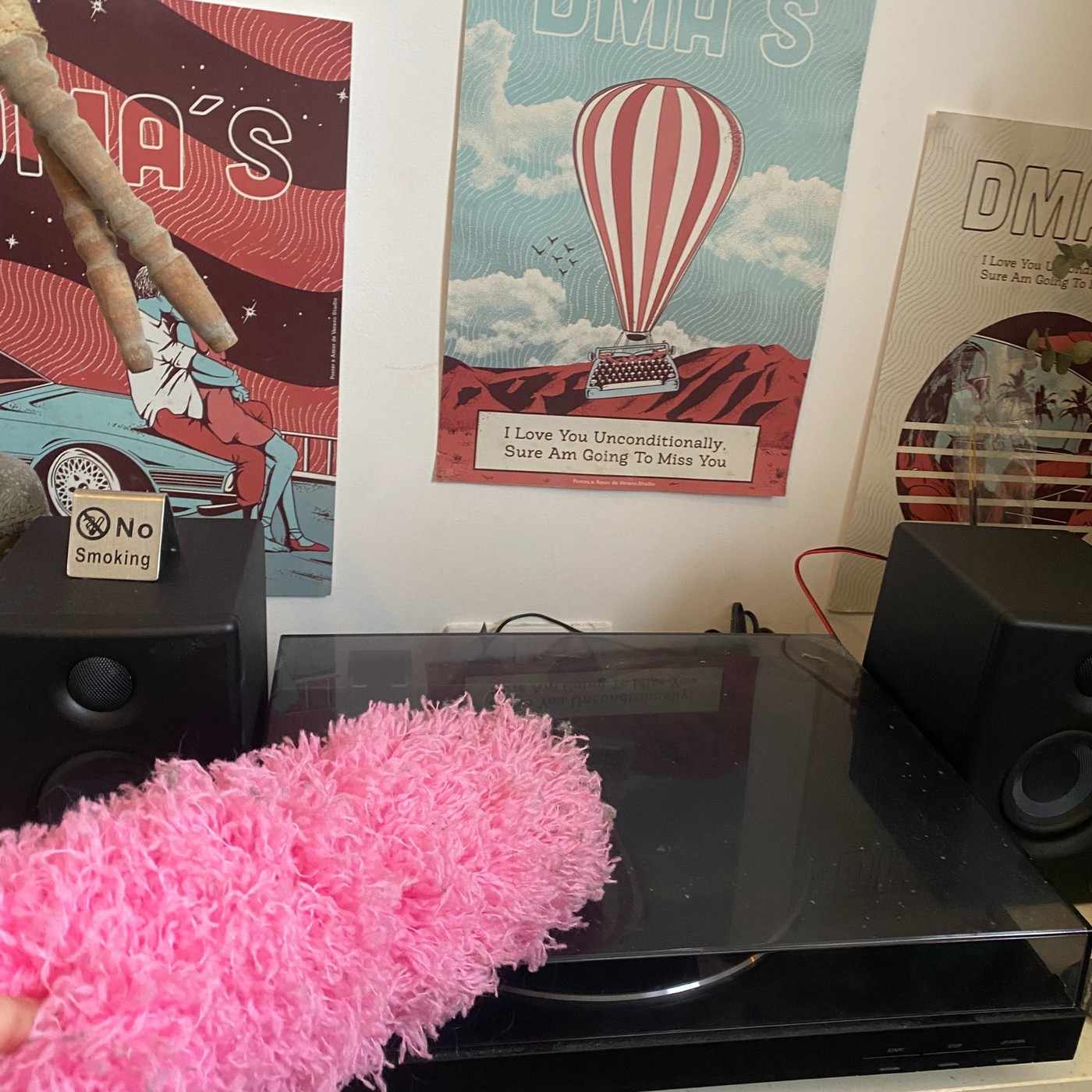
Ideal Home's account of the Five Senses Cleaning Method groups tasks by sight, sound, touch, taste and smell. The writer began with visible clutter and dust, then moved to sources of unwanted odor. A fridge clear-out could belong to more than one category.
Although the proposed method can run across five days, the writer spaced it around a busy schedule. Use the categories as prompts for noticing neglected areas, not as an instruction to taste cleaning products or questionable food. The benefit is choosing a manageable next task instead of confronting every household job at once.
Use the senses to classify observations
Kezia Reynolds began with visible clutter and dust around a record-player area, then used unwanted odors to identify attention needed in the fridge and washing machine. Those examples show how the categories can reveal a next job. A creaking door belongs more to inspection or maintenance than surface cleaning, so the resulting action may need a different tool or source of help. The labels are prompts to notice conditions, not instructions to test unknown substances by touch or taste.
Keep the order flexible and verify the treatment
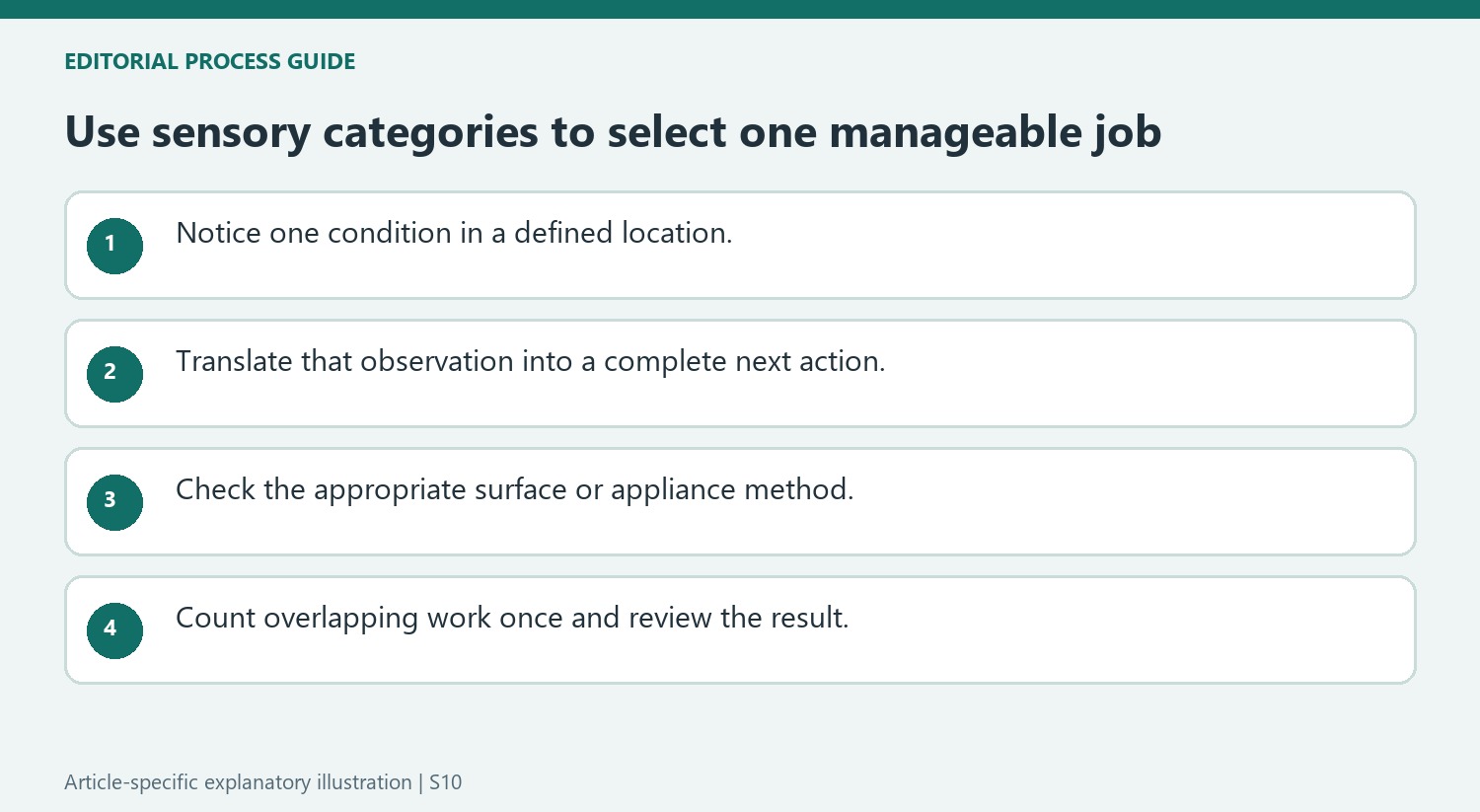
The writer spaced the method around available time instead of following five consecutive days. A fridge clear-out may address more than one category, so it need not be repeated simply to fill another box. Once a task is identified, use the relevant appliance or surface guidance rather than assuming a sensory cue diagnoses the cause. Fragrance can conceal an odor without removing its source, and a washing-machine smell can require the maker's approved maintenance process. Choose one observation, define the next action, and stop when that action is complete. The method's value is reducing indecision while preserving a practical, appropriate cleaning procedure.
Translate one observation into a bounded action
The writer's first useful category was sight, because visible clutter and dust gave an immediate place to begin. Borrow that structure by naming one location and one action, such as clearing a tabletop or removing accessible dust from a shelf. The category narrows attention; the defined action establishes when the job is finished.
Several observations may lead to the same task. A refrigerator with old leftovers does not need separate complete cleanouts for smell and the food-related category. Record the overlap and count the work once. This keeps the method from becoming a five-part obligation that creates more work than the household originally needed.
Distinguish noticing a problem from identifying its cause
An unwanted odor can suggest where to inspect, but it does not by itself diagnose the source or establish the correct treatment. The account moves from a fridge review to washing-machine maintenance. Those areas require different handling, so consult the actual equipment instructions after deciding which location needs attention.
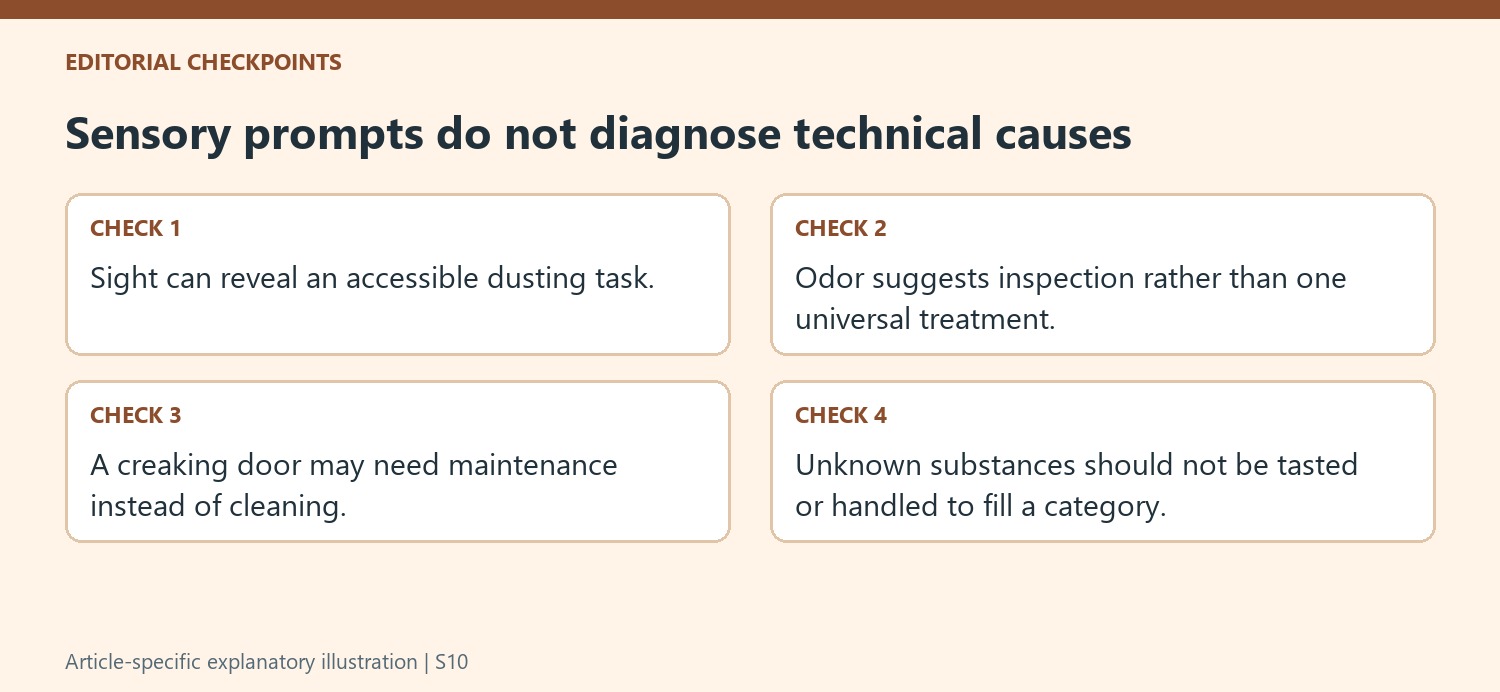
The sound category makes the distinction particularly clear. A creaking door may need maintenance rather than more surface wiping. Identify the next appropriate action and any information or help required. Do not treat sensory classification as a technical test, and do not handle unknown residues or taste questionable substances in order to complete a category.
Keep the schedule flexible and review the result
The author spaced the experiment around a busy period instead of following five consecutive days. That flexibility is part of the reported experience. Choose an interval that fits available energy, and return to the remaining observations later without assuming that a missed day invalidates the method.
After finishing one action, check whether the original issue remains rather than covering it with fragrance or adding another product automatically. Keep useful notes about appliance care or a maintenance question that still needs an answer. The source is a personal account of improved decision-making, not a controlled comparison showing the method works for every household. Its transferable value is a clearer way to select the next manageable job while retaining ordinary material and hygiene guidance.
References
- As an easily overwhelmed cleaner, I tried the 5 Senses Cleaning Method - now I know exactly where to start. Ideal Home; Kezia Reynolds.
Ideal Home's account of the Five Senses Cleaning Method groups tasks by sight, sound, touch, taste and smell. The writer began with visible clutter and dust, then moved to sources of unwanted odor. A fridge clear-out could belong to more than one category.


Leave a Comment
Comments (0)