
Homes & Gardens' experts question automatic daily vacuuming or mopping in every household. Pets, children, heavy traffic and frequent spills change the requirement, while quieter rooms may need less intervention. Fresh spills and visible debris still deserve prompt attention regardless of the calendar.
The article also raises the risk of excessive moisture or wear on finishes. Use the flooring manufacturer's method and interval as the starting point, with dry debris removal where appropriate. A schedule based on actual conditions can preserve time and materials better than repeatedly wet-cleaning a surface that does not need it.
Separate prompt spill care from scheduled whole-floor work
A visible spill or tracked-in grit should not wait simply because the next full clean is several days away. Conversely, a quiet room does not automatically need a wet mop every evening. The experts distinguish households with pets, children, and heavy use from lower-traffic conditions. Observe where dirt actually appears and choose a suitable dry-removal or spot-care method before adding unnecessary moisture across the entire floor.

Use the floor and equipment guidance together
The feature warns that repeated wet treatment can be unsuitable for finishes and discusses alternatives such as sweeping. The correct method still depends on the floor material, coating, and care instructions. Broad shopping suggestions for steam tools or powders are not permission to use them on every floor or with every vacuum. Check both the surface and equipment restrictions before introducing either. A useful schedule records the routine removal of loose debris, prompt response to spills, and less frequent deeper work as separate tasks. Adjust that schedule when traffic or household conditions change, rather than treating a quoted weekly interval as a universal rule.
Observe where the household actually creates the cleaning demand
The article distinguishes quieter rooms from routes used repeatedly by people and pets. Review the entry, kitchen and seating areas separately rather than assigning the same treatment to every floor. That makes the routine responsive to real debris and spills, while avoiding a full wet-cleaning session in a room that does not currently need one.
Traffic can change with visitors, weather or a different household routine. Reassess the schedule when those conditions change instead of treating an expert's quoted weekly interval as a permanent rule. Prompt attention to a spill remains separate from the decision about when to clean the entire floor. A useful plan can include both without equating them.
Use the least disruptive suitable method for the actual surface
The source suggests dry removal as an alternative to unnecessary repeated mopping. Confirm what tools and attachments the flooring maker permits, particularly for coated wood or delicate rugs. Removing loose particles with an appropriate method may meet the immediate need without adding moisture to the whole area.
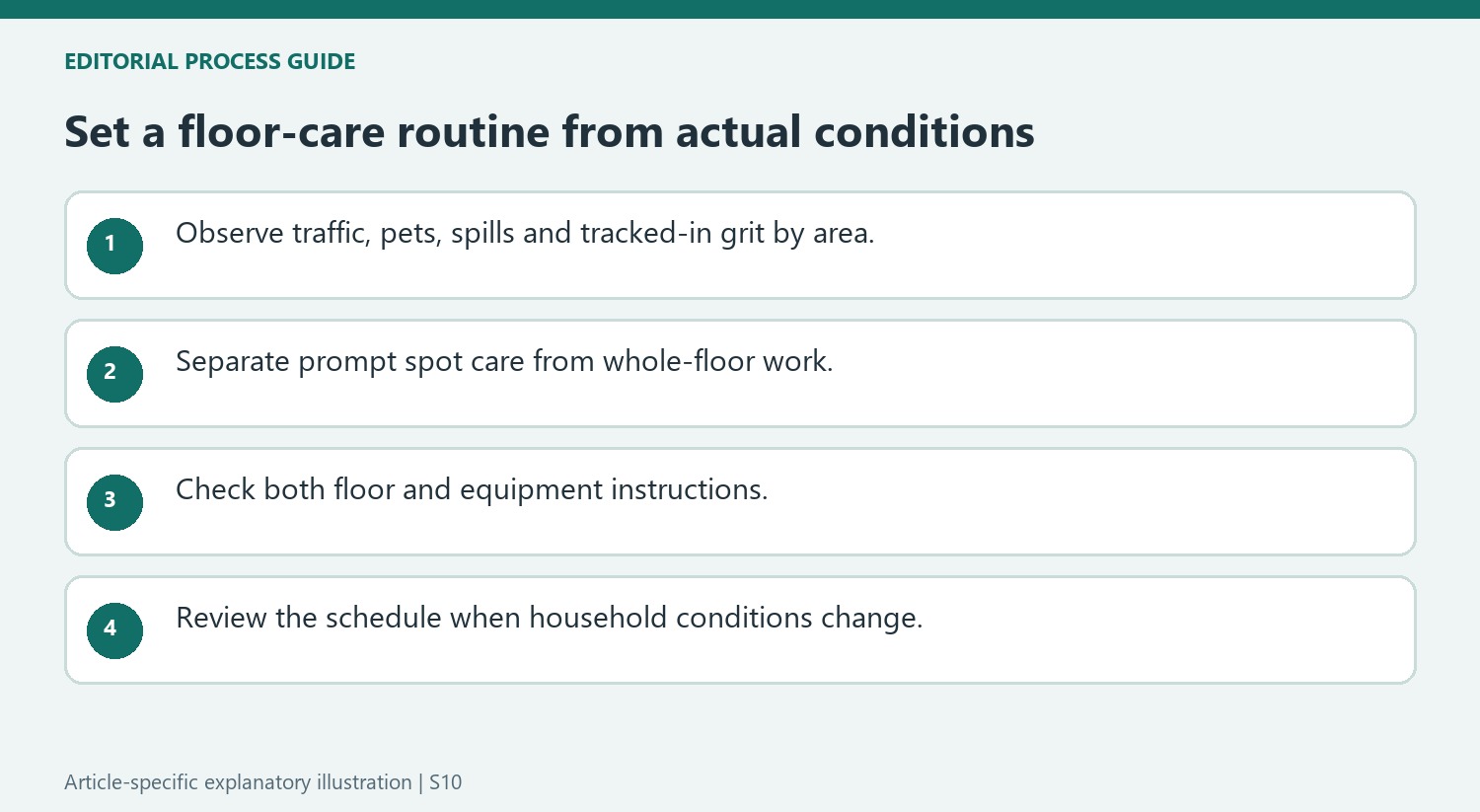
If a deeper treatment is needed, check both the floor guidance and the equipment instructions. A steam tool or powdered product appearing in a shopping list does not establish compatibility with every material, seal or vacuum. Avoid transferring a method from one example to another merely because both are described as floors. The exact finish and construction matter as much as the broad category name.
Separate appearance, odor and hygienic treatment
A shiny surface is not proof that every cleaning objective has been achieved, while an odor does not automatically call for more frequent wet mopping. Identify what needs attention before selecting the product. Any disinfection claim must come from the actual labeled use and conditions, not from a general impression of freshness.
Keep a simple record of routine debris removal, spot care and less frequent deeper work. Review whether the result is adequate and whether the surface tolerates the chosen method. The feature's useful challenge is to question unnecessary automatic daily treatment, while preserving responsive care for actual mess and the manufacturer's requirements for the flooring in the home. Keep the chosen surface guidance available so future changes in the routine can be assessed consistently.
References
- 'It's just overkill' – no, you don’t have to clean your floors every day, pros say. Homes and Gardens; Chiana Dickson.
Homes & Gardens' experts question automatic daily vacuuming or mopping in every household. Pets, children, heavy traffic and frequent spills change the requirement, while quieter rooms may need less intervention. Fresh spills and visible debris still deserve prompt attention regardless of the calendar.


Leave a Comment
Comments (0)