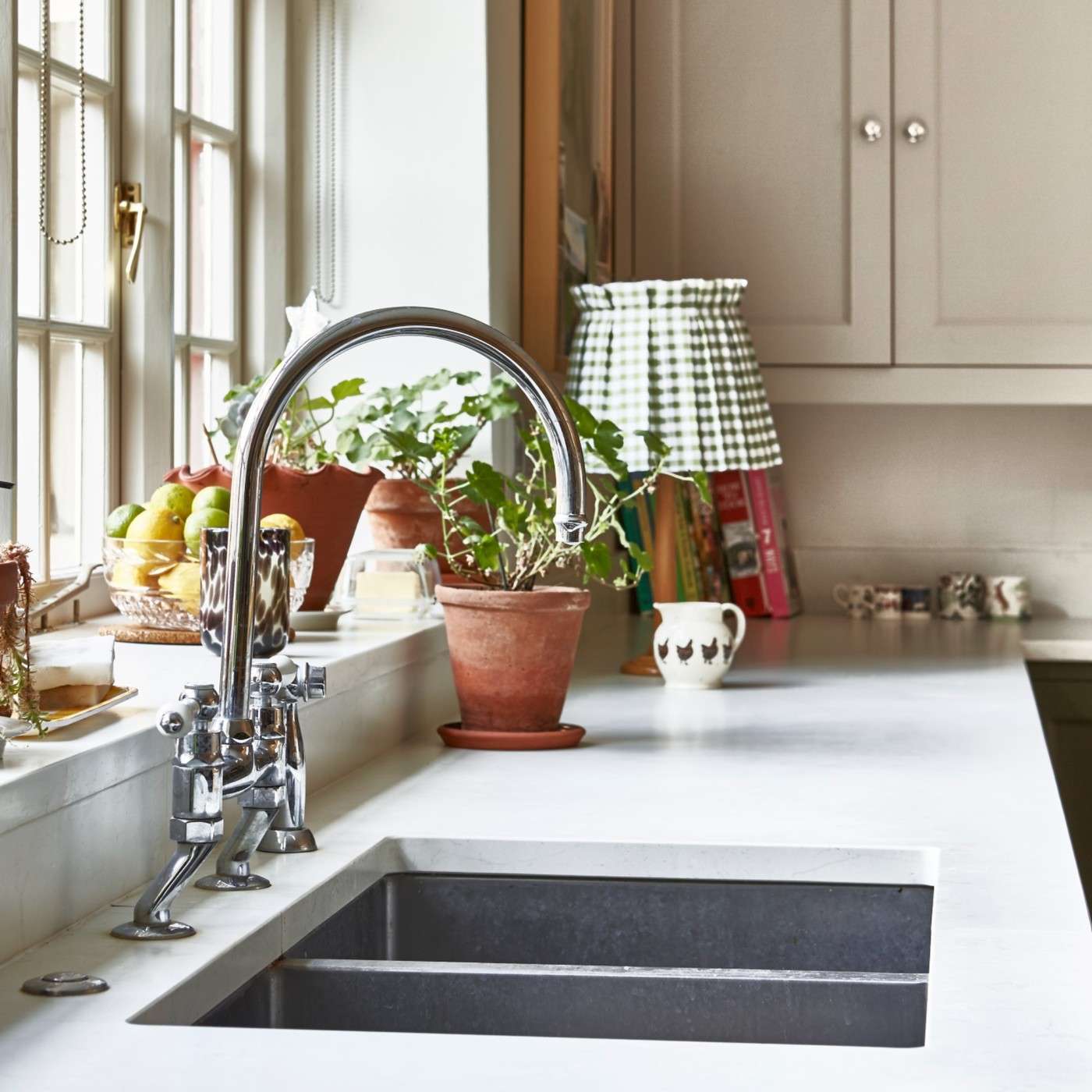
A seasonal kitchen clean works best when food storage, appliance maintenance and hidden grime are included in one organized plan.
Clear space before cleaning
Ideal Home's kitchen checklist begins with decluttering cupboards, drawers and the refrigerator. Removing expired food and unused equipment makes the remaining cleaning easier to see and reach. The guide recommends writing tasks in priority order and collecting suitable supplies before starting, instead of interrupting the work to look for products.
Work from higher surfaces downward
The checklist includes cabinet interiors, the sink, bins, dishwasher components and appliance areas that a quick daily clean can miss. It recommends cleaning higher surfaces before finishing with the floor so falling dust does not undo completed work. Cleaning methods must fit the material, and the guide specifically tells readers to check appliance care manuals. That warning matters for descaling and other treatments that may conflict with the manufacturer's instructions.
Inspect removable parts instead of relying on an empty cycle
The kitchen checklist distinguishes the dishwasher's filter, baskets, seals, and spray areas from the chamber as a whole. Follow the manual for what can be removed and how it should be cleaned; a hot cycle does not necessarily remove trapped food. The sink, taps, and hot-water equipment also have different finish and maintenance requirements. Note those separately so a general kitchen cleaner does not become an unexamined treatment for every fitting.
Return the kitchen to food preparation condition
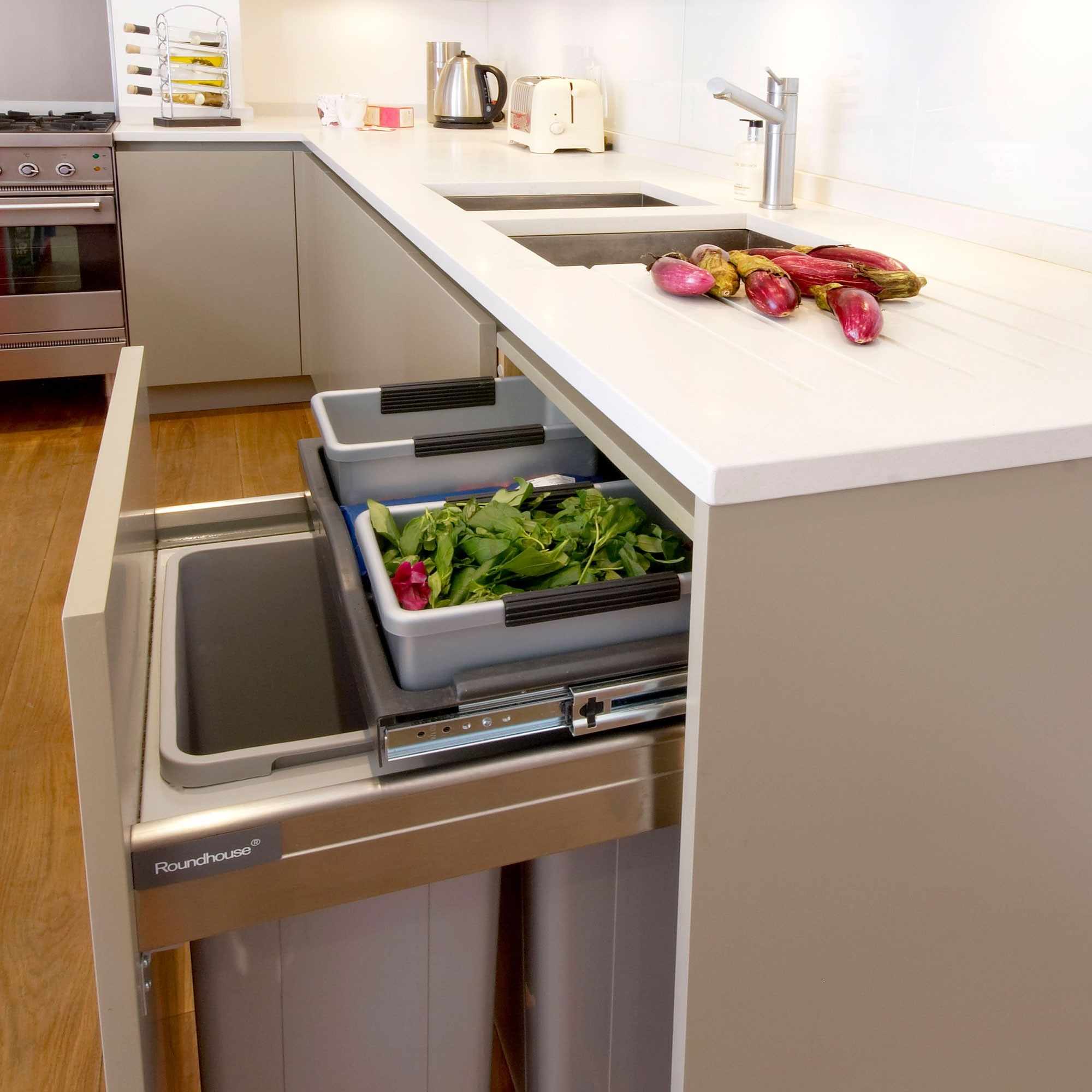
The guide's larger list is an opportunity to inspect cupboards, food containers, bins, grout, and appliance areas omitted from the daily wipe-down. Start with clear access and finish with clean, appropriately dried surfaces before returning food or equipment. If disinfection is required, use a product labeled for that purpose and follow any food-contact rinsing instructions. Treat suggested household recipes and product links as ideas to assess, not universal appliance directions. Dividing the work into complete, usable areas keeps the room functional and avoids leaving several food-storage or cooking tasks unfinished at once.
Define a complete kitchen area before starting the next one
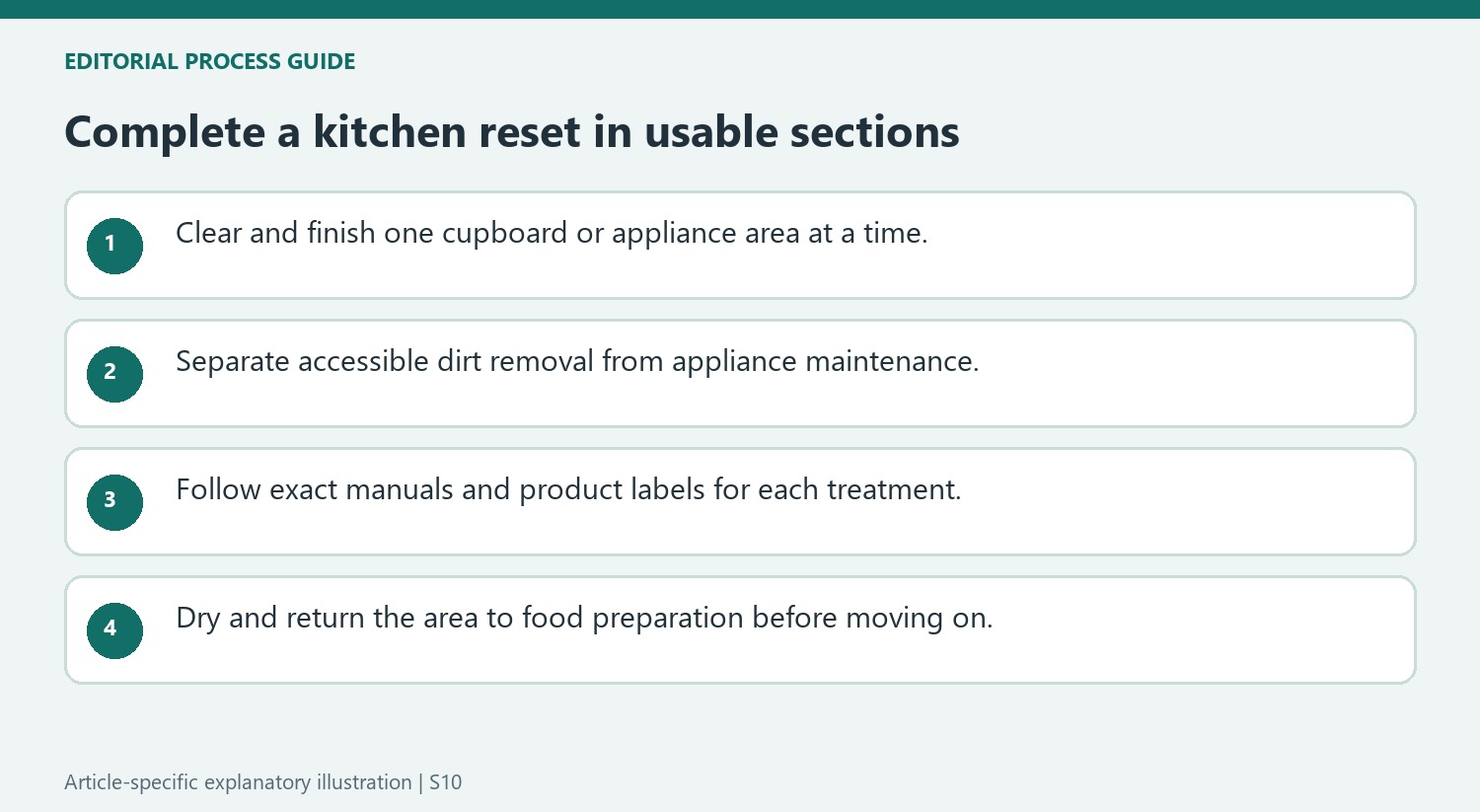
The checklist covers enough separate jobs that the room could easily become unusable if everything is emptied at once. Choose one cupboard group or appliance area that can be completed in the available time. Provide a suitable clean place for its contents, then finish the cleaning and drying before returning the items that belong there.
Use the empty space to review what actually needs to be retained. The source suggests separating frequently used equipment from objects rarely reached for. That decision improves access for the cleaning task and can make later upkeep easier, rather than returning every object to the same crowded position without checking whether it still serves a purpose.
Put hidden maintenance on a separate appliance list
The guide includes extractor components, refrigerator surfaces and smaller appliances alongside ordinary counters. Those jobs have different access and product requirements. Note the exact model and the part needing attention, then consult its instructions before removing components or choosing a descaling treatment mentioned elsewhere in the article.
Cleaning an accessible filter or tray is different from reaching into an electrical mechanism. Follow the shutdown and handling directions for the actual equipment and keep liquids away from parts not intended to be washed. A household recipe in a general checklist is not evidence that the appliance maker approves that chemical, temperature or cleaning cycle.
Finish with a kitchen ready for its next ordinary meal
The source recommends leaving floor cleaning until higher surfaces are finished. Apply the same completion principle to the area around the work: put suitable tools away, remove dirty cloths and check that food-contact surfaces are appropriately rinsed when the selected product requires it.
A clean smell does not establish disinfection, and a stronger cleaner is not automatically appropriate for every finish. Keep products separate and follow their labels. Record any maintenance that needs another session instead of improvising while the kitchen is dismantled. The larger seasonal benefit comes from reaching missed areas in a workable sequence and returning each one to normal use.
References
- The ultimate kitchen spring cleaning checklist – experts share 13 steps for a proper deep clean. Ideal Home; Tara King; Jenny McFarlane.
A seasonal kitchen clean works best when food storage, appliance maintenance and hidden grime are included in one organized plan.


Leave a Comment
Comments (0)