
Homes & Gardens' dorm guide recommends preparing cleaning supplies alongside ordinary college essentials. Microfiber cloths, a suitable duster and a handled caddy provide a portable starting point. A compact vacuum may help with crumbs where the accommodation does not supply one.
Choose products for the actual room materials and check residence rules before bringing appliances or chemicals. Keep bedding care, floor maintenance and shared-bathroom arrangements as separate scheduled tasks. A small accessible kit supports regular upkeep without requiring a student to buy every product in a comprehensive household checklist.
Inspect the areas a quick wipe misses
The dorm-room guide specifically mentions shelves, drawer interiors, the mini fridge, and space underneath furniture. Check these before unpacking everything over them. Dust accessible surfaces first, then vacuum suitable flooring and crevices with the appropriate attachment. A handled caddy can keep a small kit portable, but it should contain products permitted by the accommodation and the surfaces being cleaned. Agree with roommates which supplies and responsibilities are shared.
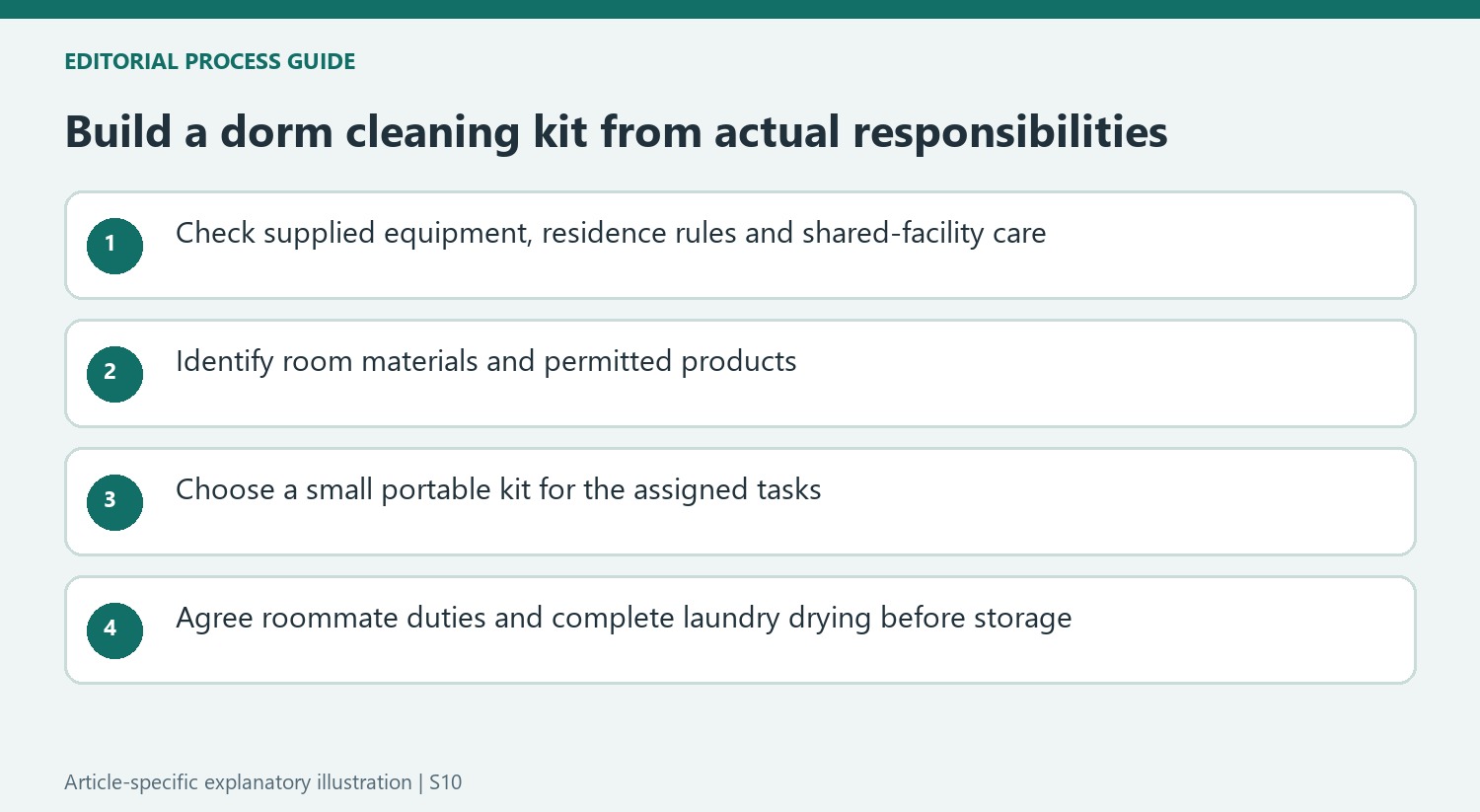
Keep institutional rules and fabric care in the plan
The article covers bedding, flooring, and bathrooms as distinct tasks. A dorm mattress, fitted furniture, or supplied curtains may have maintenance restrictions set by the residence, so consult those instructions before applying a treatment. Do not assume that household recipes or broad claims about natural ingredients replace an approved disinfectant or stain procedure. Use the bedding care label and available laundry facilities to establish a routine, and dry items fully before making the bed. For a shared bathroom, identify what the residence staff handle and what students must maintain. A portable starter kit is useful only when paired with clear, appropriate tasks.
Find out what the residence supplies and maintains first
Homes & Gardens' dorm guide lists a broad range of tools, but a student does not need to purchase every item before learning the accommodation's arrangements. Check which vacuum or mop is supplied, what products are permitted and who handles shared facilities. A small private washroom and a corridor bathroom maintained by staff create different responsibilities. Record those differences before turning a comprehensive household shopping list into an unnecessarily large dorm kit.
Supplied mattresses, curtains, fitted furniture and small appliances can also have institution-specific maintenance restrictions. Ask for the appropriate instructions rather than applying an improvised treatment to property whose materials are uncertain. A visible stain or recurring damp area may need reporting to residence staff. Household recipes in a lifestyle article do not establish that a student should treat every unknown mark independently or that a quick fragrance application resolves an underlying problem.
Use the move-in inspection before belongings block access
The source calls attention to shelves, drawer interiors, the mini fridge and areas beneath furniture. Inspect accessible locations before placing possessions over them, using appropriate tools for dust and ordinary debris. Do not shift heavy fitted furniture or open appliance components without permission and a suitable method. The advantage of checking early is access, not an invitation to turn a simple move-in reset into unsupervised restoration work.
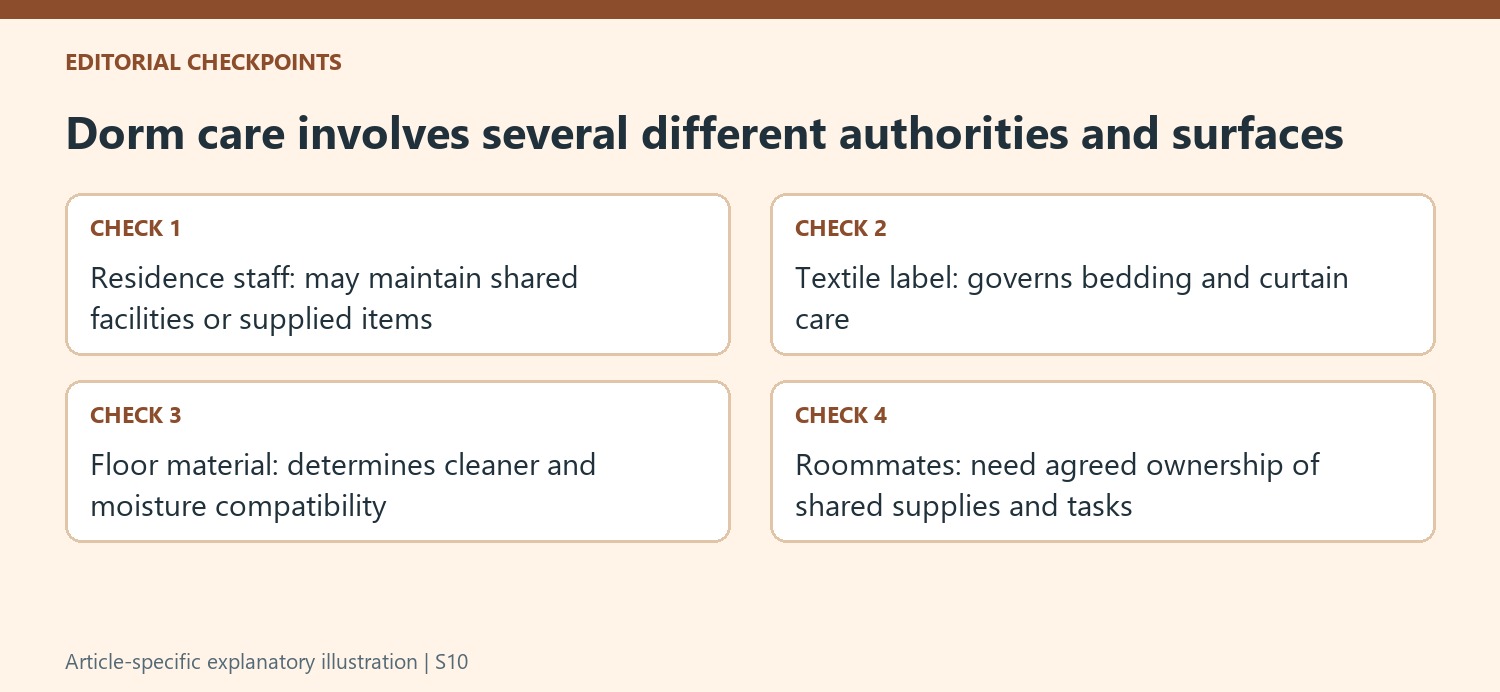
Choose products from the actual surface instructions and keep ordinary cleaning separate from disinfection. Broad claims that vinegar or a paste kills mold or bacteria should not replace an approved procedure. Do not spray a supplied mattress widely with peroxide merely because a general guide includes that suggestion; follow its textile and residence requirements. Likewise, floor materials can exclude acid or excess water even when an all-room recipe appears convenient for a compact space.
Build the repeating plan around laundry and shared use
The article distinguishes bedding, floor care and bathroom work, which makes a useful small routine. Sort textiles by their labels and practical load needs, then allow full drying before making the bed or storing towels. A split hamper can assist organization without determining every washing permission. Check available laundry facilities and the drying route so the routine ends with usable textiles rather than a damp pile waiting for an unavailable appliance.
Agree which supplies and tasks roommates share, maintaining separate appropriate handling for bathroom and food-area tools. Keep cleaners labeled and stored under residence rules instead of relying on a portable caddy as permanent unsecured storage. The source's fragrance and wellbeing suggestions remain optional personal preferences, not evidence of clean air or a guaranteed study benefit. A practical starter routine focuses on identified responsibilities, compatible tools and completed care tasks without requiring a full household product collection in one small room.
References
- The complete dorm deep-clean guide – expert tips and step-by-step checklists. Homes and Gardens; Chiana Dickson.
Homes & Gardens' dorm guide recommends preparing cleaning supplies alongside ordinary college essentials. Microfiber cloths, a suitable duster and a handled caddy provide a portable starting point. A compact vacuum may help with crumbs where the accommodation does not supply one.


Leave a Comment
Comments (0)