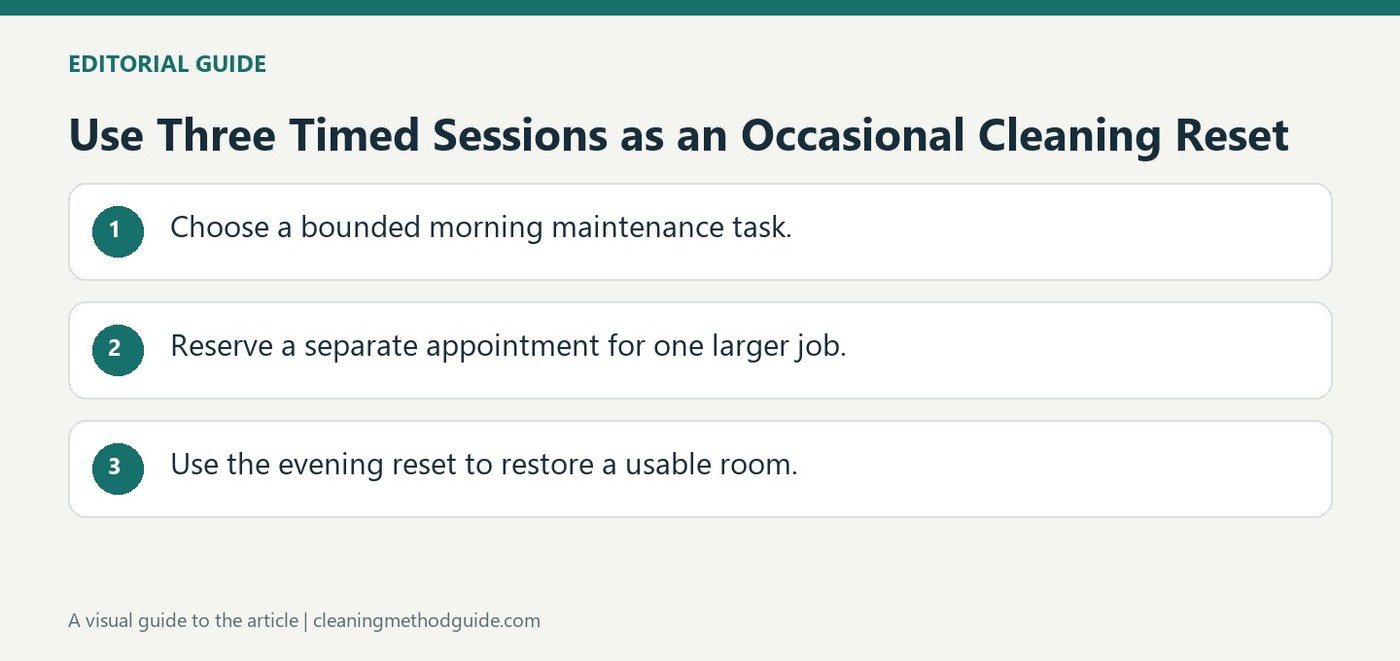
Ideal Home's account of the 3-30 method divides cleaning into three thirty-minute sessions. A morning block handles routine work, an afternoon block tackles a larger task, and an evening block puts the home back in order. Together they still amount to ninety minutes of work.
The writer used the method for a spring-cleaning week rather than presenting that time commitment as essential every day. Choose tasks that fit each block and your available energy. Cleaning a fridge or sorting seasonal clothes can become a focused appointment instead of competing with every other household job at once.
Choose different jobs for the three appointments
The source divides the day into a morning routine, a larger afternoon task, and an evening closing reset. That can prevent ordinary dishes or laundry from consuming the same block reserved for an overdue project. Choose a bounded task for each appointment and include setup and putting tools away in the time estimate. The three sessions still total an hour and a half, so this is a way to distribute work rather than make the work disappear.
Use the account as a trial for seasonal planning
The writer tested the method during a spring-cleaning period and reported finishing earlier than expected. That is a personal result, not a promised completion date for another home. Adjust the number of sessions, room order, and frequency to the household's schedule and energy. Appliances and materials also retain their own cleaning restrictions: a routine's time block does not establish that a steam tool or chemical suits a particular fridge, oven, or floor. If a job needs longer than the selected block, pause at a safe, usable stage and schedule the remaining steps explicitly instead of rushing to protect the timer.
Read three sessions as a substantial chosen commitment
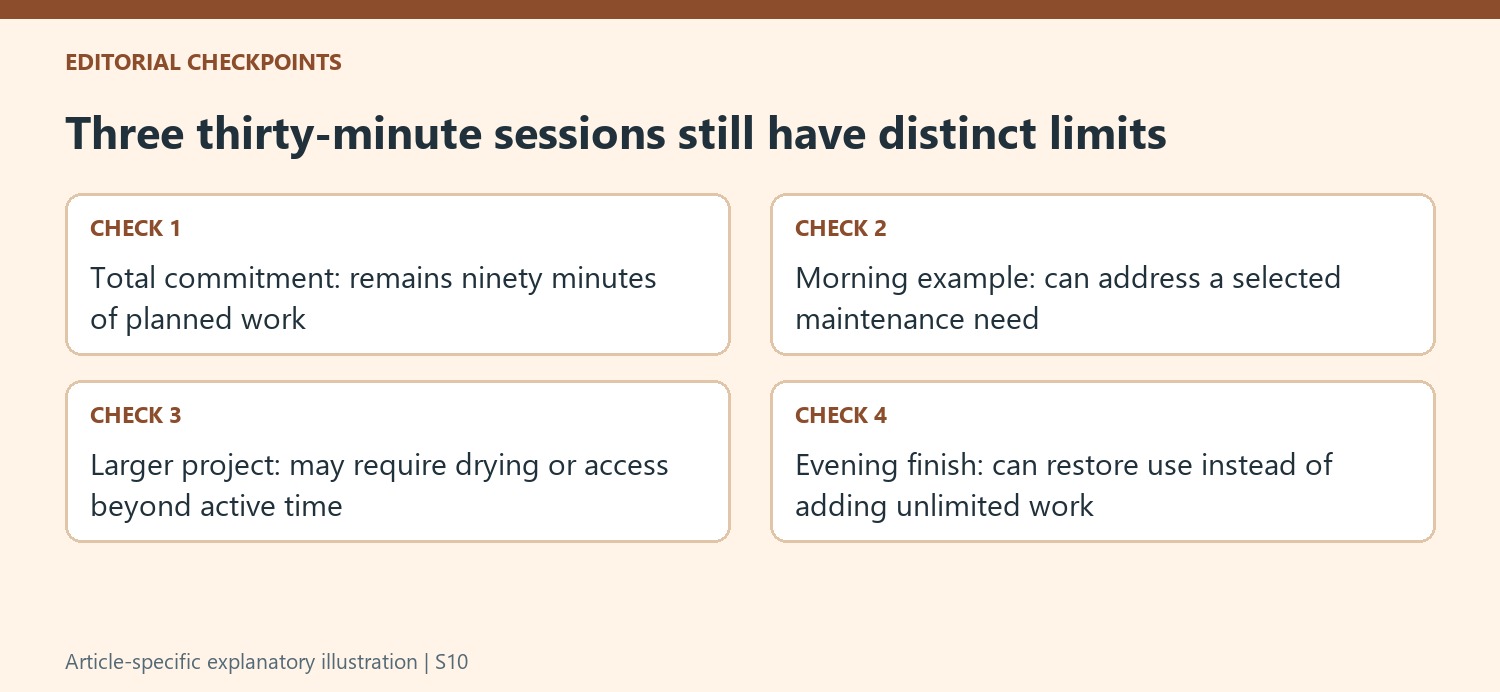
Ideal Home's 3-30 account divides work into three thirty-minute periods, which still totals ninety minutes. The author explicitly questions whether that amount is necessary for everyday maintenance outside a seasonal reset. Keep that limitation visible when adapting the method. Splitting work can change how it fits the day, but it does not make the total time disappear or establish that every reader has the same available morning, afternoon and evening windows.
The writer's reported early finish belongs to one home's spring-cleaning experiment. It is not a promise that another household can complete its entire project in four days or that the same tasks need identical time. Choose a frequency that fits the actual scope and capacity, whether occasional or seasonal. A short session can be resized or moved without invalidating the underlying idea of making a larger project easier to begin.
Select tasks that fit the purpose of each window
The source distinguishes a morning maintenance shift, a larger afternoon project and an evening closing routine. Use those categories as a planning example rather than three compulsory lists. A bounded cupboard task can fit differently from refrigerator cleaning that requires food protection and appliance readiness. Note each selected job's access and completion needs before starting so the end of a thirty-minute period does not leave an essential system unavailable.
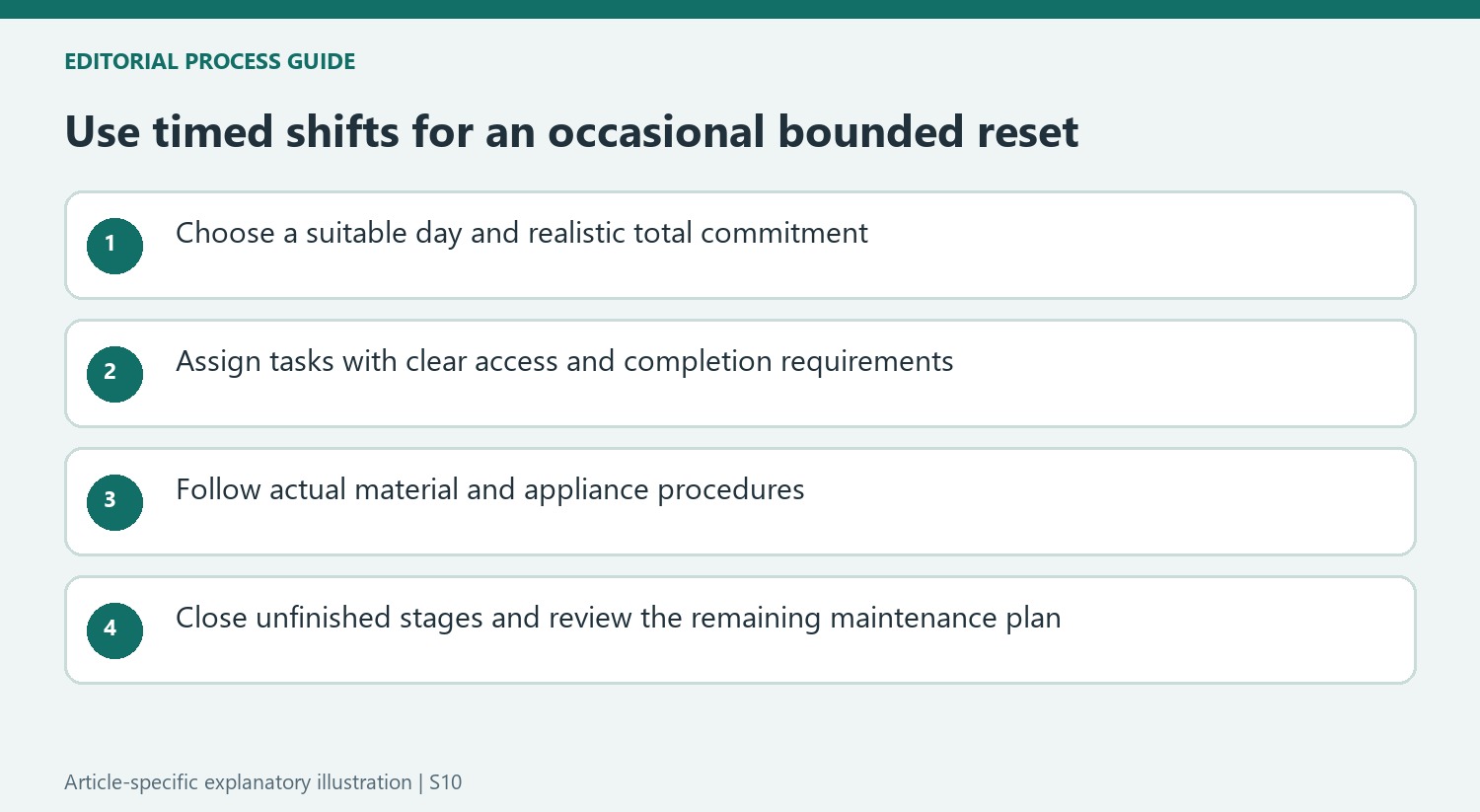
The author's appliance-cleaning examples are personal choices, not general approval for steam or household recipes on every model. Consult actual appliance directions before cleaning a refrigerator, oven or coffee maker. Do not shorten a product's required contact, removal or curing stage to match the session. Likewise, an upholstery or carpet job needs the textile's permitted process and drying time, which can extend beyond the period spent actively handling the tool.
Use the last session to complete rather than endlessly add
The article's evening stage puts dishes and clean clothing away and leaves commonly used areas ready. That makes a useful finishing opportunity for work begun earlier, provided the items are actually dry and ready under their instructions. Do not add another large project solely because one session ended with spare minutes. Restoring the room's ordinary function and putting equipment away can be the appropriate result of that final window.
Review what remains after the chosen reset and return ongoing tasks to a realistic routine. Immediate spills or hygiene concerns still need appropriate attention outside the three calendar slots. The author reports feeling less overwhelmed, which is an individual experience rather than a guaranteed response to timed cleaning. Judge the method by whether it creates clear tasks and useful stopping points while preserving proper care, not by whether the household reproduces the source's pace or enthusiasm.
References
Ideal Home's account of the 3-30 method divides cleaning into three thirty-minute sessions. A morning block handles routine work, an afternoon block tackles a larger task, and an evening block puts the home back in order. Together they still amount to ninety minutes of work.


Leave a Comment
Comments (0)