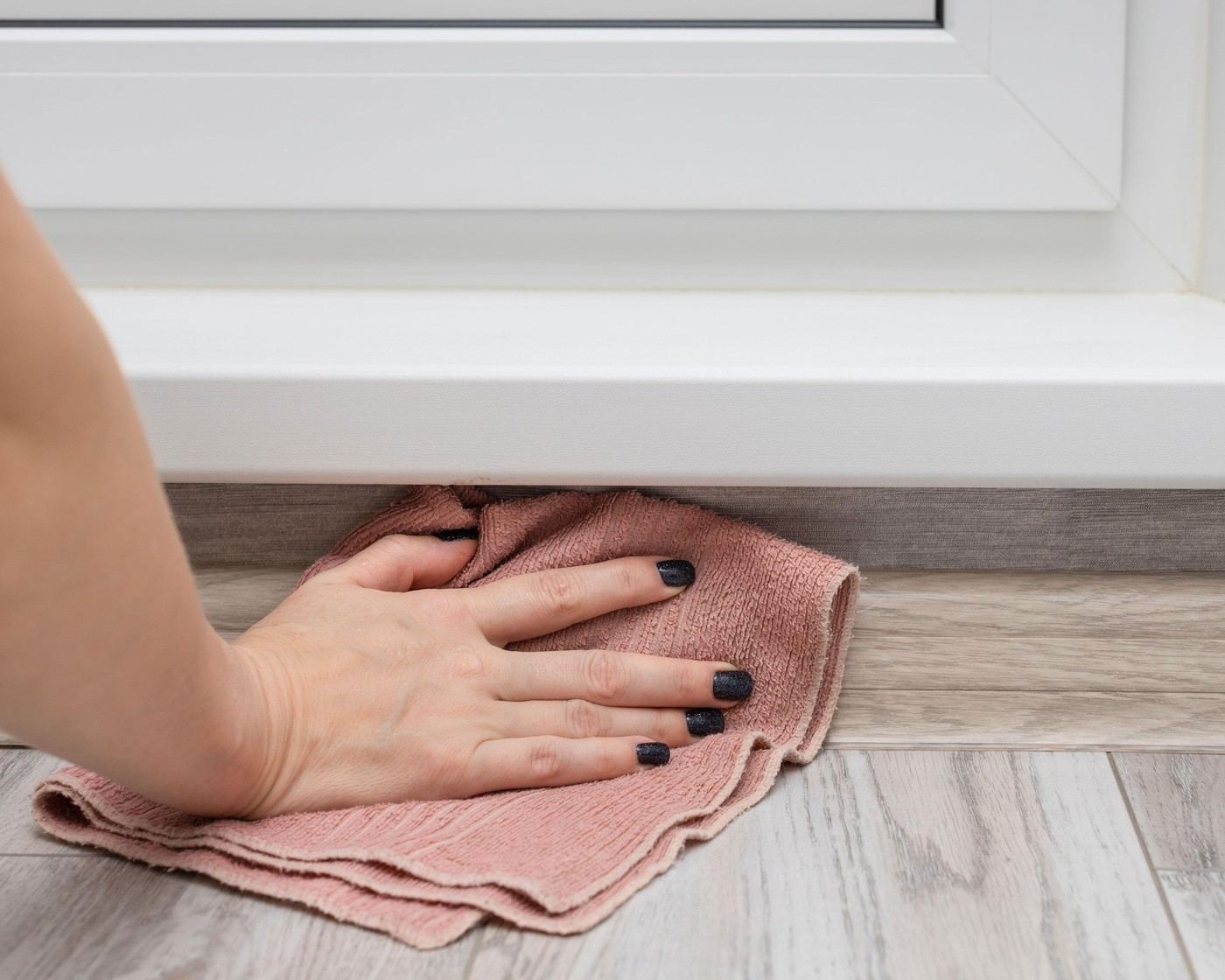
A useful seasonal checklist includes the edges, undersides and tracks that ordinary room cleaning tends to overlook.
Follow the dust into hidden places
Homes & Gardens' whole-house spring checklist calls attention to shelves, picture frames, baseboards and the undersides of furniture. Removing decorative items temporarily makes shelves easier to clean. Working from the top of a room downward reduces the chance of dust settling on surfaces that have already been finished, while a brush attachment can help with detailed edges.
Choose the right treatment for each area
The guide also covers window tracks, textiles and floors rather than treating every surface identically. It recommends beginning textile cleaning with a thorough vacuum to remove loose material. Wood floors need limited moisture and an appropriate cleaner, while other floor types call for different methods. Dividing the list into rooms or smaller sessions makes it possible to tackle neglected areas without expecting an entire home's deep clean to happen in one exhausting day.
Make the hidden edges a defined part of each room
The checklist's baseboard and underside examples explain why a room can look tidy while retaining dust in protected places. Use an appropriate brush or vacuum attachment where it can reach without scratching, and move only furniture that can be handled safely. Temporarily removing a few decorative objects provides access to their shelves rather than simply dusting around their outlines. Finish those accessible details before proceeding to the floor below.
Match the seasonal job to the material
Textiles, coated trim, wood flooring, and window tracks need different tools and moisture limits. The feature's broad list should guide inspection, while the care label or manufacturer determines the treatment. A steam tool, abrasive sponge, or wet mop is not suitable merely because it appears elsewhere in the same checklist. Choose a room or task group that can be completed with the available energy, and leave a clear note for the next session. The useful seasonal change is reaching neglected areas systematically, not performing all twenty-eight listed jobs in one day or assuming every suggested cleaner is interchangeable.
Use one room to make the broad checklist concrete
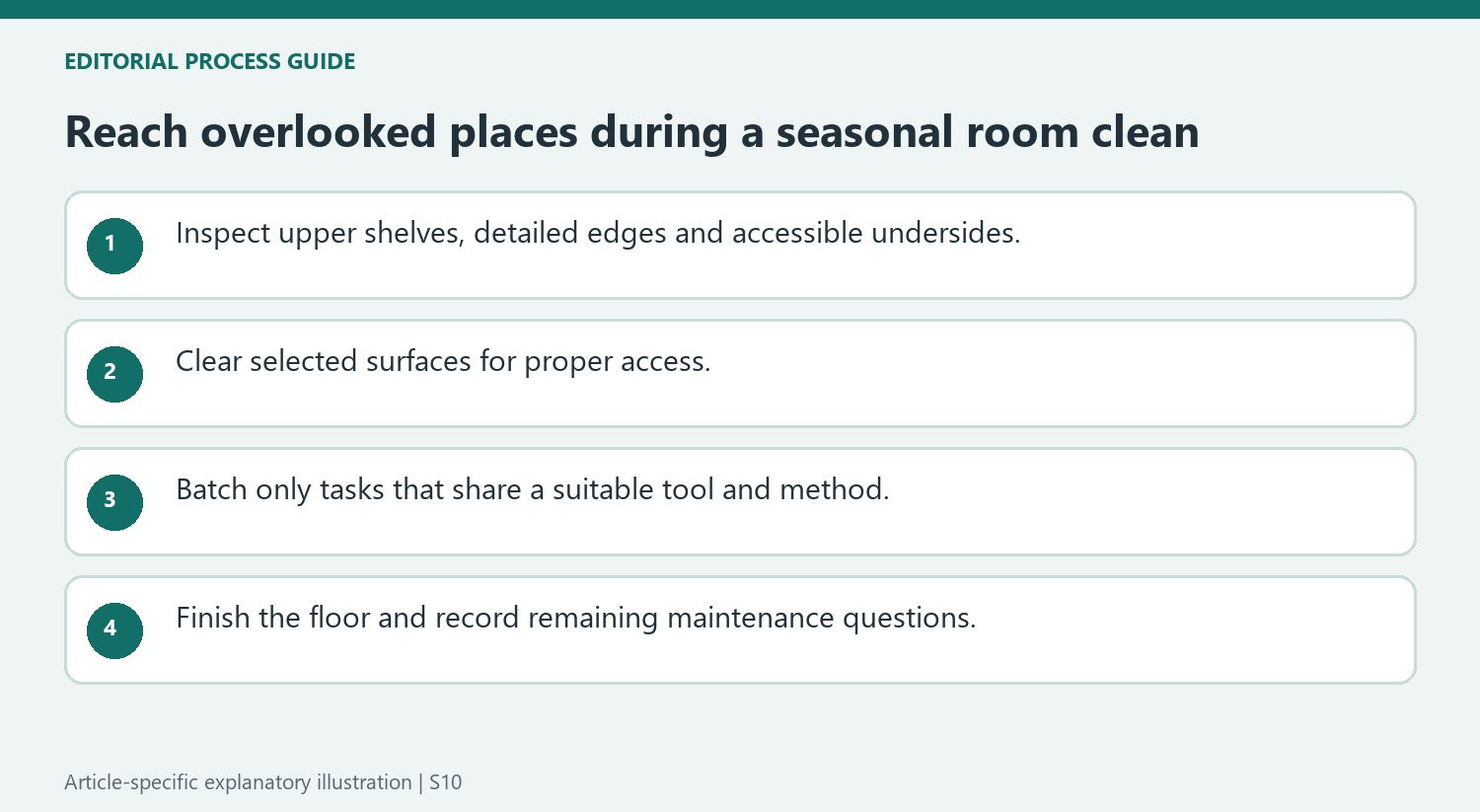
The whole-house guide is most useful as an inspection framework. Begin with a room and identify its upper shelves, detailed edges, accessible undersides and floor finish. Decide which neglected areas can be reached with the tools already available before extending the session to the rest of the home.
Temporarily clear a shelf when practical rather than cleaning only the visible gaps between objects. This provides access to the surface and gives an opportunity to reassess how belongings are grouped. Return items after the area is suitably clean and dry, keeping the task complete instead of spreading several unfinished display piles across adjoining rooms.
Separate tool batching from identical treatment
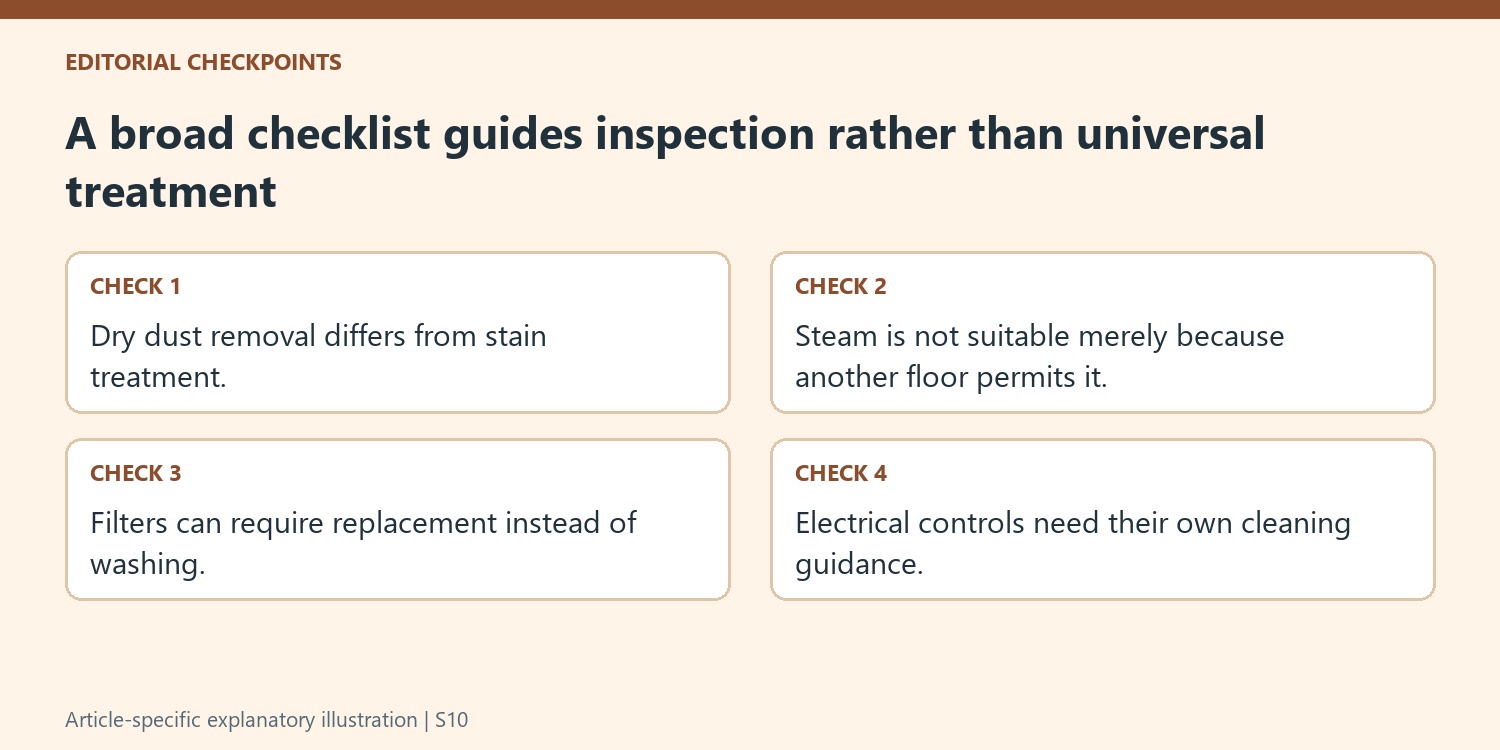
The source proposes moving through several rooms with one tool to reduce repeated setup. That can help when the tasks genuinely share a suitable method, such as accessible dry dust removal. It does not make one damp cloth, steam setting or cleaner appropriate for all the different materials encountered on the route.
Change or clean tools when needed rather than carrying soil from one area to another. Read care guidance for coated wood, wallpaper and textiles before addressing marks or embedded dirt. The article's varied examples should lead to separate material decisions, with ordinary dust removal distinguished from stain treatment, laundering or any procedure intended to disinfect.
Keep maintenance checkpoints beyond the visible room surfaces
Household filters and high-touch items also appear in the guide. Follow each filter's replacement or washing instructions instead of treating every type as reusable. Electrical controls and personal devices likewise need their own cleaning guidance; a surface being touched frequently does not make it safe to soak or spray directly.
Leave a brief record of the jobs completed and those deferred. This makes the next session easier to start and avoids repeating a favorite easy task while hidden places remain untouched. The useful reset is a more systematic view of the home, with realistic stopping points and material-specific methods, rather than one exhausting attempt to complete every suggestion.
References
- The ultimate spring cleaning checklist – 28 tasks professional cleaners urge you to tick off now. Homes and Gardens; Chiana Dickson; Millie Hurst.
A useful seasonal checklist includes the edges, undersides and tracks that ordinary room cleaning tends to overlook.


Leave a Comment
Comments (0)