
Choose a theme or neglected area
The Spruce describes a Monthly 10 List as a way to select manageable, often optional cleaning or organizing goals. Experts suggest focusing on a particular area or theme rather than creating an endless list of everything that could be improved. The approach can make less urgent projects feel easier to begin.
Separate optional projects from essential hygiene
The concept is intended to reduce pressure around desirable improvements, not to postpone necessary cleaning indefinitely. Pick tasks that suit the household and available time, then make progress visible. Sorting a storage area or reviewing a small collection can contribute to a calmer room without requiring the entire home to be transformed during one monthly session.
Choose enjoyable tasks within one bounded theme
The Monthly 10 List began as a self-care idea popularized by Julianna Salguero, and the cleaning experts adapt its low-pressure structure to the home. Courtney Cummings suggests focusing on one space, while Huy Hoang gives family examples such as matching storage-container lids or sorting a board-game shelf before playing a game. These activities make the list specific and approachable without turning every item into a major decluttering project.
Use incomplete progress as information rather than failure
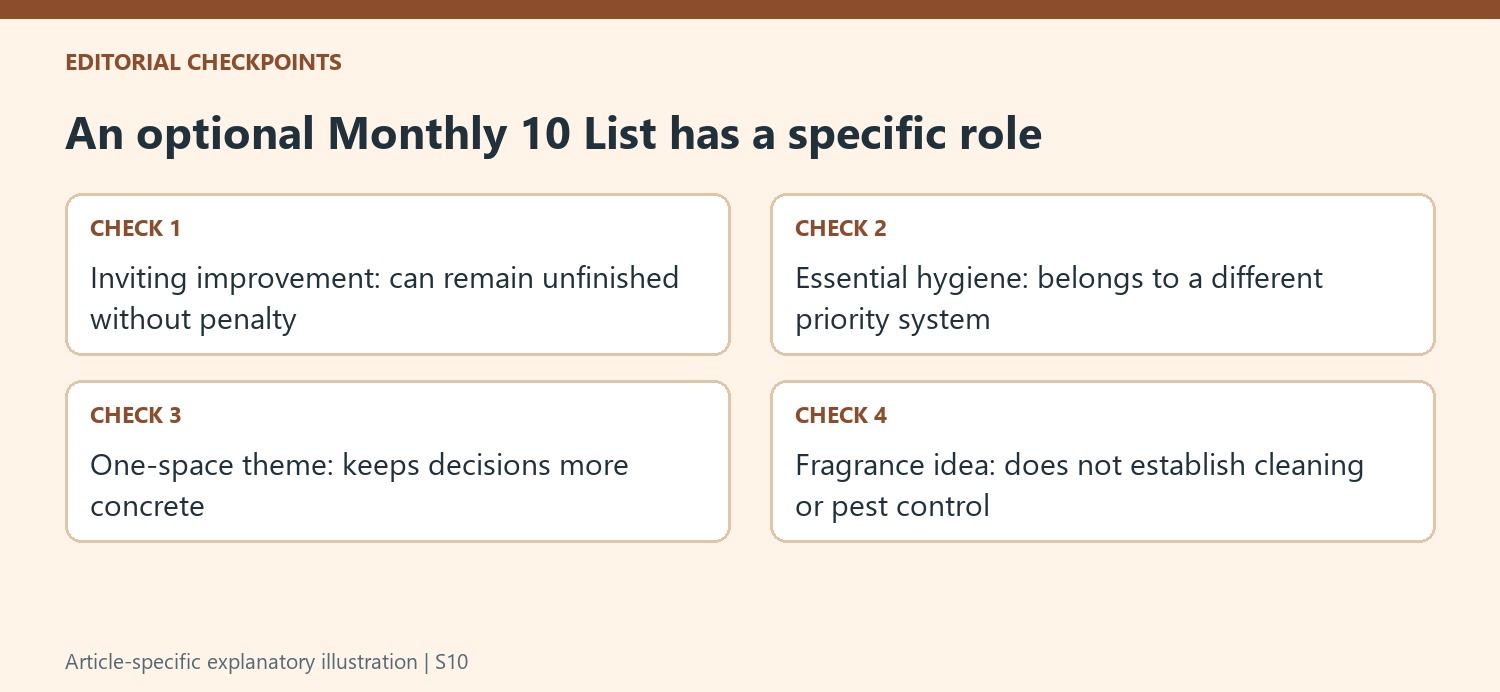
Hoang's example allows that a busy household may complete only a few items and still gain useful improvements. The defining feature is that these are desirable activities without a penalty for missing them. Urgent spills, necessary hygiene, and equipment care therefore need their own appropriate response instead of waiting behind a recreational list. Review which ideas were pleasant, which were too large, and which need a different time slot. A book donation or one cleared shelf can be a complete outcome. Keeping that boundary preserves the method's intended sense of choice rather than rebuilding the same pressure in a more decorative checklist.
Reserve the list for optional improvements
The Spruce describes the Monthly 10 List as ten inviting ideas with no penalty if they remain unfinished. That premise separates it from a schedule for food hygiene, urgent spills or essential appliance maintenance. Choose low-stakes organizing or decorative-care tasks that genuinely fit the concept. A gas-appliance concern or contaminated kitchen surface should not become optional simply because it is placed on a friendly-looking monthly card.
The article's experts value an unfinished list still producing a few useful changes. Keep that flexibility rather than turning ten into a performance target. A reader who completes three appropriate ideas can assess what helped without carrying seven automatic failures into the next month. The list is an invitation to consider home improvements, not evidence that everyone needs the same amount of extra household work or the same deadline.
Choose a theme that makes the tasks concrete
The source suggests focusing on one space or theme, with examples such as a game shelf, lunch containers or a wardrobe. Those examples offer naturally bounded decisions. Matching lids to containers can finish with a usable storage arrangement, while organizing games can end with a family activity. Define the practical endpoint before starting so a pleasant optional task does not quietly expand into emptying every cupboard in the home.
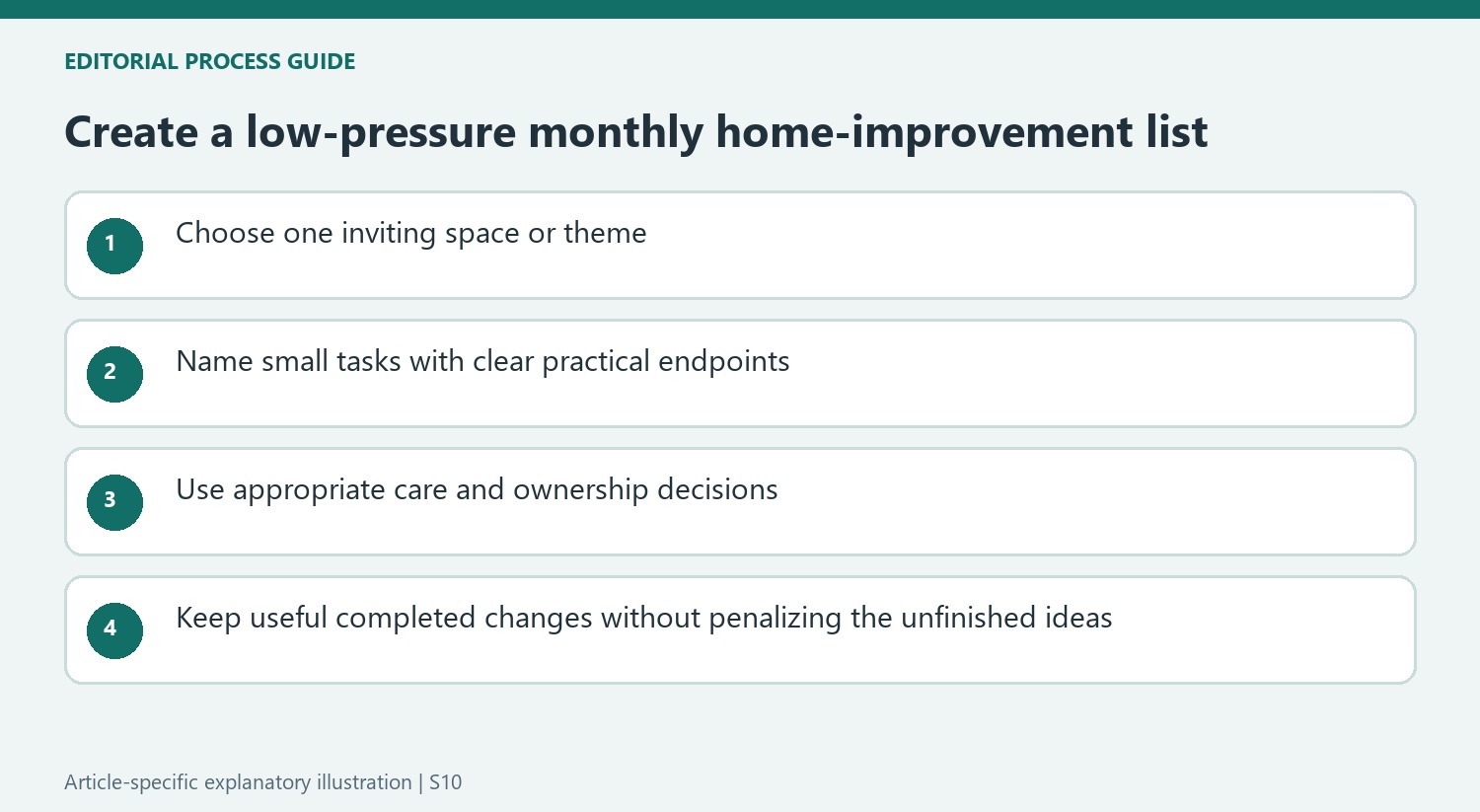
The article also frames looking through stored possessions as a chance to revisit memories. That is one possible personal experience rather than a guaranteed enjoyable activity. Respect ownership and emotional significance when deciding what leaves. A garment worn infrequently may still serve a purpose, and old documents can require retention or secure disposal rather than a rapid blanket purge. Keep each decision appropriate to the belongings, even when music or a reward makes the task feel lighter.
Keep the treatment method separate from the motivational format
A low-pressure checklist does not change material or product compatibility. A top shelf still needs a suitable cleaning tool, and a textile still follows its own label. The source includes additional fragrance suggestions, but do not soak materials in cleaners or add essential oils casually without applicable product approval. Scent is separate from soil removal and does not establish pest control or disinfection merely because a pleasant smell remains in the room.
At the end of a chosen task, return retained items accessibly and deal with the small amount selected to leave. This creates an actual improvement without requiring the rest of the list to be completed. Review the next month's ideas from what the household enjoyed or found useful, rather than automatically increasing the workload. The useful result is a few completed optional changes that fit the space and the people using it, with essential care still handled through its appropriate separate routine.
References
- Organizing and Cleaning Pros Swear by a “Monthly 10 List” for Keeping Your Home Cleaner and Less Cluttered. The Spruce; Nishaa Sharma.
The Spruce describes a Monthly 10 List as a way to select manageable, often optional cleaning or organizing goals. Experts suggest focusing on a particular area or theme rather than creating an endless list of everything that could be improved. The approach can make less urgent projects feel easier to begin.


Leave a Comment
Comments (0)