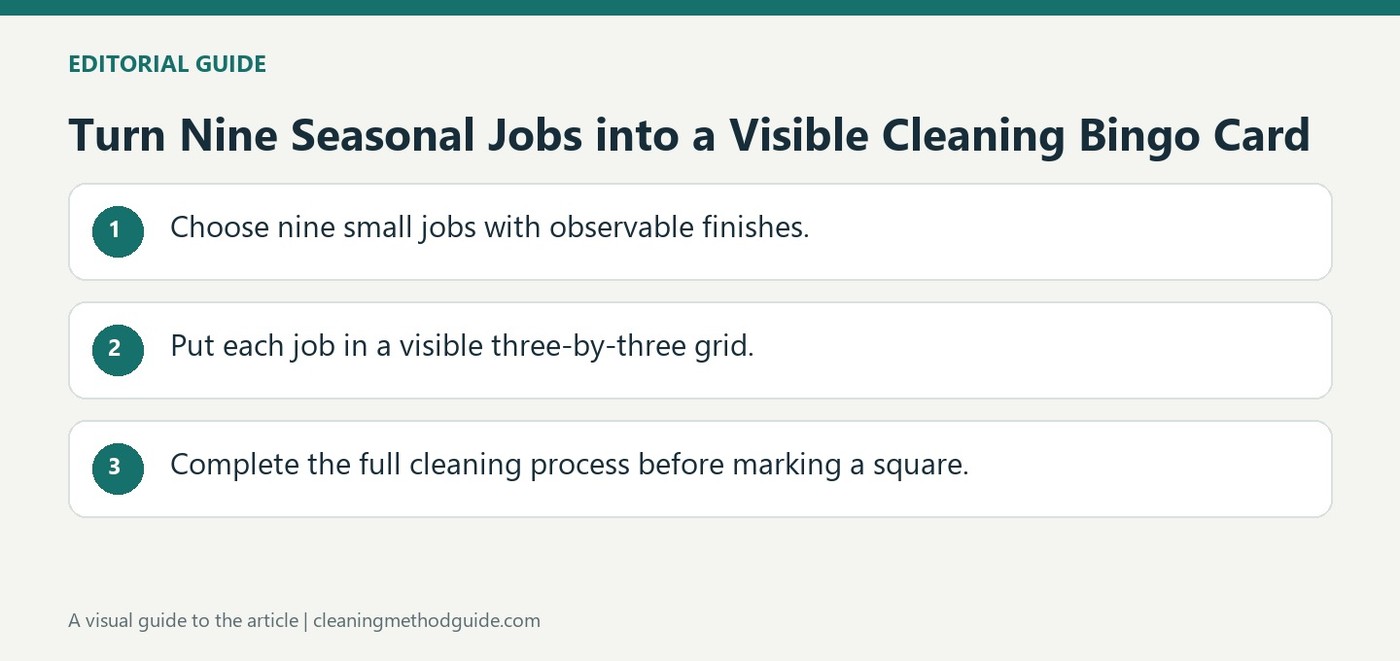
Homes & Gardens describes a spring-cleaning bingo method using nine boxes filled with chosen household tasks. The writer used a visible three-by-three grid and a reward after completing the list. Each box represents one manageable action rather than an entire vague room makeover.
Tailor the tasks to the home and available time; a generic seasonal checklist may contain more jobs than the card can hold. A handwritten grid or separate notes can work as well as a digital template. The method's practical appeal is seeing progress while keeping the first round of work deliberately limited.
Give each square an observable finish
The writer used a visible three-by-three card with tasks such as a cutlery drawer, bookshelves, and frequently used appliances. A square labeled clean the whole house has no clear stopping point, while a single drawer can be emptied, cleaned appropriately, dried, and returned to use. Choose jobs that fit the available energy and equipment. The card is a limited first round of work, so additional seasonal tasks can remain on a separate list.
Use a reward without rushing the cleaning method
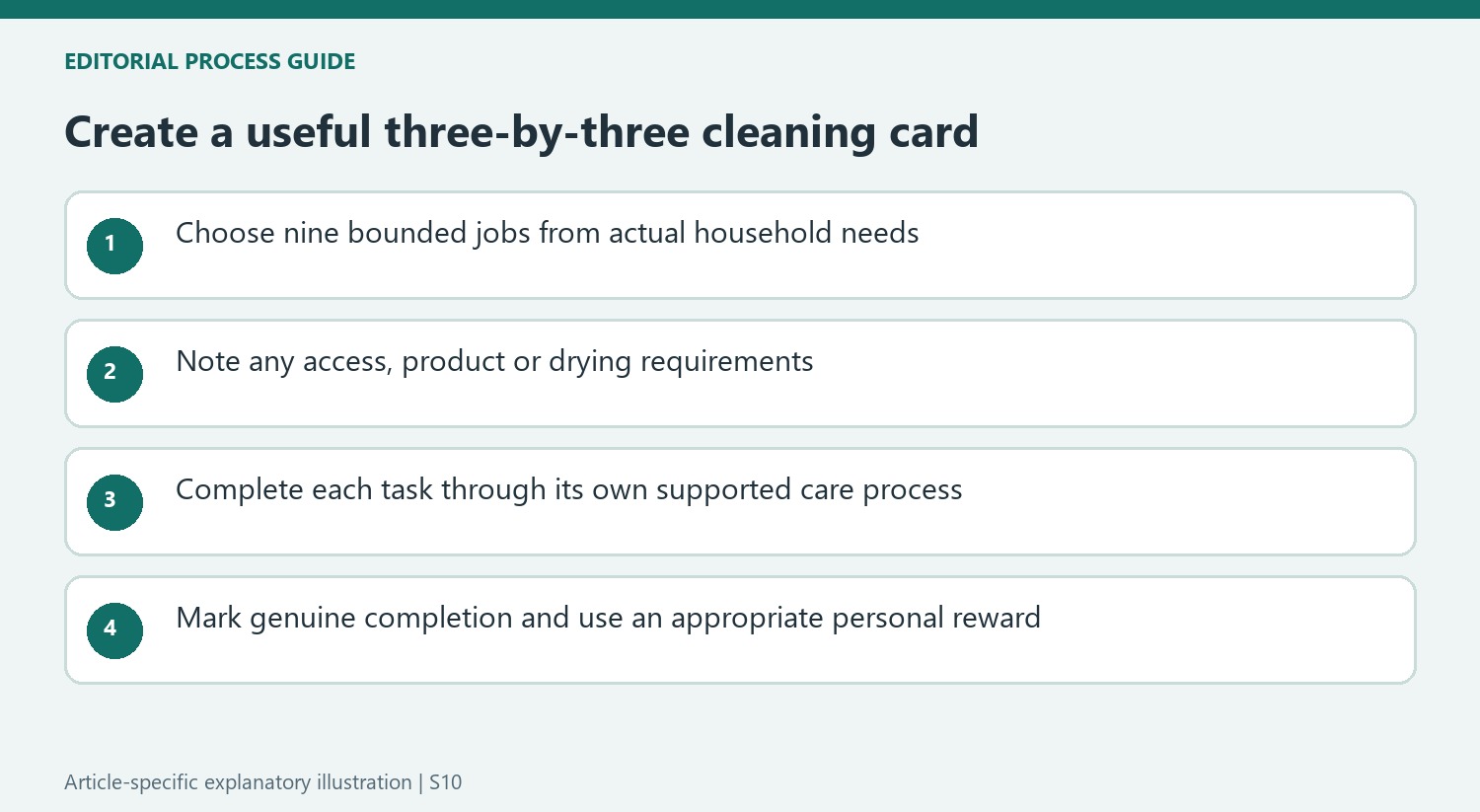
The feature's psychologists connect clear boundaries and enjoyable incentives with motivation. That explanation supports a planning tool, not a guarantee that every person will find the game helpful. Pick a modest reward that does not create pressure to ignore dwell times, material restrictions, or drying. The American Cleaning Institute contributor also recommends checking supplies and prioritizing areas important for hygiene when scaling the list down. A handwritten grid or nine visible notes can provide the same reminder as a digital template. Mark the square after the full task is complete, rather than after applying a product that still needs further attention.
Define nine jobs that can each reach a clear end
Homes & Gardens describes a three-by-three bingo card whose boxes contain personally selected seasonal tasks. The visible grid can make progress easier to recognize, but the number nine does not determine how much work is appropriate. Name bounded actions rather than writing an entire room as one vague box. A cutlery drawer and a whole kitchen have very different scopes even though both can fit inside the same printed square.
The source's writer mixes larger appliance jobs with shorter tasks, using the card as a personal experiment. Its positive experience is not a controlled finding that every reader will become more productive. Choose tasks from the actual household condition and available capacity. If a job needs specialist help, a long drying stage or suitable weather, record that requirement instead of assuming it can be completed just because it appears beside several brief cleaning actions.
Let visibility and rewards support the process without setting treatment times
The article suggests a printed template or sticky notes placed where they act as reminders. Use an appropriate location and attachment that will not damage the surface or interfere with work. The reward is also a personal planning choice rather than a requirement to purchase something. A clear stopping point or enjoyable activity can serve the same organizing purpose when it suits the household.
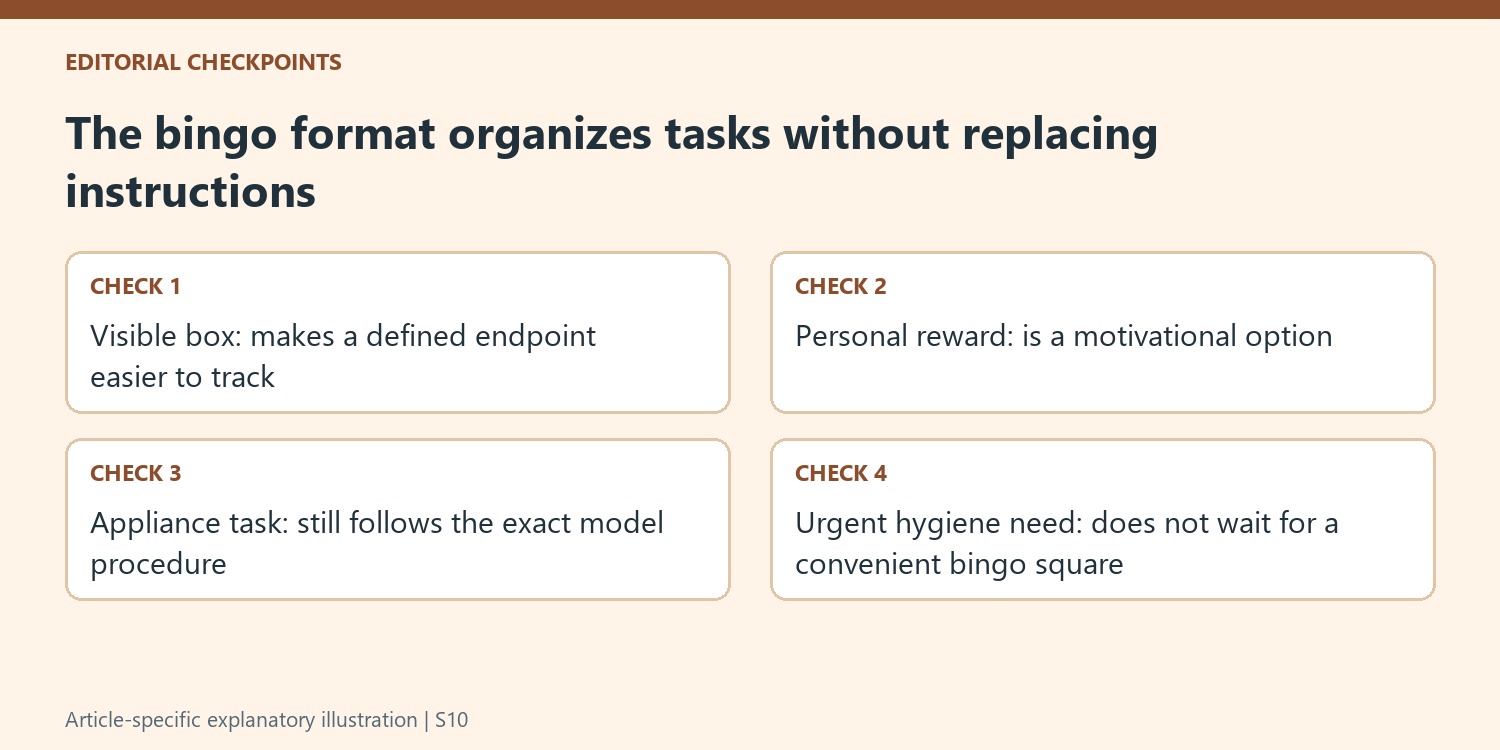
The psychologists quoted in the feature discuss clearer goals and incentives as ways to make large projects feel more manageable. Keep that explanation attributed and avoid promising a guaranteed emotional or clinical outcome. A person who finds the grid unhelpful can adapt the format without failing the underlying task. Its value depends on whether it clarifies what needs doing, not whether every cleaning session produces the same enthusiasm reported by the author.
Keep appliance and material instructions outside the game rules
The source's examples include kettle descaling, air-fryer cleaning, upholstery and grout. Those jobs require different products, access and completion procedures. Do not reproduce a household recipe without checking the actual item's directions, and do not run an air fryer with cleaning water inside it. A small box labeled deep clean cannot replace the appliance manual, textile code or product label that determines the safe supported method for that particular task.
Mark a box complete only when the chosen job has reached its proper endpoint, including residue removal, drying and reassembly where required. Essential hygiene needs should also be addressed when they arise rather than postponed until they help finish a bingo row. Review the card from what remains useful, allowing a task to be resized or moved if circumstances change. The grid organizes attention and progress; the individual care instructions still govern what happens on the surface or inside the appliance.
References
- I tried the 'Spring Cleaning Bingo Method', and it was a game-changer for a less stressful clean in my tiny home, say psychologists. Homes and Gardens; Rebecca Shepherd.
Homes & Gardens describes a spring-cleaning bingo method using nine boxes filled with chosen household tasks. The writer used a visible three-by-three grid and a reward after completing the list. Each box represents one manageable action rather than an entire vague room makeover.


Leave a Comment
Comments (0)