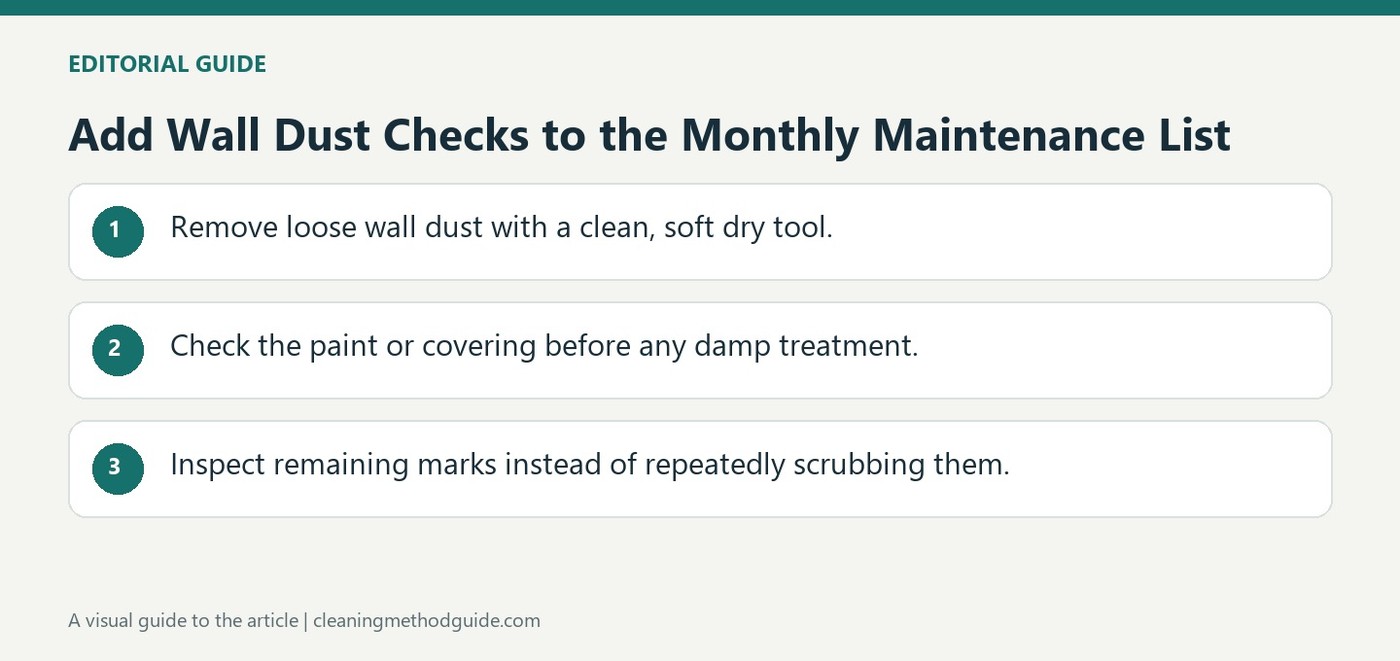
Homes & Gardens highlights wall dust as a commonly missed part of routine care. A soft extending duster can reach broad sections without turning the task into redecorating. Keeping it on a monthly inspection list makes dust easier to notice before it becomes a conspicuous buildup.
Any damp method depends on the paint or wall covering, and some finishes tolerate very little water. Work in small sections and dry promptly only where the finish permits cleaning. The article also connects dust control with HVAC filter maintenance; use the equipment handbook for the correct filter type and service interval.
Begin with dry dust removal suited to the finish
The feature's experts start with a dry microfiber cloth or a soft extending tool rather than routinely washing the whole wall. That keeps moisture out of the first step and helps distinguish loose dust from greasy residue or an actual stain. Use a clean tool and reach comfortably without scraping trim or dragging gritty material across the paint. A monthly review can identify areas that need attention without requiring every wall to be scrubbed on a fixed schedule.
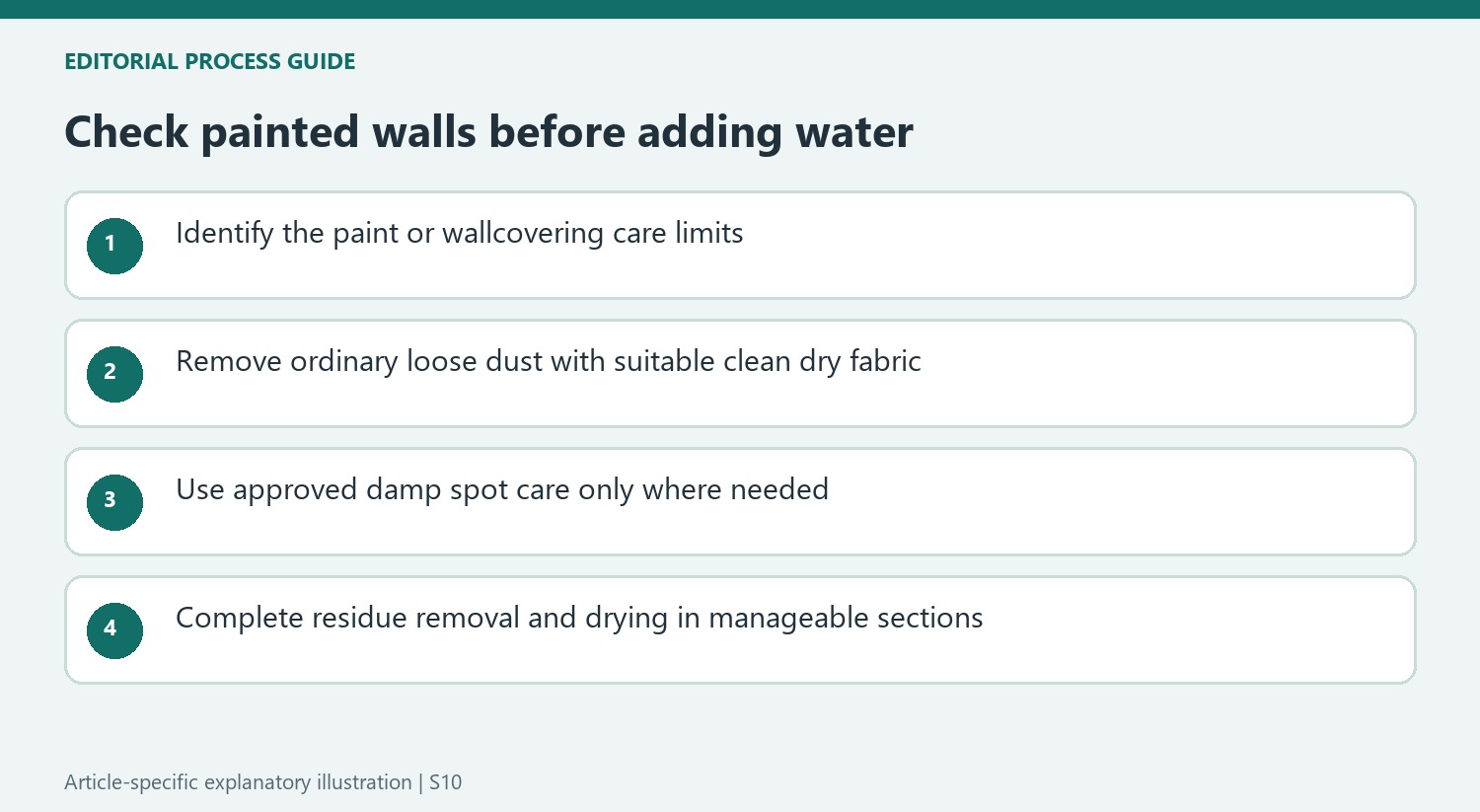
Check the coating before treating remaining marks
Jade Piper's damp-cleaning suggestion is conditional on a wall finish that tolerates it. Review the paint or covering instructions and test an inconspicuous area before extending the method. Use controlled moisture, work in small sections, and dry as permitted instead of letting water remain on the surface. Steven Ip also connects dust accumulation with HVAC filter maintenance, but the correct replacement type and interval come from the actual equipment guidance. Dusting can improve the appearance of a wall; it does not establish that discoloration from damp, damaged paint, or another underlying problem has been resolved.
Begin with a dry dust check instead of automatic washing
Homes & Gardens recommends dry microfiber as the starting point for ordinary wall dust. That is a different task from treating grease, a scuff or a damaged paint film. Inspect the wall and identify the finish before selecting the tool. A regular reminder can catch loose dust without turning every monthly session into wet mopping, particularly where the paint or wallcovering has restricted moisture tolerance.
A mop-shaped tool can extend reach, but its design alone does not establish suitability for a particular wall. Use a clean nonabrasive head and appropriate access so particles or rough edges are not dragged over the finish. A tool used on the floor may carry grit or cleaner residue. Keep the wall-contact material suitable for the paint rather than assuming that all microfiber heads and all household mops are interchangeable across surfaces.
Make any damp treatment specific to the finish and mark
The source cautions that some paints do not tolerate water well and recommends small sections with controlled moisture where damp cleaning is appropriate. Follow the actual coating's care guidance before moving beyond dry dust removal. A hidden-area test can reveal an immediate visible change under a permitted method, but it does not override a known restriction or prove that stronger scrubbing will leave the sheen uniform across the whole wall.
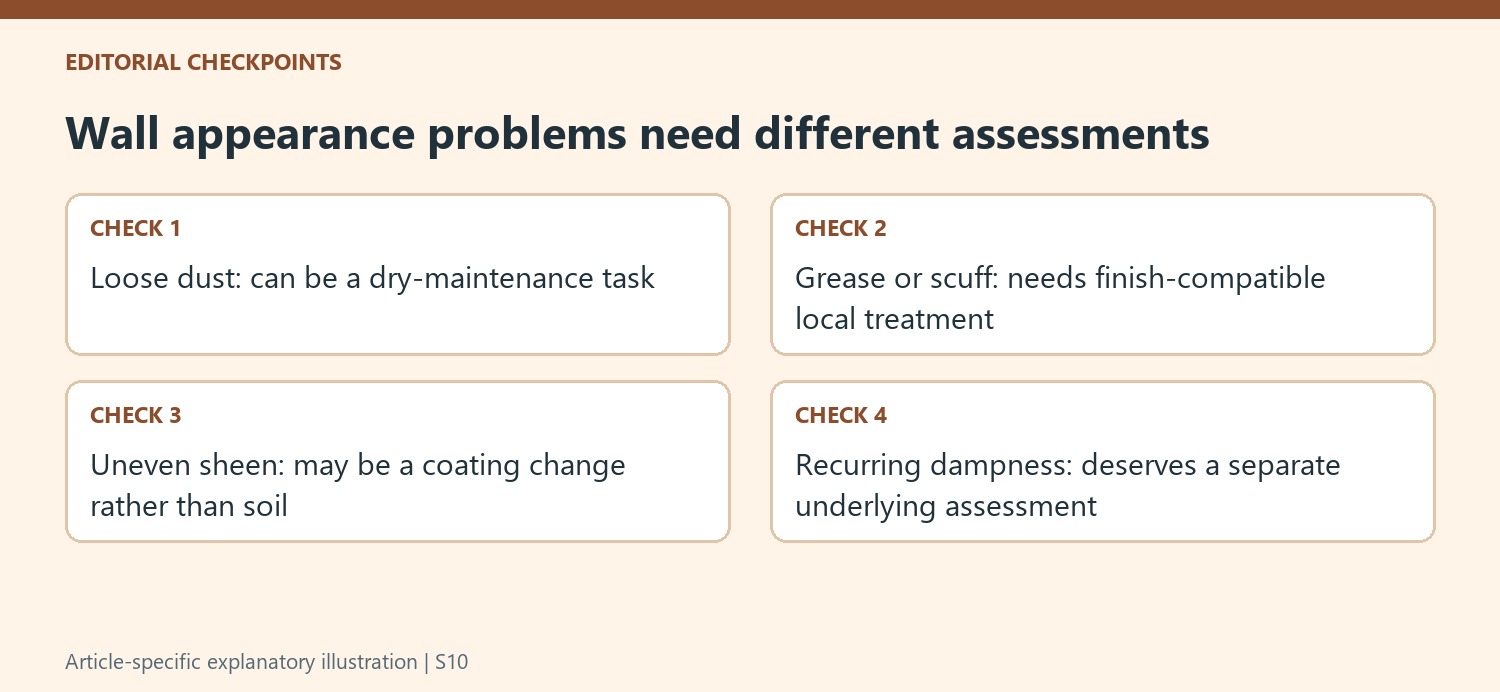
Remove compatible cleaner and dry as directed rather than leaving a broad wet area to soak. The article's small-section approach helps keep that completion stage manageable. A stubborn pale patch can be a finish change rather than removable soil, so stop escalating friction when the cause is uncertain. Cleaning cannot restore missing paint or correct every mark, and a newly uneven sheen should not be mistaken for evidence that the wall simply needs more product.
Keep room dust management separate from a paint-life guarantee
The guide links regular care with maintaining appearance and discusses HVAC filters as another dust-related checkpoint. Use the correct filter and maintenance procedure for the actual system rather than a generic size or cleaning interval. Some filters need replacement rather than washing. A wall-dusting habit can be useful without proving a specific extension of paint life or establishing that it controls every allergen in a particular home.
Treat recurring dampness or suspected mold as a separate condition needing appropriate assessment, not merely another reason to wipe the paint harder. The article's practical monthly idea is an inspection opportunity: identify loose dust, choose suitable gentle removal and notice where another problem may exist. Combine that with material-compatible spot care when needed, leaving the wall ready through its own drying instructions rather than repeating unnecessary moisture exposure on a fixed calendar.
References
- This simple monthly task will keep your wall paint pristine and reduce the need for frequent redecorating – you need just 1 cleaning essential. Homes and Gardens; Chiana Dickson.
Homes & Gardens highlights wall dust as a commonly missed part of routine care. A soft extending duster can reach broad sections without turning the task into redecorating. Keeping it on a monthly inspection list makes dust easier to notice before it becomes a conspicuous buildup.


Leave a Comment
Comments (0)