
A cold-weather deep clean can target tracked-in dirt, closed-up rooms and the soft furnishings used heavily during the season.
Start at the entrance
Homes & Gardens' winter checklist identifies entryway floors as a priority because shoes bring in moisture, grit and salt. It also highlights baseboards and door frames, where accumulated dirt can become harder to remove. The useful approach is to identify those seasonal pressure points rather than simply repeating the spring list regardless of conditions.
Include air paths and fabrics
The article recommends checking heating vents, radiators and filters, following the relevant maintenance instructions. Bathrooms also deserve attention to ventilation and visible signs of moisture problems around grout, curtain liners and seals. Upholstery and other soft furnishings can collect dust, pet material and odors while windows remain shut more often. Schedule the work in manageable sections, with a method suited to each fabric or surface instead of assuming that one cleaning product is appropriate everywhere.
Remove seasonal grit before deeper treatment
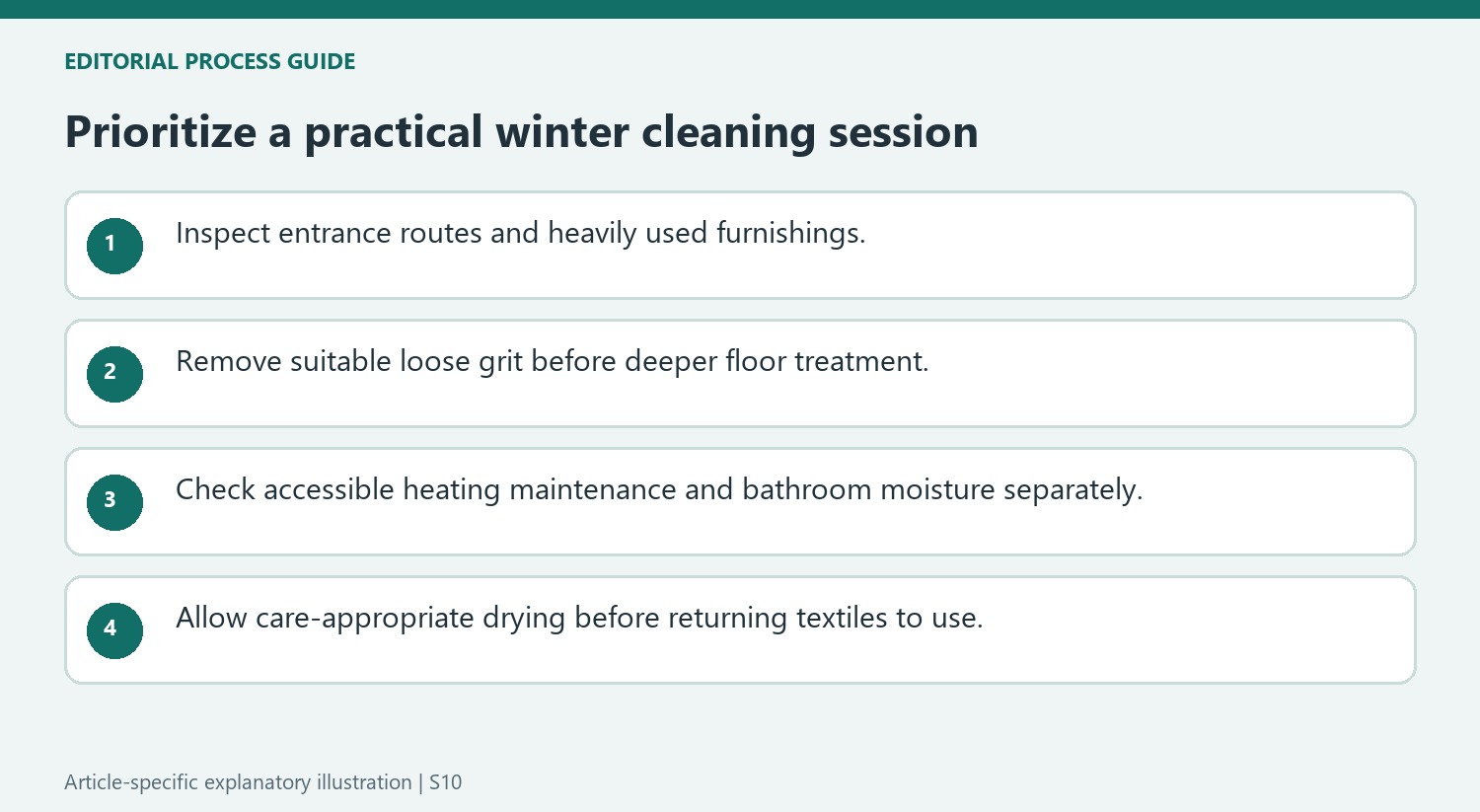
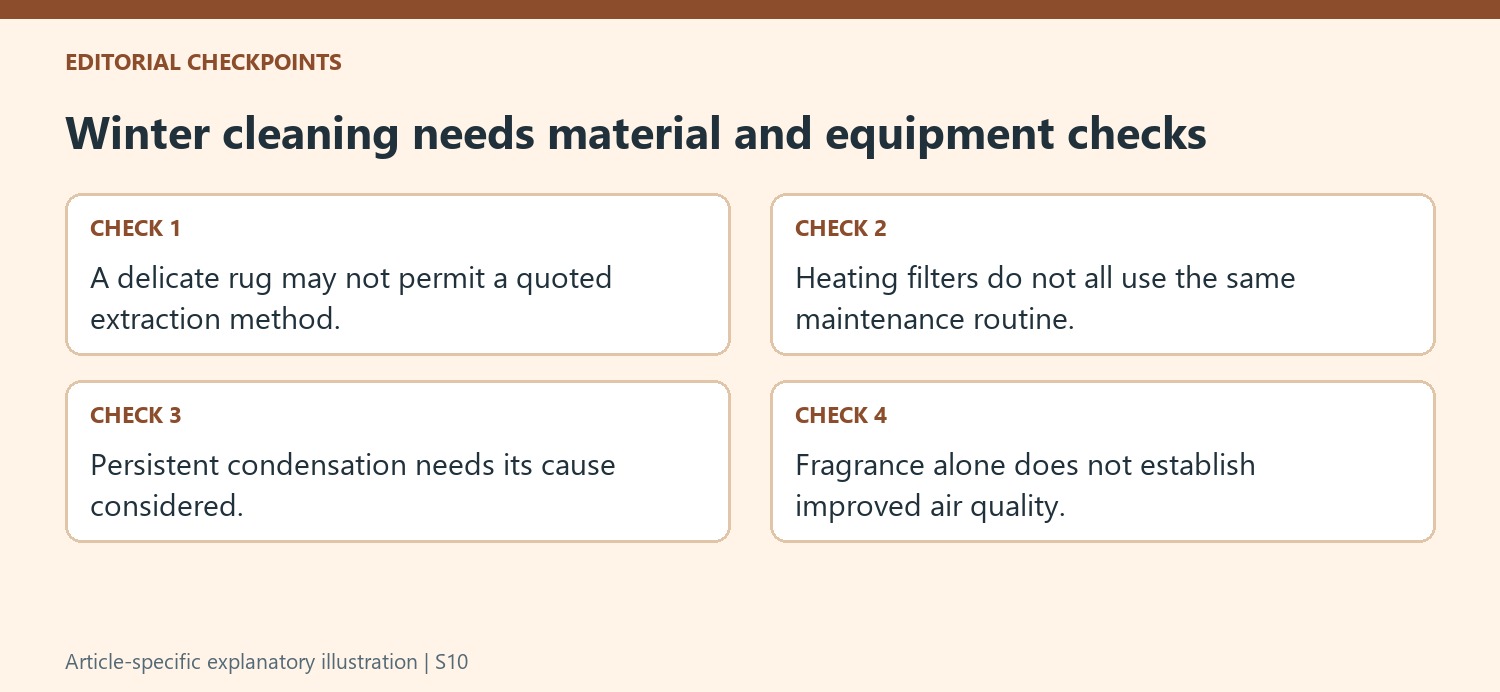
The winter entryway example concerns the combination of tracked-in dirt, moisture, and salt rather than ordinary indoor dust alone. Inspect the entrance and frequently used routes, remove loose material with suitable tools, and follow the floor or textile instructions for any remaining residue. A carpet extraction method quoted for one situation should not be transferred automatically to a delicate rug or a moisture-sensitive floor. Identify the material before choosing the treatment.
Include drying and ventilation in the seasonal plan
Cold weather can make it harder to dry washed upholstery and other soft furnishings, so allow enough time and appropriate airflow before returning them to service. The guide also identifies bathroom ventilation, heating vents, radiators, and filters as winter checkpoints. Use the equipment's maintenance instructions and distinguish accessible dust removal from a repair or a persistent moisture problem. Visible mold or repeated condensation needs its cause considered as well as cleaning. A manageable cold-weather list can focus on those pressured areas without copying every spring task or assuming a fragranced product establishes improved air quality.
Prioritize the places that experience different winter conditions
The entryway is a clear example because it receives grit, wet footwear and other outdoor residue. Compare that route with less-used rooms before deciding where the session should begin. Removing loose material promptly can keep it from being carried farther into the home, while deeper treatment can be chosen according to the actual floor or rug.
The guide's winter emphasis does not mean every spring task needs to be repeated immediately. Look for the areas under pressure from the current routine: heavily used seating, enclosed bathrooms and accessible heating surfaces. Choose a manageable group that can be cleaned and returned to use with enough time for any necessary drying.
Treat the heating system and bathroom as different maintenance questions
Accessible vents and radiators can collect dust, but their cleaning should follow the equipment's operating and maintenance directions. A filter may need replacement rather than washing. Do not infer that a general household cleaner or improvised soaking method is appropriate for every heating component.
In the bathroom, visible spots or repeated condensation should prompt attention to moisture and ventilation as well as the surface. The source identifies grout, liners and seals as inspection points. Select a product suitable for the actual material and follow its label, keeping chemical treatments separate. A cosmetic improvement alone does not establish that a recurring moisture cause has been resolved.
Build drying time into upholstery and floor cleaning
The source notes that cold-weather soft-furnishing work needs more planning than a quick summer refresh. Check the care code and the intended method before applying moisture. Allow suitable airflow and sufficient drying before cushions, rugs or upholstered seating return to ordinary use.
Product reviews and shopping labels in the feature are not universal evidence of stain removal, disinfection or improved air quality. Compare the exact tool and surface requirements instead of copying every recommended product. A focused winter plan can preserve the seasonal advantages of cleaning while remaining realistic about time, weather and the maintenance needs of the actual home.
References
- The Winter Deep-Clean Checklist Professional Cleaners Swear By in December – 5 Things You Should Never Leave Until Spring. Homes and Gardens; Chiana Dickson.
A cold-weather deep clean can target tracked-in dirt, closed-up rooms and the soft furnishings used heavily during the season.


Leave a Comment
Comments (0)