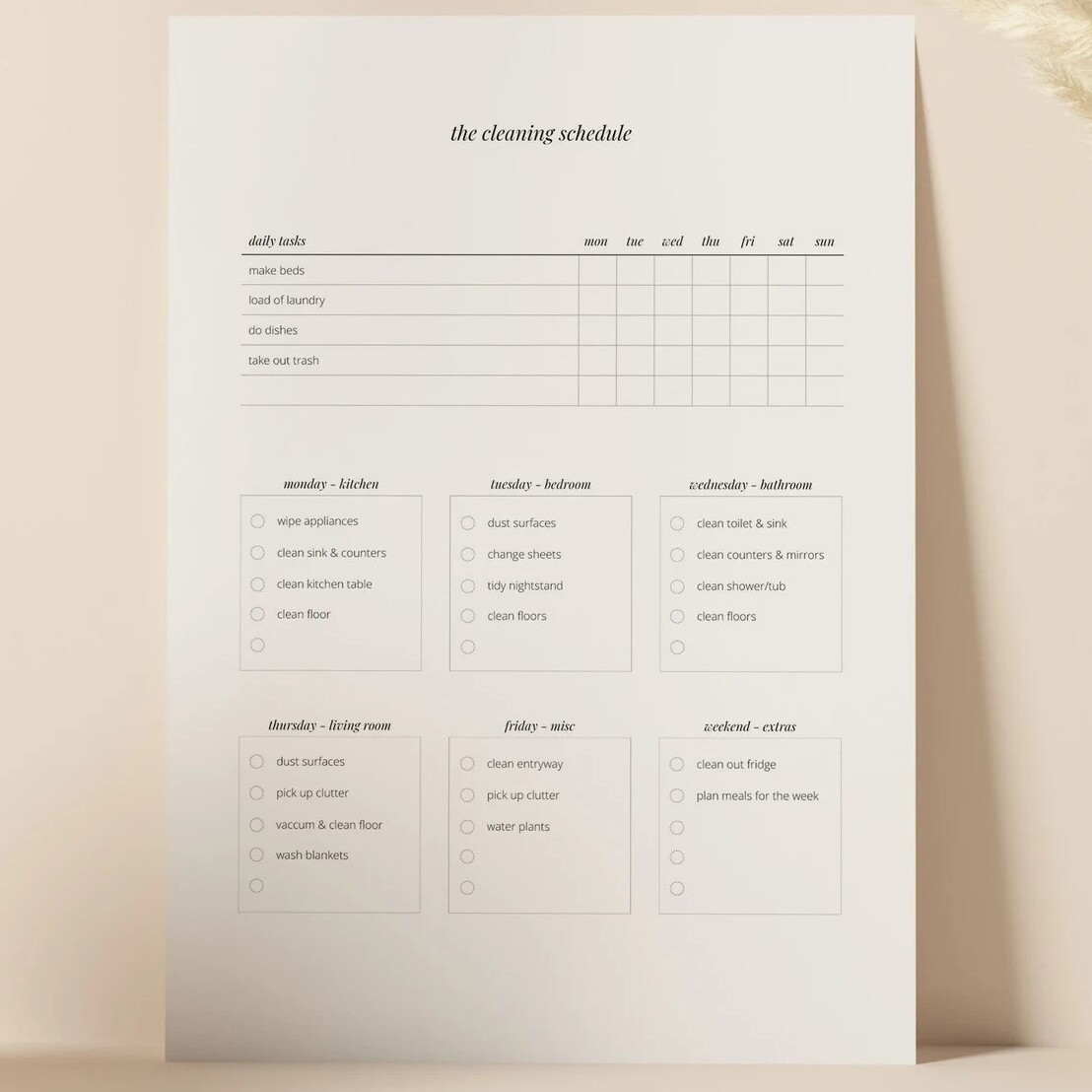
A manageable spring reset starts with a realistic list and fewer obstacles, rather than a promise to finish everything in one burst.
Inspect before buying supplies
Homes & Gardens' planning guide recommends walking through the home and noting both visible and overlooked tasks. A written list helps estimate time and share work with other people. It also advises assembling basic equipment such as cloths, a vacuum and suitable floor tools before starting, then adding specialist supplies only for jobs that actually require them.
Declutter and pace the work
The article emphasizes clearing unnecessary belongings before cleaning or buying storage organizers. That avoids spending time cleaning things that will be discarded anyway. Large areas can be broken into one room, one section or even one task at a time. Music, an audiobook or a shared cleaning session may make the process easier to sustain. The central idea is a repeatable plan that fits the household's available energy and time, rather than an all-day deadline.
Use the walkthrough to estimate a workable session
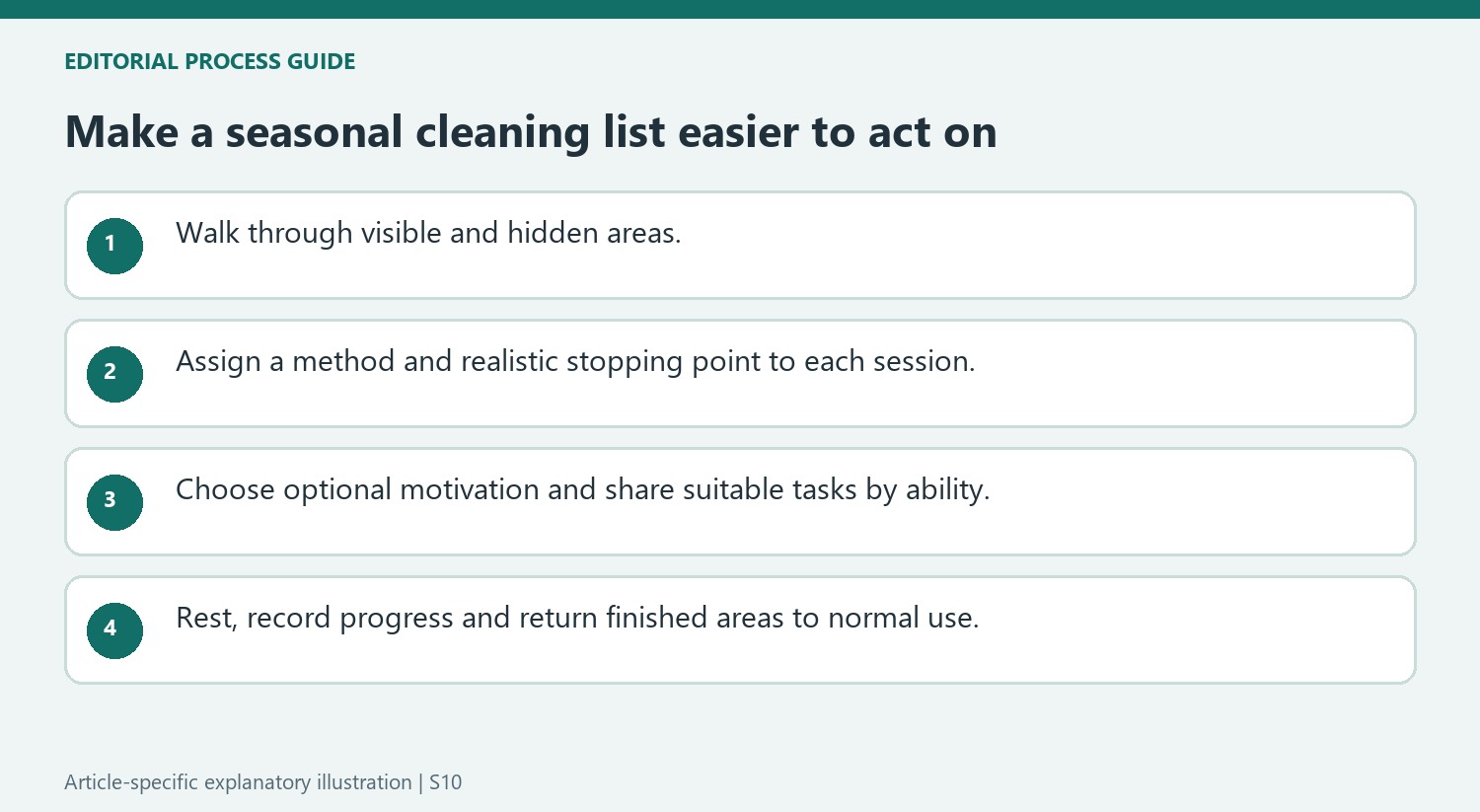
Ryan Knoll's checklist recommendation begins with visible and hidden areas, while Paulo Filho suggests assembling basic tools before adding specialist equipment. This helps connect each task with the time and supplies it actually needs. A whiteboard, notebook, or printed list can serve that purpose without purchasing a large planning system. Group jobs only when they share a practical method, and identify a complete stopping point for each appointment.
Reduce obstacles before adding storage and products
The guide emphasizes decluttering before cleaning objects that will leave the home or buying organizers for possessions that are no longer needed. That makes access easier and reduces repeated handling. Its motivation ideas, such as music and shared work, can be adapted to preference and energy rather than treated as mandatory steps. Product claims still need scrutiny: natural ingredients do not automatically disinfect, and a steam cleaner or acidic mixture is not appropriate for every surface. Use the seasonal list to choose the next useful task, then follow the relevant material, appliance, and product directions when carrying it out.
Make the written plan describe decisions as well as chores
A useful checklist identifies the location, method and realistic stopping point for each job. During the walkthrough, distinguish an easy accessible dusting task from one needing a care label, specialist supply or another person's help. That makes the estimated session more accurate than a broad instruction to clean an entire room.
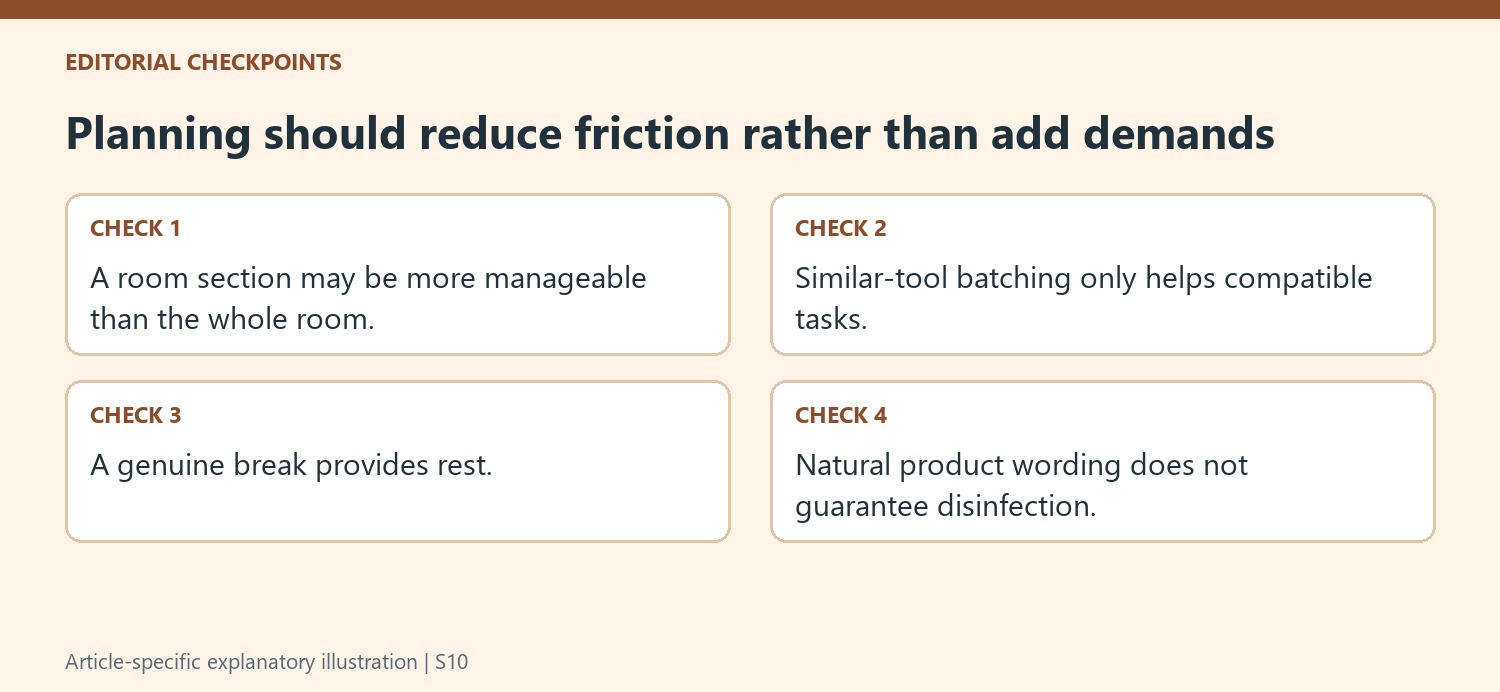
The source discusses both room-based work and batching similar tasks. Choose the arrangement that reduces friction for the particular household. A single shelf group may be the better unit when belongings need sorting, while suitable dry dusting across several rooms may share one tool. The plan can change as the actual time and effort become clearer.
Use motivation ideas without making the routine more demanding
Music, company and modest rewards are optional ways to make work easier to sustain. Select what helps attention and comfort rather than adding another requirement to an already long list. The article also emphasizes genuine breaks, which should provide rest instead of becoming another period spent reorganizing supplies or preparing the next task.
Share work according to age, ability and the actual method required. A visible written list can clarify responsibilities, but it does not remove the need to explain which products and tools suit each surface. Keep specialist or physically difficult work separate from simple tasks that can be comfortably completed by another household member.
Let each finished session improve the next one
Return cleaned areas to practical use, put supplies where they can be found and record remaining questions. This avoids recreating the same setup obstacles at every appointment. Decluttering first also means fewer unnecessary items need to be repeatedly lifted and cleaned during future routines.
The guide contains broad product and natural-cleaning claims, so verify the actual label and material guidance rather than treating those descriptions as guarantees. Build the routine around a sequence that can be repeated with available time and energy. Progress comes from completed useful areas and clearer decisions, while the seasonal checklist remains a guide rather than an inflexible deadline.
References
- 'It's a marathon, not a sprint' – 15 smart spring cleaning tips for a smooth seasonal reset from professional cleaners and psychologists. Homes and Gardens; Chiana Dickson.
A manageable spring reset starts with a realistic list and fewer obstacles, rather than a promise to finish everything in one burst.


Leave a Comment
Comments (0)