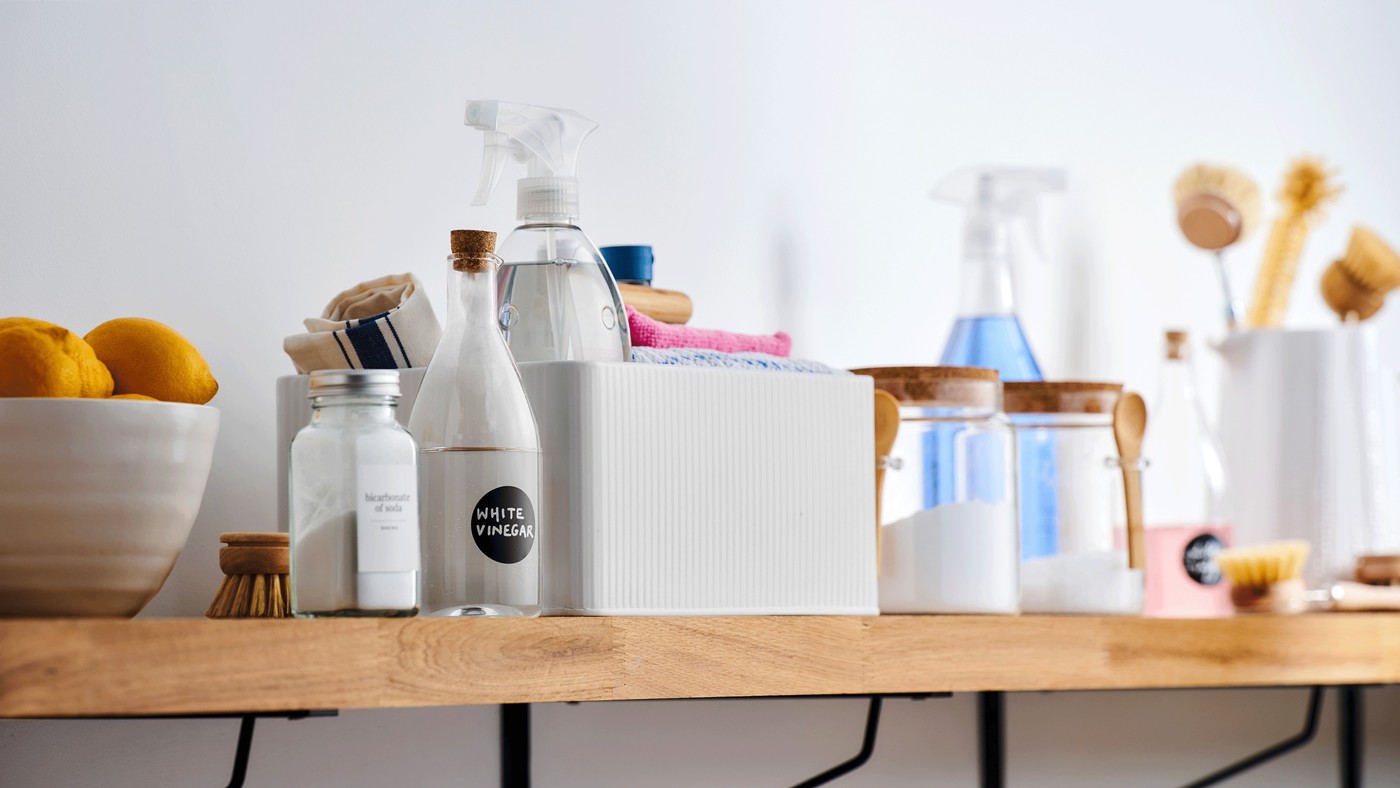
Ideal Home's spring-cleaning rules start with making a list in priority order. The guide recommends identifying the larger jobs and checking the supplies needed before beginning. This avoids starting several rooms without the tools to finish any of them.
Decluttering comes before detailed cleaning because clear surfaces are easier to reach. Mark each finished task and adjust the next appointment to the time available. The rules provide a sequence for a seasonal reset rather than a requirement to complete every household project at once.
Finish a defined area before widening the plan
Ideal Home's rules recommend working one room at a time and paying attention to high-traffic spaces such as the kitchen, hall, and bathroom. A useful first task has a visible boundary: one set of cabinet fronts or a cleared shelf can be completed and checked. Starting several demanding appliance jobs together may instead leave the house less usable and require repeated trips for missing supplies. Priorities should reflect the actual household rather than a fixed room order copied from another home.
Keep overlooked care separate from product promotion
The feature identifies appliances, upholstery, and less frequently reached surfaces as seasonal opportunities. Each still needs its own material and manufacturer guidance. A shopping recommendation in an article is not proof that a cleaner suits every carpet, coating, or fabric, and fragrance is not evidence of disinfection. Review the label and any care code before treatment, prepare a suitable tool, and return the area to use only when the task is finished. The transferable value of the five rules is their sequence: plan, reduce clutter, work in manageable areas, and check the places ordinary weekly cleaning misses.
Rank the actual work before deciding what to buy
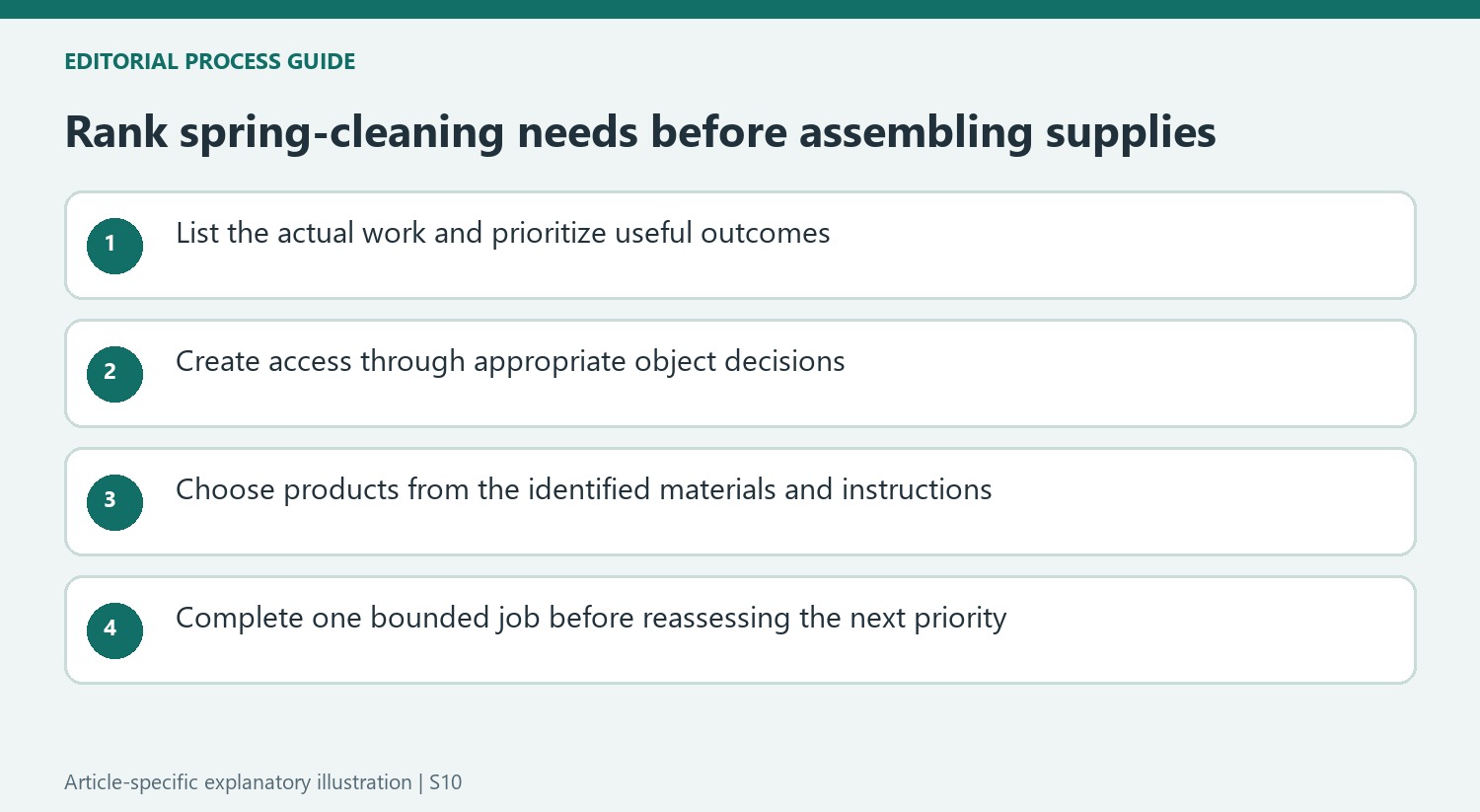
Ideal Home recommends a priority list before the spring-cleaning kit is assembled. That order can prevent buying a broad collection of products for jobs the home does not need. Identify the most useful result and note the materials or appliances involved. A fridge, upholstered sofa and painted cabinet have different care requirements even if all are called deep-cleaning tasks. Supplies should follow those identified requirements rather than determine what gets treated.
The source favors attention to high-traffic areas and overlooked equipment, but the practical priority depends on condition and use. A fresh food-area problem can be more urgent than an impressive decorative project. Likewise, a larger task is not automatically the best first task if it cannot be completed with the available time or access. Choose an achievable sequence that leaves each selected space functional rather than several major jobs half-started.
Use decluttering to establish access and destinations
The article places decluttering before cleaning so the surface can be reached without shifting the same objects repeatedly. Make appropriate keep, donate, recycle or disposal decisions and complete them for the chosen area. A pile moved to another room is not a completed organizing result. Respect shared ownership and retain items with a real purpose rather than treating any infrequently used object as unnecessary by default.
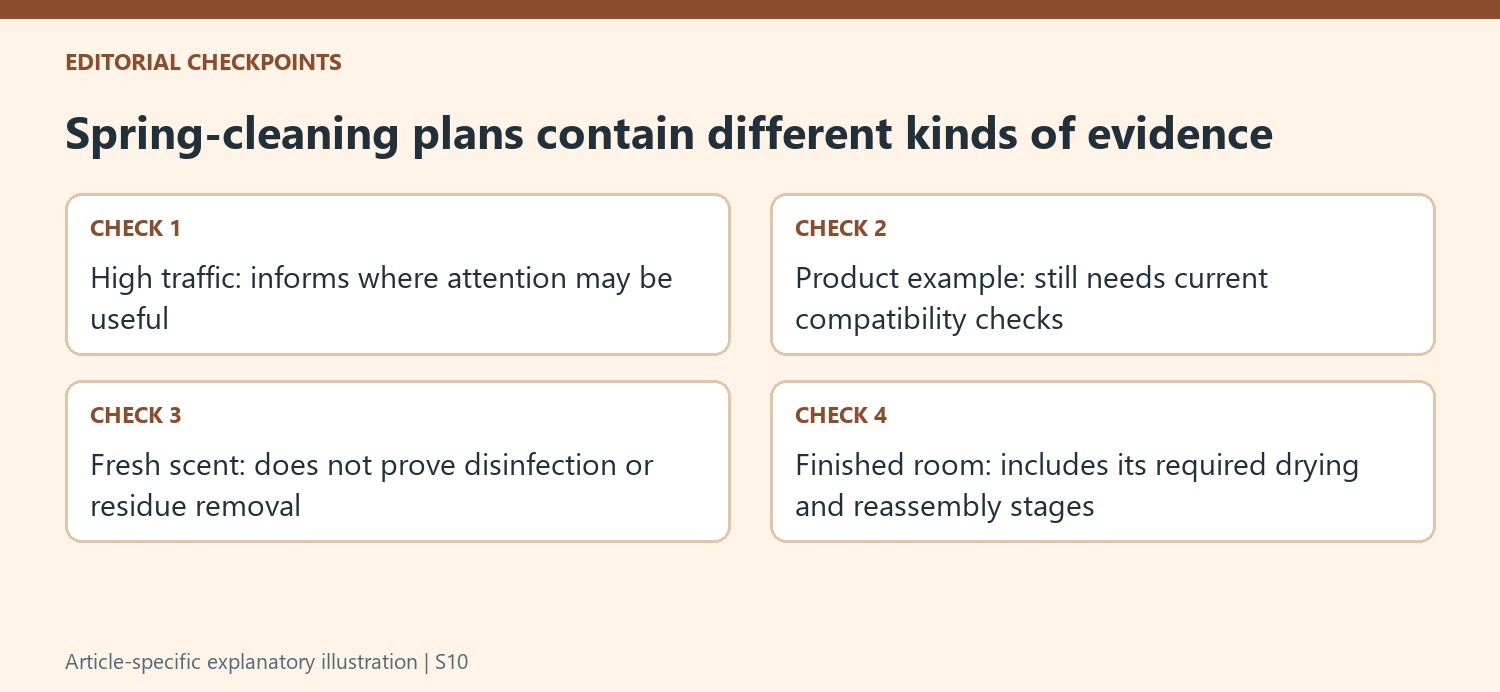
Then give the newly accessible surface its own compatible cleaning method. The source's named product examples are recommendations within a lifestyle guide, not universal approval for every coating or fabric. Check current labels and item instructions, including hidden tests where appropriate. A product described as removing odors should not be turned into a promise of bacteria-free carpet, and a stain remover's broad marketing does not override an upholstery code or material exclusion.
Keep one-room progress compatible with product completion times
The source recommends finishing one room or bounded job before moving onward. Define what finished means for the selected task, including rinsing, drying, appliance reassembly or another label-required stage. A cleaning timer cannot shorten disinfectant contact or coating cure, and a fresh scent does not establish that those stages occurred. Avoid combining products or household ingredients simply because the larger spring project creates pressure to work faster.
Recheck the remaining list after each completed unit and adjust the next step to actual needs. Seasonal timing is a planning prompt, not a universal deadline that every home must meet in the same month. The practical value of the guide's five rules is a clearer order of decisions: prioritize, create access, choose compatible supplies, finish an appropriate unit and then reassess. That structure supports thorough selected work without requiring an unlimited whole-house project to happen at once.
References
- 5 rules for successful spring cleaning - transform your home from dusty to dazzling. Ideal Home; Katie Sims.
Ideal Home's spring-cleaning rules start with making a list in priority order. The guide recommends identifying the larger jobs and checking the supplies needed before beginning. This avoids starting several rooms without the tools to finish any of them.


Leave a Comment
Comments (0)