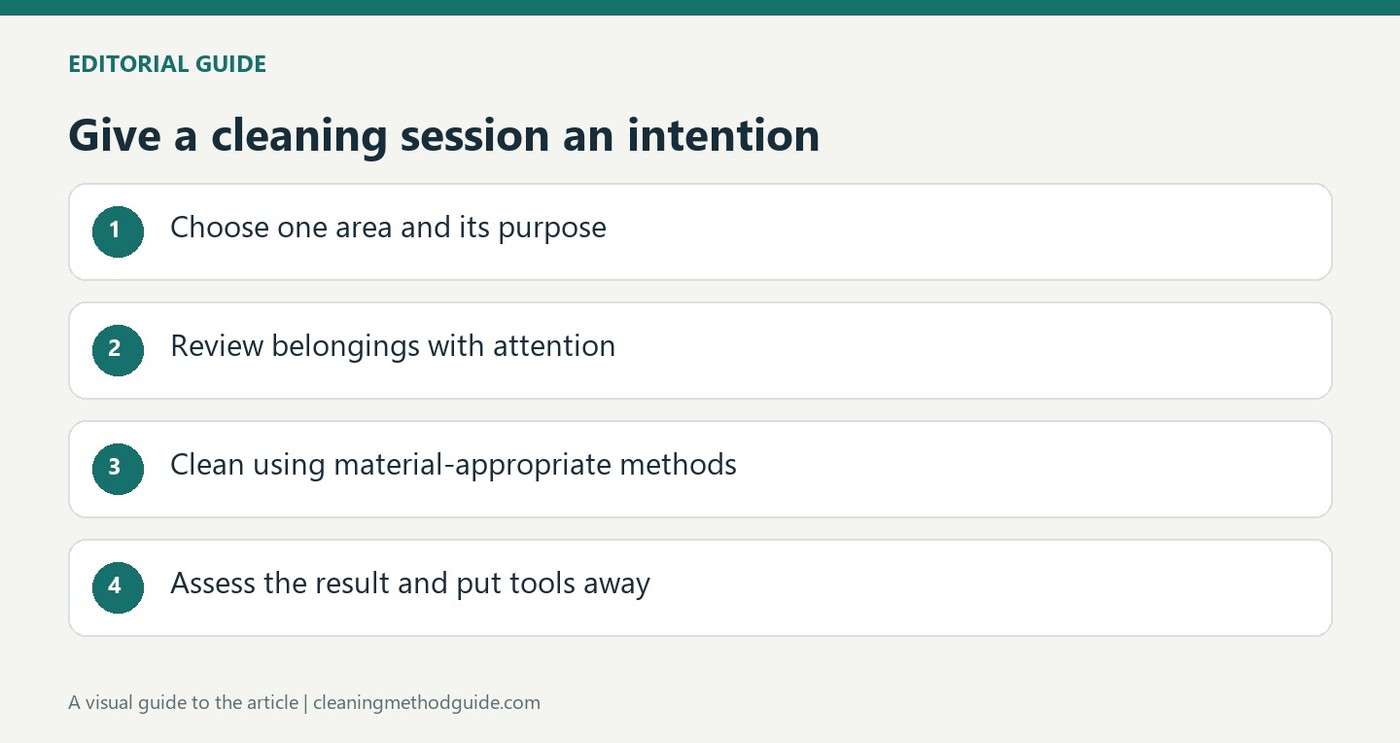
Ideal Home explores Kiyomeru, a Japanese concept associated with purification, as a more intentional way to approach household care. The article connects actions such as clearing a desk or organizing a closet with appreciating the possessions and rooms involved. It frames the practice as a perspective on cleaning.
For a practical schedule, choose one bounded area and a clear purpose before starting rather than rushing through an undefined list. Any sense of emotional renewal is personal, and the cultural discussion is not a medical treatment claim. The useful planning element is giving the session attention and a realistic finish.
Choose what the session is meant to restore
The feature presents intention as a way to approach familiar cleaning tasks. Put that into a concrete decision before starting: clear the desk for tomorrow's work, make a shelf usable, or restore a cupboard's order. A defined area and purpose make the action easier to complete than a broad demand to transform the entire home's atmosphere.
Combine attention with practical decisions
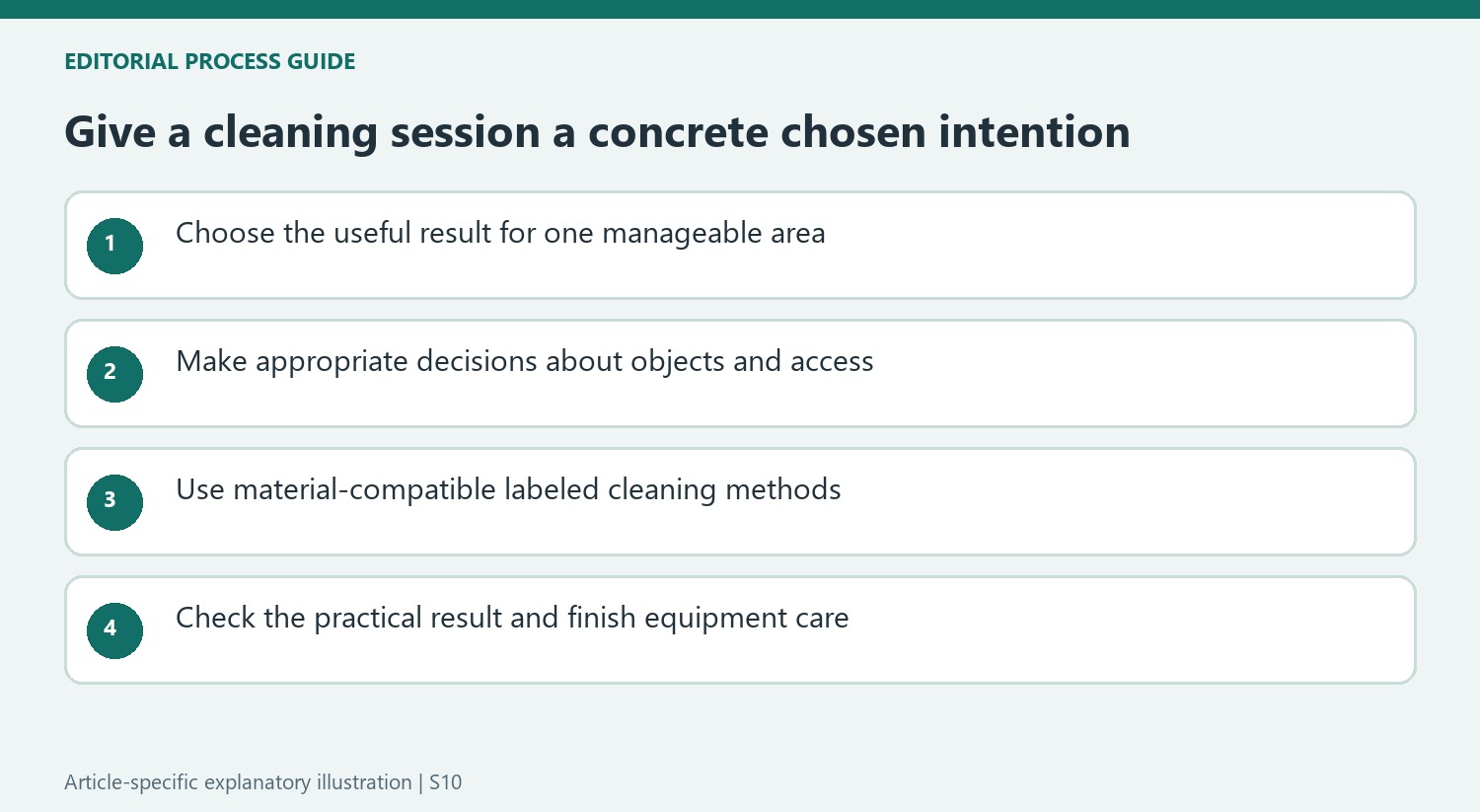
Its decluttering discussion asks readers to consider whether possessions still serve them. Review those items deliberately, keeping useful belongings and choosing appropriate routes for things leaving the home. Handle the retained objects gently and use cleaning methods compatible with their materials. The article's spiritual framing can remain a personal perspective; it does not establish that a fragrance or natural-sounding product suits every surface.
Notice the finished result and stop
The source encourages a pause after the work rather than immediately treating completion as the start of another task. Look at whether the chosen area now serves its purpose, put tools away and note anything requiring a later repair or longer session. That creates a practical finish. Any feeling of calm is individual, while the visible result is a space restored through specific, careful actions.
Use a chosen intention without turning belief into a claim
Ideal Home presents Kiyomeru through a lifestyle interpretation that links household care with intention and appreciation. Readers can use that framing to decide what they want a session to accomplish without treating spiritual language as a measurable cleaning outcome. Clearing a working desk or caring for a valued object is a concrete purpose. Claims about removing negative energy belong to the article's belief-based description rather than proof that a particular product changes the environment in that way.
The source also carries an editorial correction about an earlier unverified contributor. Do not revive removed authority or treat the remaining lifestyle quotations as clinical evidence. A person may find intentional cleaning pleasant, but the article does not establish a guaranteed therapeutic result or a replacement for mental-health care. Keep the practical planning ideas useful on their own: choose a manageable area, handle belongings deliberately and recognize the work completed.
Make decluttering decisions appropriate to the belongings
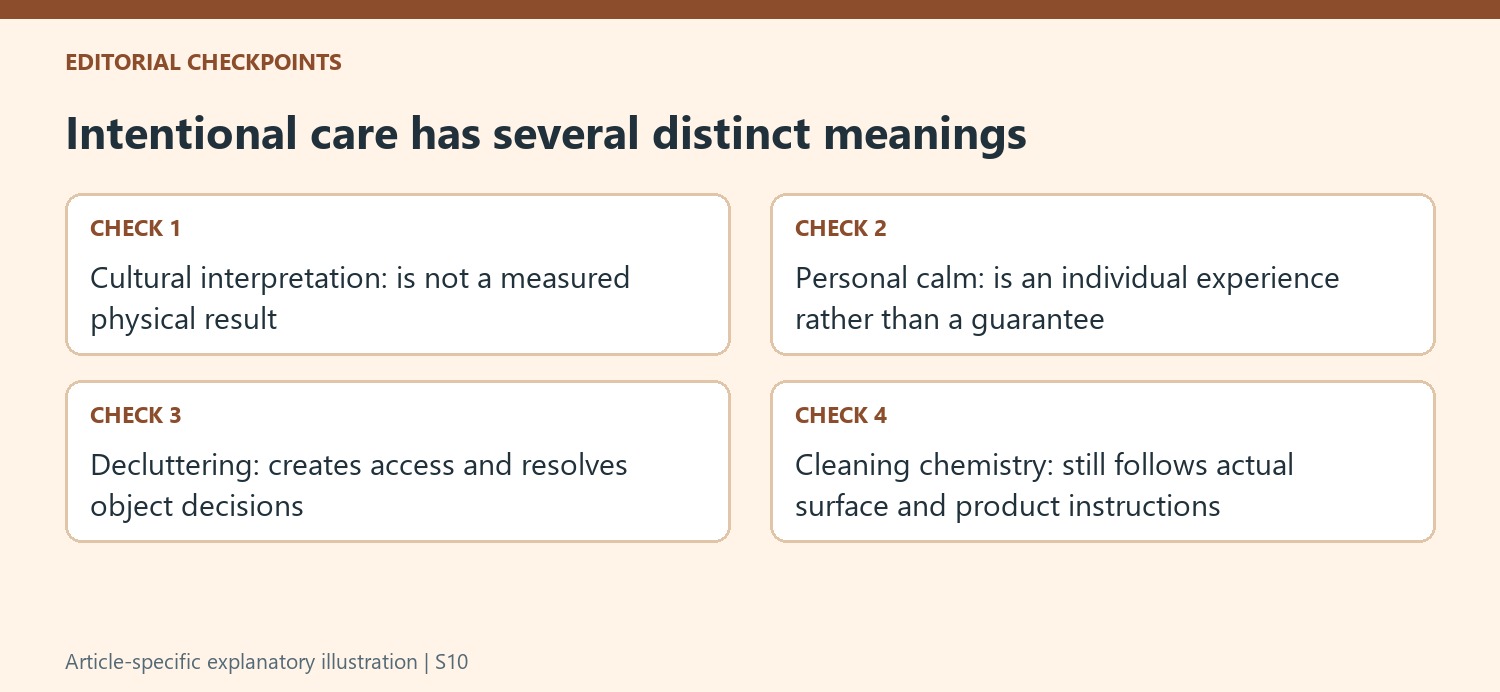
The guide encourages considering what serves the home before simply accumulating more objects. Apply that prompt with attention to ownership, usefulness and the reason an item is kept. A rarely used but necessary object need not be discarded because it does not create immediate joy. Shared belongings also need shared decisions. The intention-setting exercise is most useful when it clarifies a particular space's function rather than imposing an unlimited purge on every room.
Complete the chosen destination for items that leave, using appropriate donation, sale, recycling or disposal routes. A pile shifted to another room is an unfinished decision even if the cleared shelf now looks calmer. Keep decluttering separate from cleaning the newly accessible surface, which still needs a method compatible with its material. Removing objects can create access, but it does not itself remove grease, dust or another type of soil.
Choose products by instructions rather than the natural label
The article favors natural materials and fragrances, but that preference does not establish chemical compatibility or safety for every surface. Vinegar is acidic, essential oils can affect materials and products, and a biodegradable cloth still needs appropriate use and laundering. Follow the actual item and cleaner instructions instead of adding an aromatic ingredient to a prepared product. Scent and a mindful routine are different from a validated cleaning or disinfection process.
End by checking the practical result and leaving equipment appropriately ready. Acknowledging a completed section can provide a clear stopping point without demanding a particular emotional response. The source's daily small-task suggestions can support repetition where they fit the household, while larger or specialist needs remain separately planned. Intentional cleaning then becomes a way to select and complete compatible care, with cultural interpretation, personal feeling and physical soil removal kept as distinct parts of the account.
References
A discussion of Kiyomeru suggests slowing down and noticing the space being cared for.


Leave a Comment
Comments (0)