
Ideal Home describes Staddag as a Swedish cleaning-day approach with an emphasis on shared responsibility. Rather than leaving one person to maintain communal rooms, household members contribute to the spaces they use. The article connects the session with organizing and attending to areas easily overlooked.
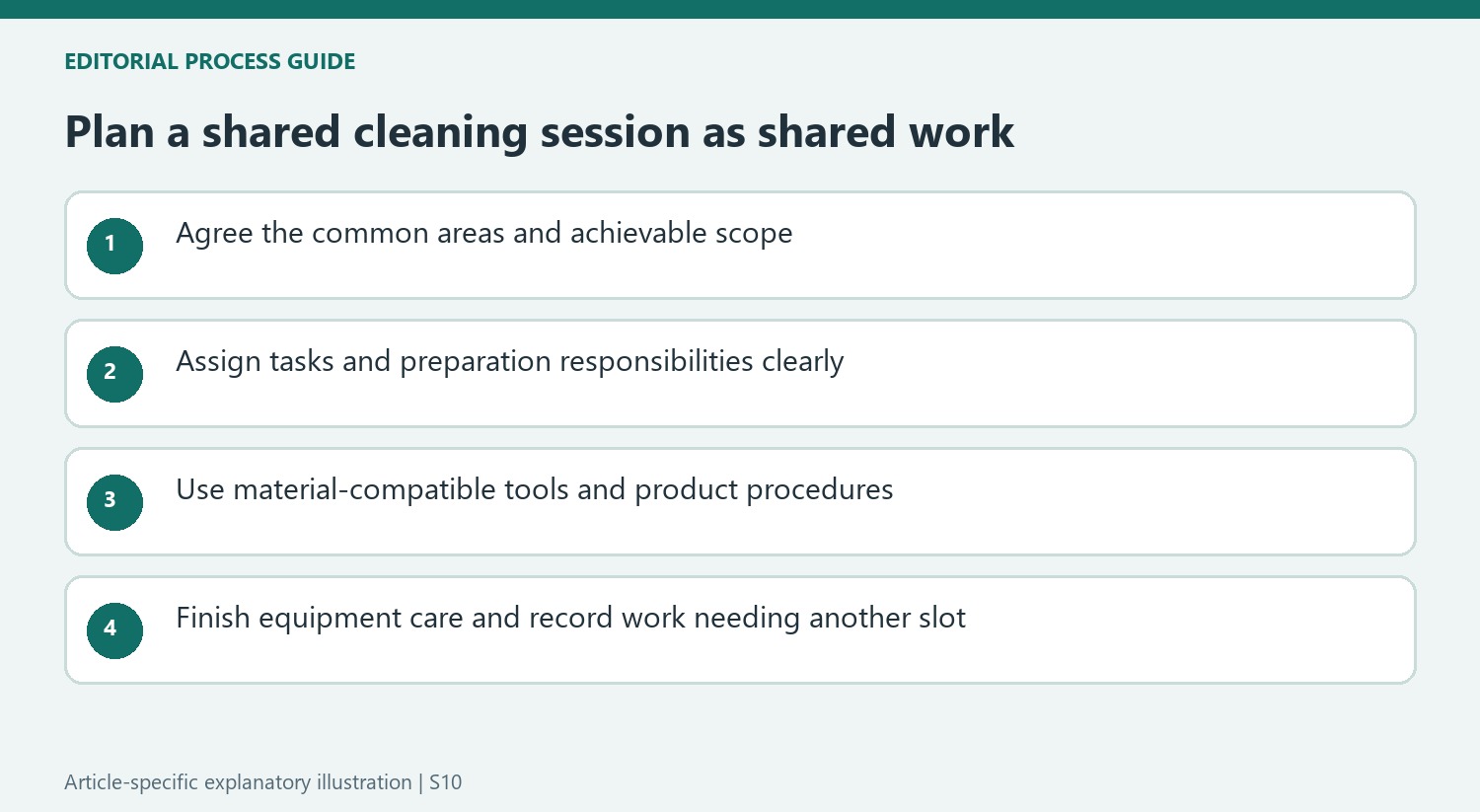
A Saturday is one cultural example, but the practical appointment should fit the people involved. Agree on tasks and a realistic finish before beginning, with work divided according to ability. A recurring shared session can complement daily upkeep without requiring every participant to tackle the same task or work for the same duration.
Make the appointment a collective agreement
The article's author changed from cleaning at separate times to a shared weekend session with her husband. That is a personal example of coordinating work, not evidence that every home can finish in the same time. Agree when participants are available and what the session should cover before it begins, rather than assigning everyone an open-ended command to clean.
Include the organizing work
The source describes Staddag as more than wiping visible surfaces. It also gives time to overlooked areas and reorganizing belongings in shared spaces. Decide which of those jobs matters this week and who will handle it. Sharing the planning helps avoid leaving one person responsible for both identifying every task and checking that the rest of the household has completed it.
Retain small cleanups between shared sessions
The author's weekly example still includes occasional crumb cleanup during the week. A common cleaning appointment therefore works alongside everyday care, rather than making spills wait until Saturday. Choose tasks according to household use and ability, with a realistic stopping point. Review what worked afterwards so the next shared session remains useful instead of becoming an inflexible performance of someone else's routine.
Keep the shared responsibility alongside the shared time
Ideal Home presents Staddag as a collective cleaning occasion rather than merely a new name for one person's weekly workload. That distinction is central to the author's experience. Agree what shared areas need attention and who will handle each part before starting. Working in the same time window can be useful, but it does not distribute responsibility if one person still plans every detail, finds the supplies and corrects the unfinished tasks afterward.
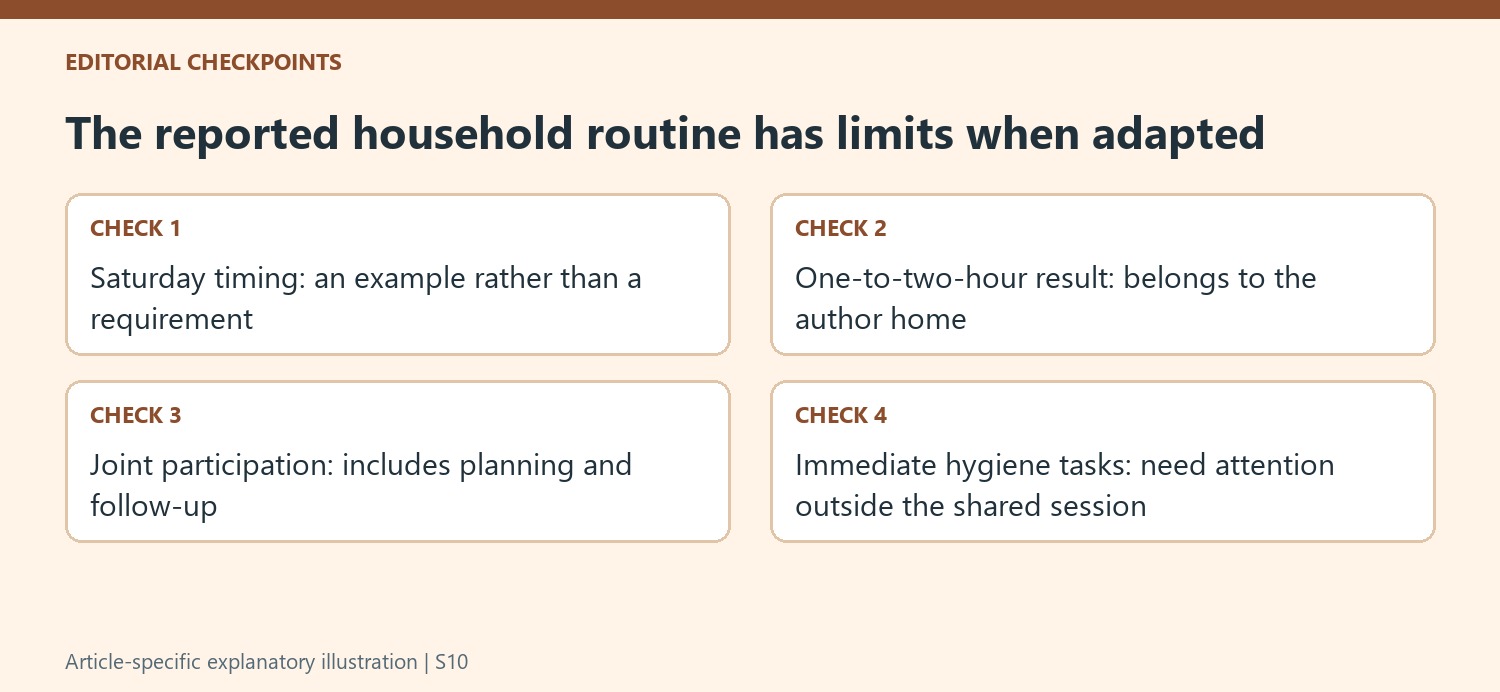
The source describes a tradition associated with a particular day while the author reports a Saturday routine. Treat that timing as context rather than a requirement. Households can choose a suitable common window, and participation should reflect each person's capacity and appropriate tasks. A coordinated session is not a reason to assign children unfamiliar chemical handling or give anyone work that requires skills or access they do not have.
Read the reported time saving as one household experience
The writer describes changing from separate tasks spread through the week to a joint session with a partner. The reported one-to-two-hour duration and freer evenings belong to that home, not a controlled comparison proving an identical result for everyone. A larger house, different mess level or household needing more frequent hygiene tasks can require another plan. Keep immediate spills and food-area needs separate from the calendar choice for the larger session.
The article's deeper focus includes decluttering and overlooked areas, so select an achievable scope rather than promising a full restoration of every room each week. Agree a stopping point and record what needs another slot. This avoids recreating the constant background workload the method is meant to organize. The practical change is coordination and intentional selection, not simply compressing the same unlimited expectations into one crowded morning.
Choose compatible products independently from the social method
The source includes the author's preferred vacuum and cleaners, but those products do not define the method or establish suitability for every reader's surfaces. Use the actual floor, fixture and textile instructions before choosing tools or solutions. One person's success with a household cleaner should not become permission to apply it to stone, wood, upholstery or a proprietary coating that has different restrictions.
Finish selected tasks through their actual completion stages, including residue removal, drying and putting equipment away where required. Shared planning can also assign the follow-up so damp textiles or dirty attachments are not left for someone else. The author reports feeling more organized and recommends the approach, which is valuable as a personal account. Evaluate the method by whether responsibilities and care needs become clearer in the actual household, rather than expecting a cultural label alone to produce calm or spare time.
References
The Staddag discussion highlights cooperation alongside the choice of a regular appointment.


Leave a Comment
Comments (0)