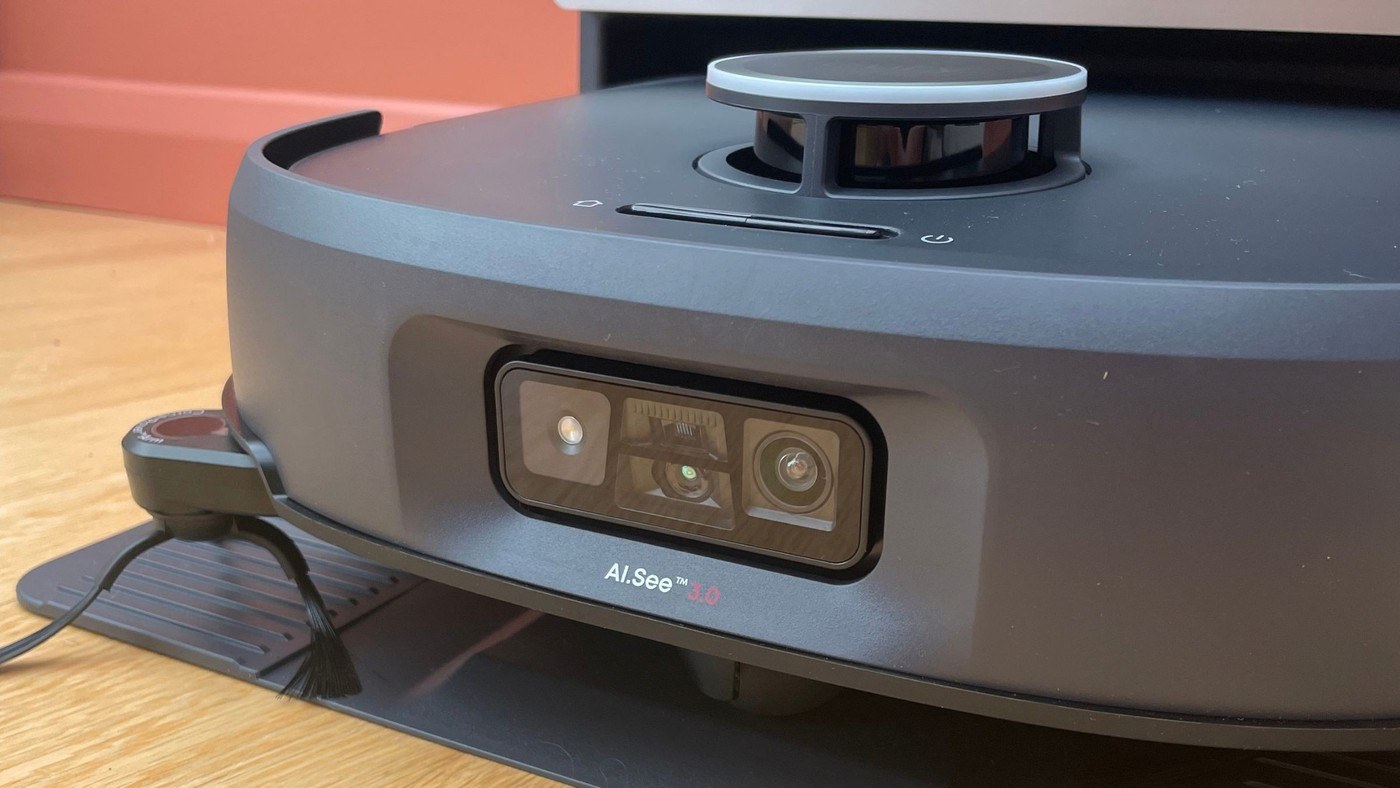
Ideal Home's robot vacuum maintenance guide separates checking water and mop components from removing accumulated debris. Dirty water should not remain unnoticed, and mop pads need to dry properly after use. A dock with a heated washing tray must cool before cleaning.
Inspect the dust chamber or bag regularly and clear hair from the brushes as the manual directs. The article notes that not every bin may be rinsed, making model-specific instructions essential. Add these checks to the floor-cleaning calendar so automation does not hide the dirty pads, full containers or obstructed brushes it depends on.
Power down before inspecting components
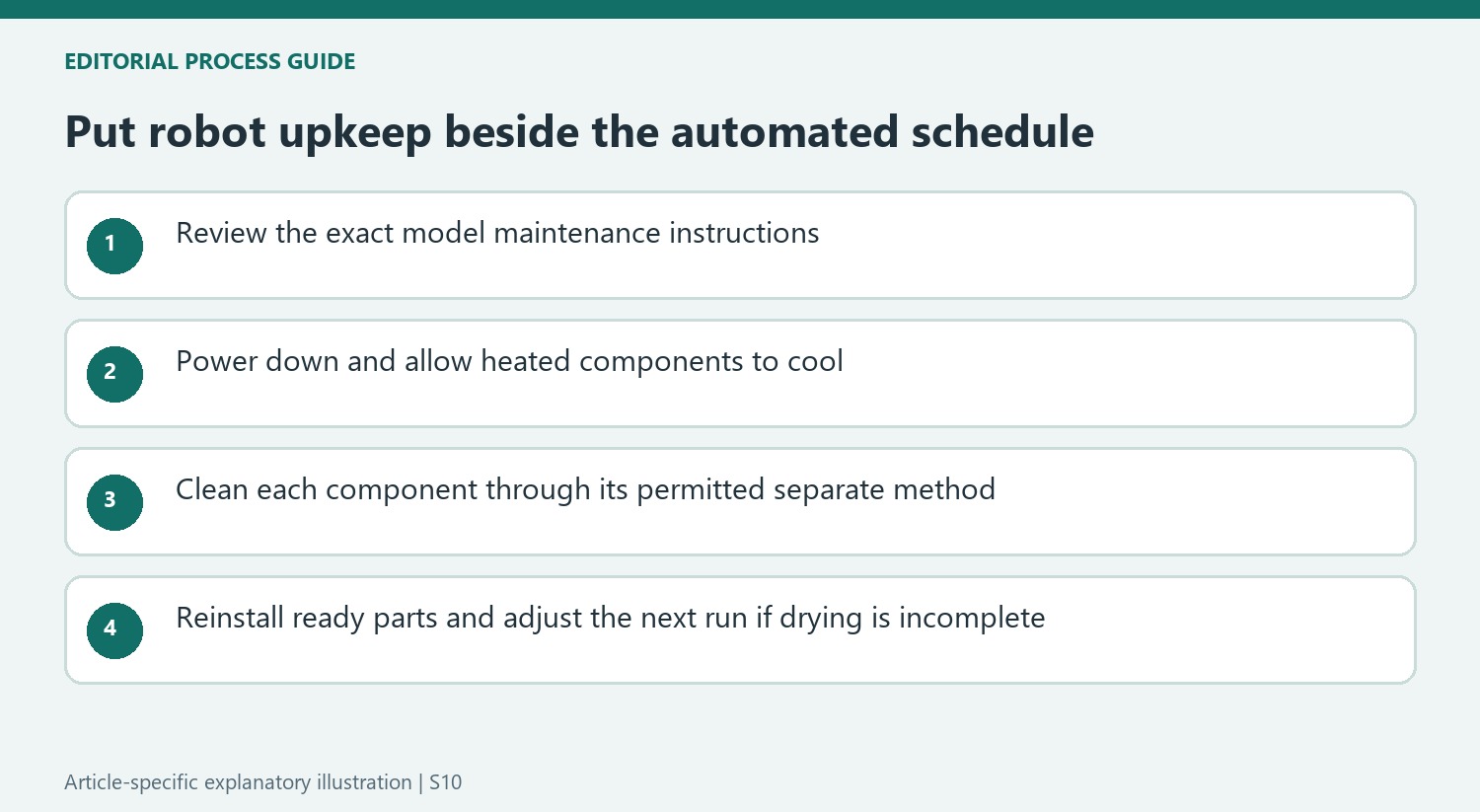
The source begins maintenance by switching off the robot and unplugging its dock. Check the model's instructions before removing parts, and allow any heated washing tray to cool. This preparation belongs ahead of brush or water-tank work, even if the robot normally operates unattended. Automated charging and cleaning do not make hands-on servicing the same as an ordinary floor run.
Keep water care separate from dust care
A mop-equipped system has fresh-water, wastewater and pad checks as well as a dust chamber or bag. The source recommends verifying that pads are clean and actually drying, including on models that handle this automatically. Use only the cleaning liquid approved by the manufacturer. Whether a bin or filter may be rinsed must also come from that particular model's instructions.
Give navigation parts a separate check
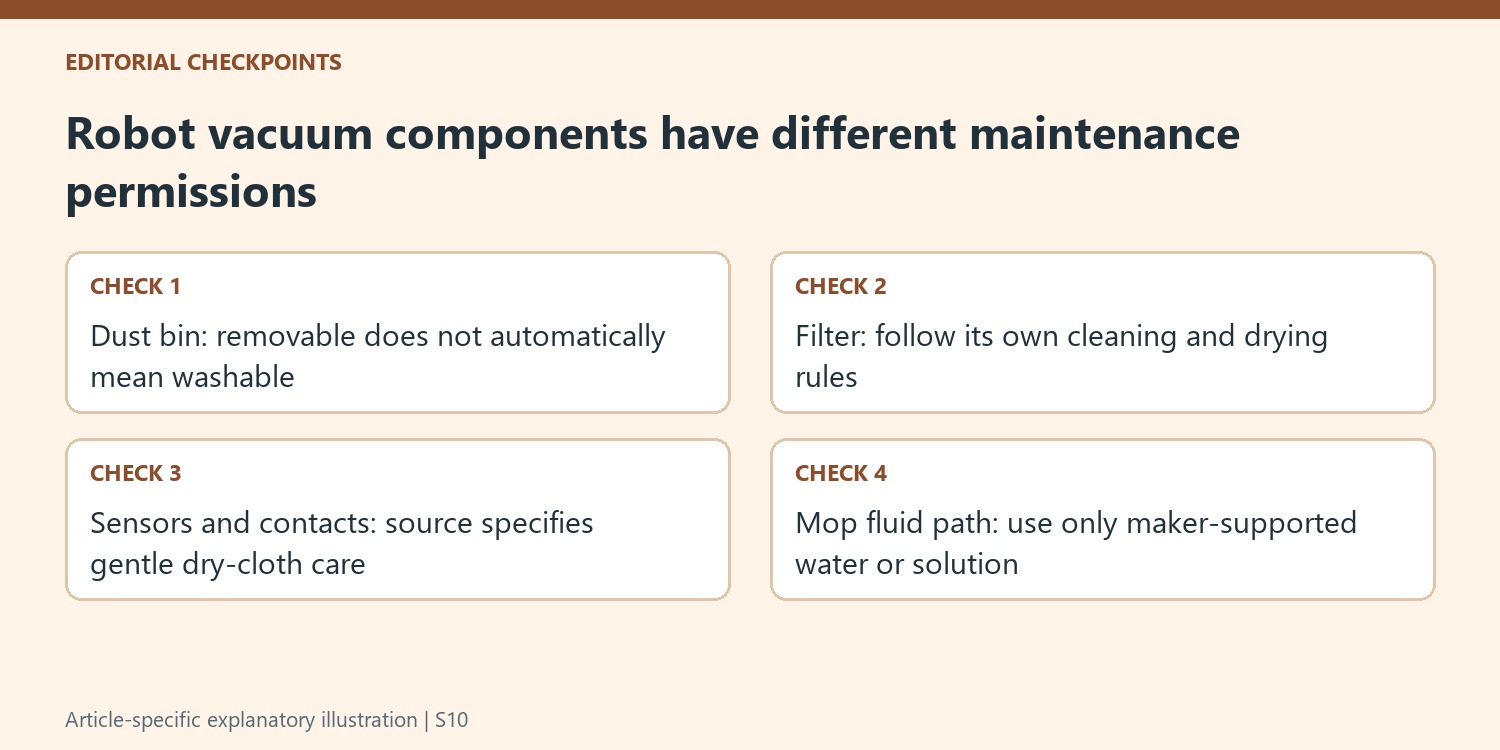
The article adds sensors and charging contacts to the longer maintenance routine, describing a gentle wipe with a soft dry cloth. Brushes and wheels need inspection for wrapped hair or threads, even when advertised as resistant to tangles. Schedule the checks around usage and the manual's intervals rather than assuming one reminder fits every home. Reassemble only after all required cleaning and drying stages are complete.
Schedule the parts that automation does not inspect for you
Ideal Home's robot-vacuum guide distinguishes an automated cleaning run from human upkeep of the machine. A self-emptying dock or automatic mop wash can reduce routine handling without proving that the brushes, tray and pads remain clean. Inspect the actual components on the model in use and follow its maintenance reminders. The source's weekly and monthly timings provide a planning example, not a replacement for the manual or the effect of a particularly dirty household.
Power down the robot and disconnect the dock through the manufacturer's procedure before supported maintenance, allowing heated components to cool. An app status can supplement that process but does not replace the physical steps the model requires. Keep the machine's wet and dry sections distinct. The fact that a dock handles water does not authorize rinsing its electrical areas or cleaning every component with the same damp cloth.
Check washability separately for bins, filters and mop parts
The source explicitly notes that some debris containers may be rinsed only if the manufacturer allows it. Extend that disciplined label check to each filter, pad and detachable tray. A part being removable is not proof that it is washable, and washable parts need their required drying before reinstallation. Do not put a damp filter back because the next automated run is scheduled soon. Adjust the schedule to the component's real readiness instead.
Brushes and wheels can retain hair even when marketed with anti-tangle features. Use the recommended removal tool and avoid cutting seals, bristles or soft coverings while freeing a strand. Sensors and charging contacts receive a separate soft dry-cloth approach in the article. Keep their instructions distinct from tank washing, and seek model-specific advice if navigation or charging remains abnormal after the approved external cleaning rather than probing electrical parts.
Use the approved water and solution system
The guide warns against adding vinegar to a robot mop and directs owners to the maker's supported water or cleaning solution. A household floor recipe can affect both the machine and the flooring, so approval needs to cover that combination. Do not infer that a pleasant scent or a small quantity makes an unlisted additive harmless. A tank-cleaning procedure also does not automatically authorize running that cleaner through the robot's working fluid path.
Empty waste and maintain fresh-water supplies according to actual use and the manual, checking that pads and trays complete their supported cleaning and drying process. An automatic cycle finishing is not evidence that every retained area is ready for the next run. Put upkeep beside the automated schedule so the robot is maintained as a system of separate components. That gives the convenience feature a practical support routine without promising that a few fixed minutes will resolve every performance fault.
References
A machine that cleans floors still needs attention to water, debris and the docking station.


Leave a Comment
Comments (0)