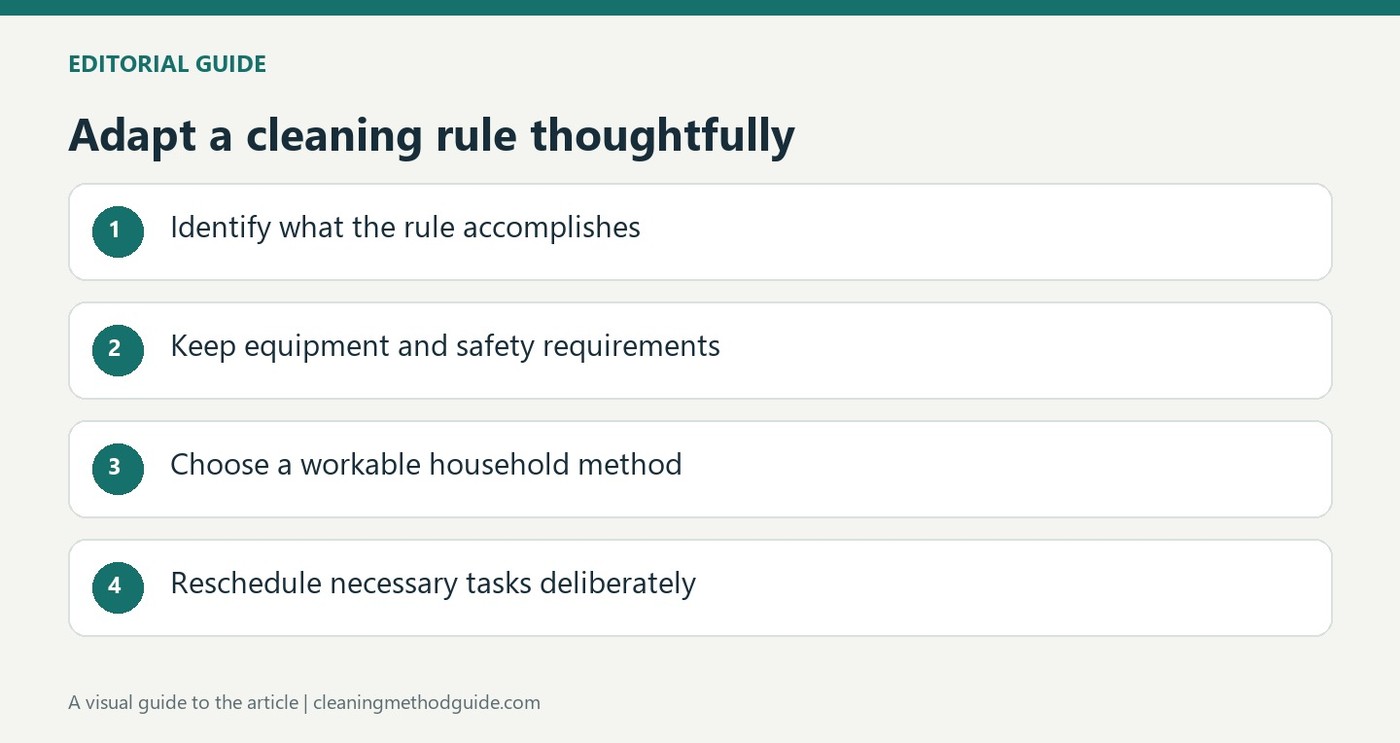
Homes & Gardens examines cleaning rules that can be adapted, including rigid scheduling and assumptions about dishwasher loading. The dishwasher advice prioritizes avoiding overload and leaving space for water to reach items. That is more useful than insisting on one arrangement for every machine.
A flexible calendar should still preserve manufacturer instructions and basic safety. Place sharp utensils safely and check rack suitability for heat-sensitive items. Apply the same reasoning to routine timing: respond to real mess and household use, while keeping product directions and material restrictions firmly in place.
Separate preference from equipment requirements
The dishwasher example allows different arrangements when items remain accessible to the wash water. It still retains precautions about sharp utensils and rack placement for heat-sensitive pieces. Use the appliance's instructions to resolve those details. Flexibility is useful for choosing an effective arrangement inside the machine; it is not a reason to obstruct the spray or expose an unsuitable item to heat.
Reconsider habits that add unnecessary work
The source discusses scraping large food debris instead of automatically performing a complete pre-rinse before loading. Whether that approach suits the machine depends on its guidance and performance. If cleaning results decline, review loading and maintenance rather than adding extra preparation indefinitely. Its broader point is to examine what a familiar step accomplishes instead of preserving it only because it has always been done.
Make the calendar serve the household
The scheduling advice permits adjustment when a rigid plan conflicts with actual conditions. Move a routine job when needed, but keep necessary cleanup and material restrictions visible. A quiet room and a heavily used kitchen may not need identical attention on the same day. Change the appointment deliberately so important work is rescheduled, rather than disappearing from the plan when one fixed cleaning day is missed.
Separate flexible preferences from actual use requirements
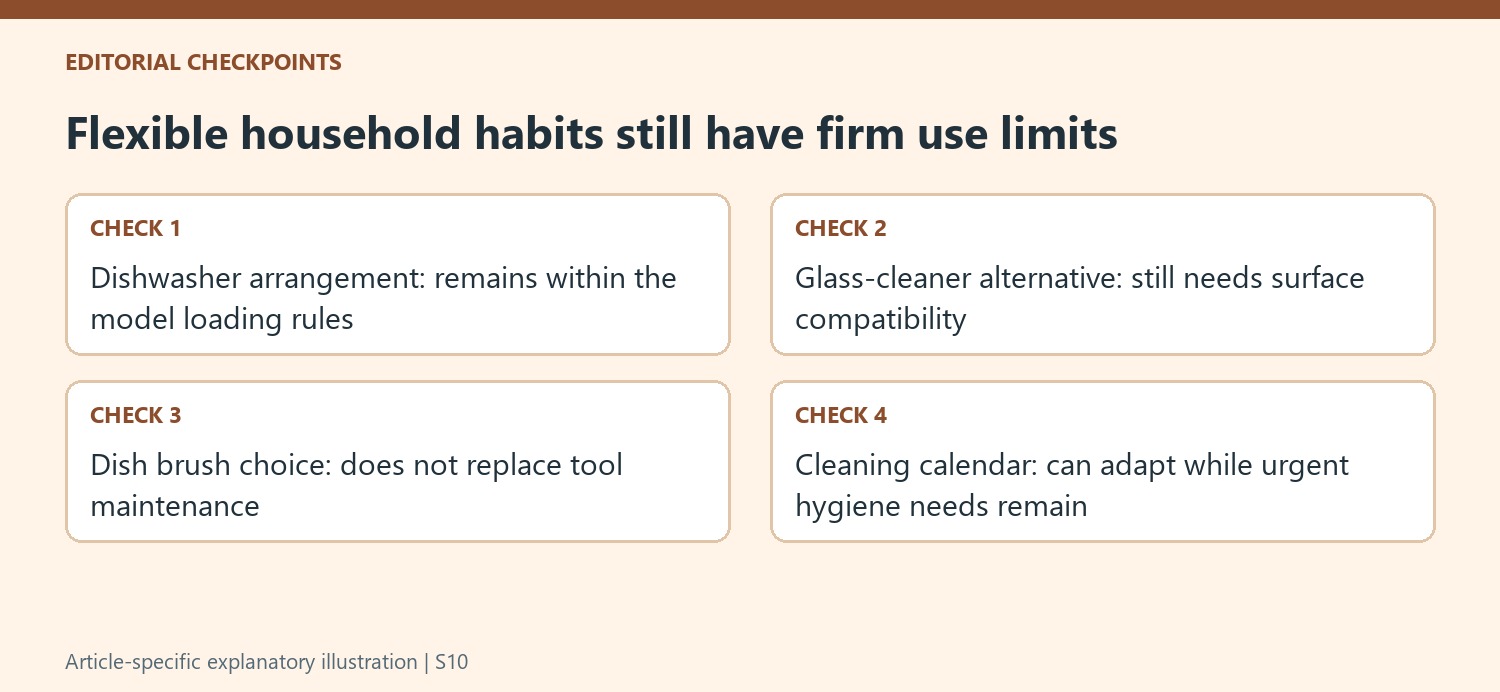
Homes & Gardens questions rigid household habits, but that does not make product labels or appliance instructions optional. A dishwasher may allow different practical arrangements while still requiring clearance for spray arms and particular placement for sensitive items. Follow the actual model and dish instructions before adapting a general loading tip. Flexibility concerns the arrangement within those limits, not permission to overload the racks or ignore an item's dishwasher exclusion.
The source's glass-cleaning alternatives need the same distinction. A homemade mixture may suit a particular glass surface while being incompatible with a frame, stone surround or special coating. Read the relevant care directions before replacing a dedicated cleaner with a familiar household ingredient. A simpler product choice is useful only when it performs the supported task without creating a new material problem elsewhere on the object.
Choose cleaning tools and appliance preparation for the actual job
The article discusses dish brushes as an alternative to sponges. A brush can be convenient, but neither tool stays appropriately clean simply because of its shape. Follow its maintenance instructions and choose contact suitable for the dishes. A dishwasher-safe brush still needs a supported cleaning arrangement, while gloves do not by themselves establish that a soiled sponge or contaminated surface has become clean enough for another task.
Its advice to scrape food rather than fully pre-rinse reflects many modern dishwashing systems, but retain the actual machine's directions and the condition of the load. If performance is poor, use the approved maintenance procedure rather than combining suggested household ingredients or probing parts without guidance. A scheduling article can identify that appliance care deserves attention; it does not replace model-specific troubleshooting or prove that every cleaning failure has the same cause.
Let a task list adapt without losing necessary care
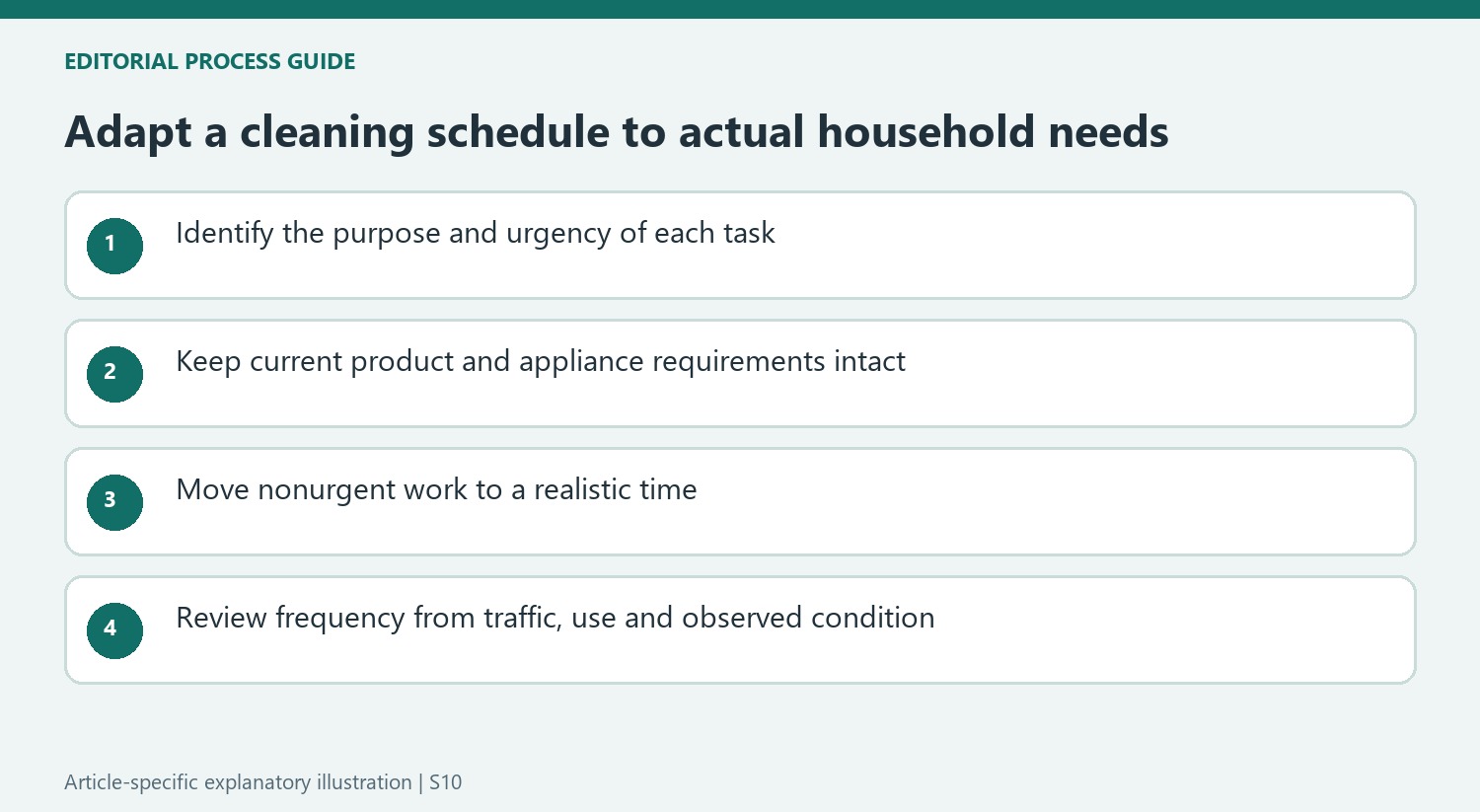
The source's most directly adaptable point is that a busy household need not revolve around an inflexible calendar. Keep periodic tasks visible and respond to fresh mess appropriately, while adjusting nonurgent timing when circumstances change. A missed decorative dusting and food contamination on a worktop have different priorities. Flexibility works better when the list identifies why a task matters, rather than treating every checkbox as equally urgent or equally optional.
Use actual traffic, pets, occupancy and surface condition to decide frequency. The article's general vacuuming examples are starting points, not a guarantee that every home is clean on the same weekly interval. Review recurring problems and the time available, and preserve material-compatible methods as the schedule moves. The useful alternative to rigid rules is an informed routine: appropriate priorities and supported procedures remain in place while the household chooses a workable time and sequence for completing them.
References
- The 5 cleaning rules you can actually break – from loading the dishwasher to sticking to a strict schedule. Homes and Gardens; Ottilie Blackhall.
A discussion of flexible rules suggests retaining safety and equipment requirements while questioning unnecessary rigidity.


Leave a Comment
Comments (0)