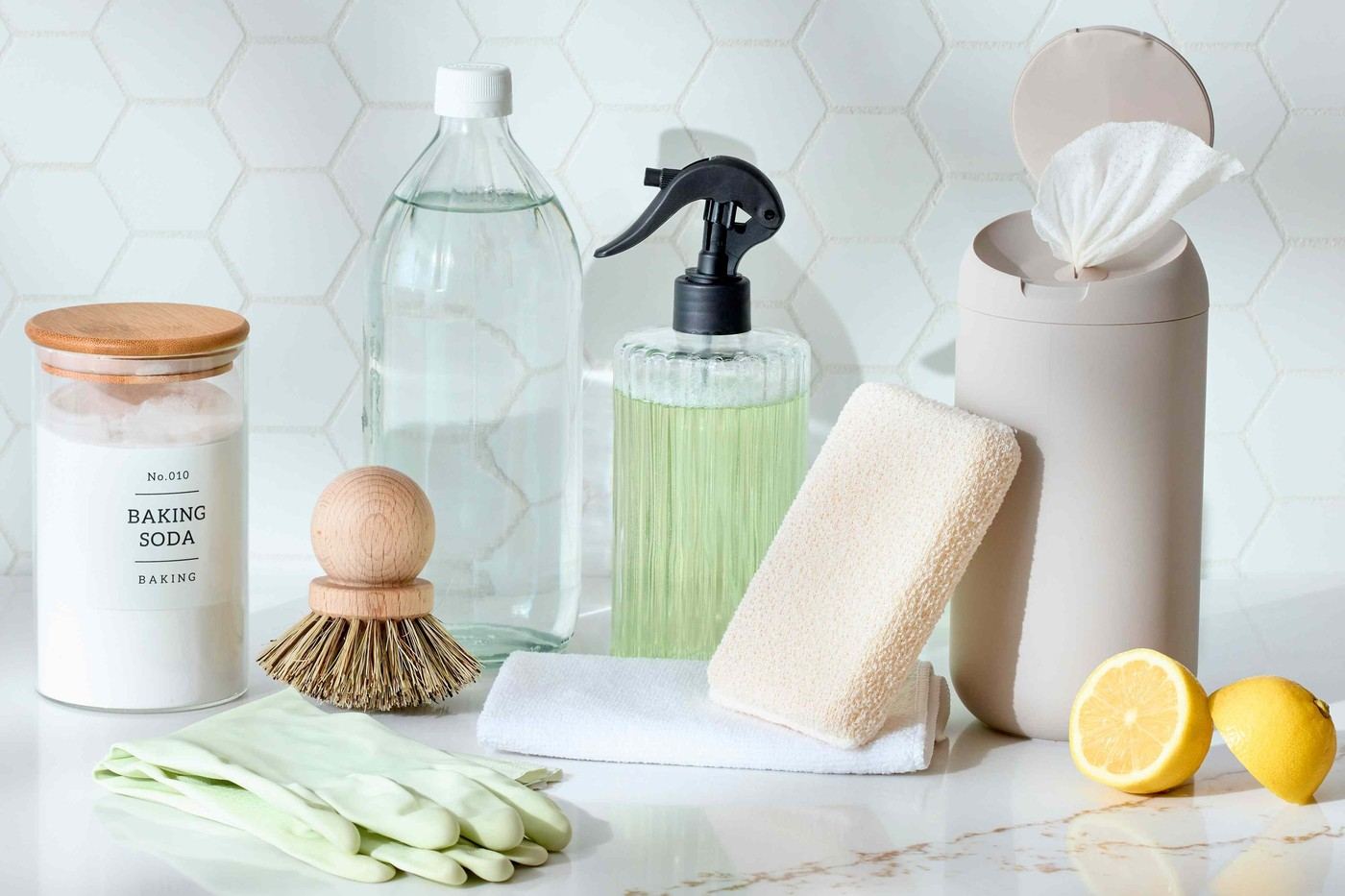
The Spruce's essential-equipment list connects a portable cleaning caddy with the controls and attachments on a vacuum. A useful kit needs clean cloths and suitable products, while the machine may need a disengageable beater bar, handheld use, or a crevice and upholstery tool for the room. These are different purchasing decisions within one working routine. Assess what must be carried, what must be replenished, and what the existing equipment can already do before adding another appliance or organizer.
Keep supplies together and accessible
The Spruce recommends a bucket or cleaning caddy for frequently used tools and products. It also suggests keeping appropriate supplies near the areas where they are used, or duplicating basic equipment between floors when that saves repeated trips. The kit should make the job easier to start, rather than becoming another store of unused bottles.
Choose equipment with the right functions
The article recommends checking vacuum features such as a switchable beater bar, handheld operation and crevice or upholstery tools. Those details matter more than simply owning a large appliance. Review the room's materials and tasks before stocking the caddy, and keep safe storage requirements in mind when deciding where a portable set of cleaners will live between uses.
Stock for replacement and maintenance as well as use
The Spruce distinguishes lasting equipment from regularly replaced cloths and detergents. That helps avoid a kit containing many bottles but no clean mop cover or usable brush. Its vacuum advice includes disengaging the beater bar on suitable hard floors, showing why controls matter alongside attachments. The article also calls for clearly labeled spray bottles, including the solution name and directions. Retain original labeled containers where appropriate and keep chemicals securely stored even if the working kit moves between rooms. A portable caddy is an organization aid rather than a reason to leave products accessible to children or to combine leftovers into one bottle.
Stock the caddy for the next room rather than the entire house
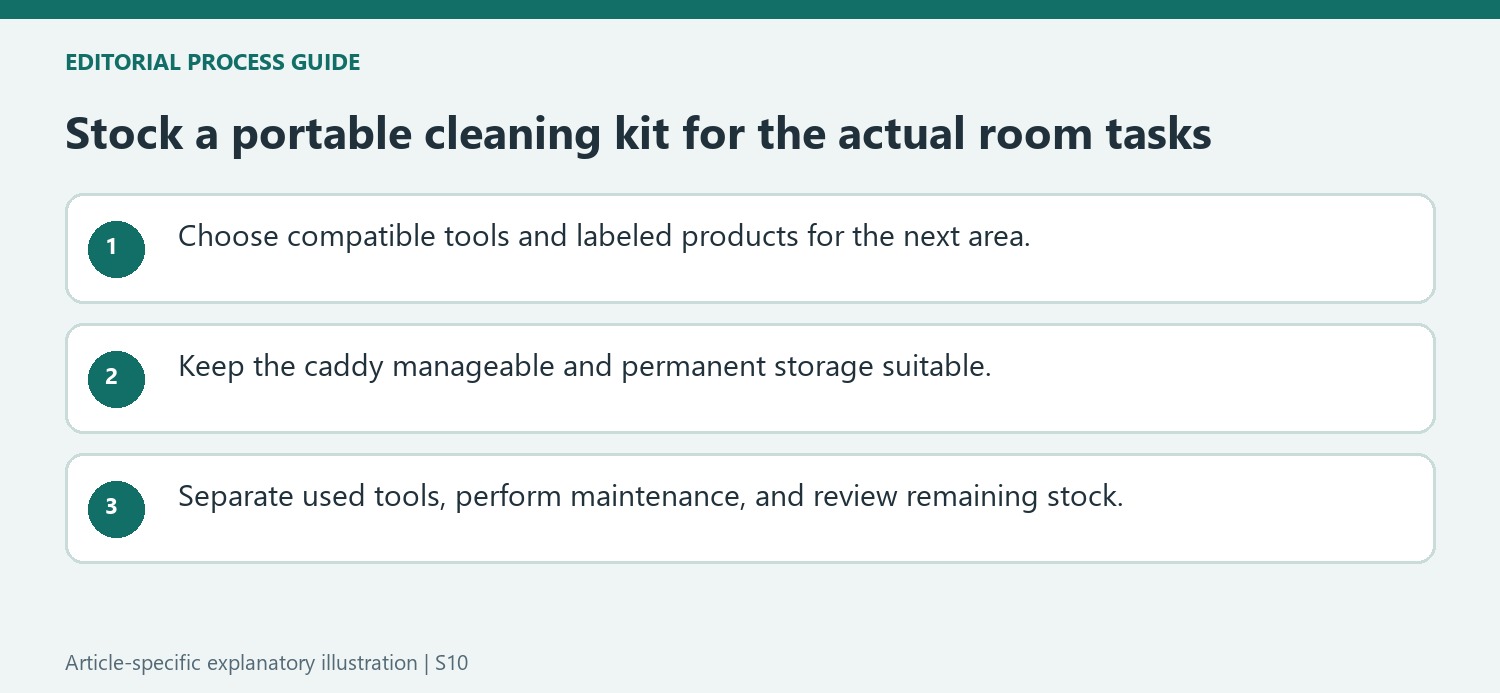
The Spruce lists both durable equipment and consumable supplies, so separate what must travel from what can remain securely stored. Identify the surfaces and tasks in the next room, then choose compatible cloths, brushes, and labeled products. A bucket or caddy can reduce repeated trips if its weight and layout remain manageable. It need not hold every bottle owned. Keep frequently used tools accessible without placing hazardous products within reach of children or pets. Duplicating selected supplies on another floor may improve convenience, but it also creates another storage location that needs identification, appropriate conditions, and stock checks.
Make versatility conditional on the actual finish
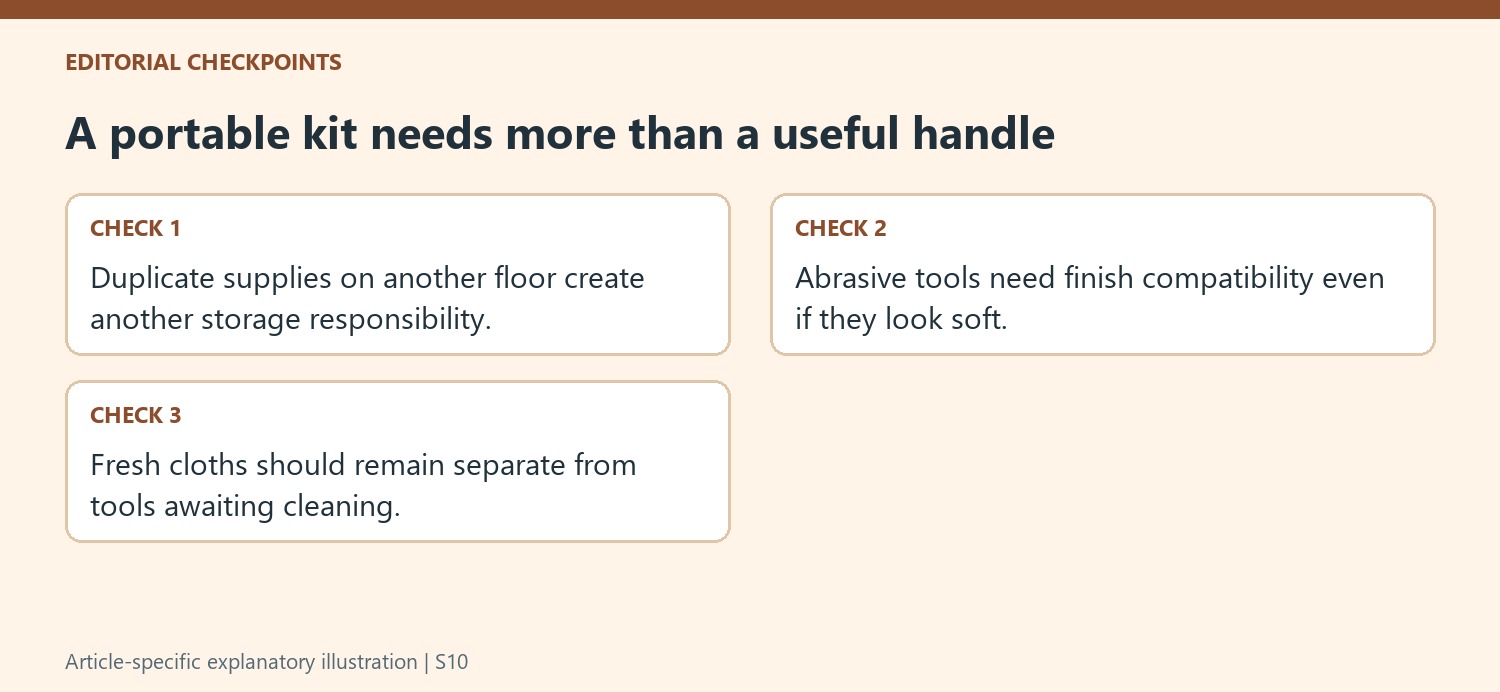
A convertible vacuum, interchangeable mop cover, and extendable duster can each cover several jobs when used within their instructions. Verify brush settings for different floors and select cloth texture for the contact surface. A melamine sponge is abrasive despite looking soft, and a stiff brush suitable for one robust surface can damage another. The source's collection of chemical examples does not make them compatible with every material or with each other. Choose the intended treatment separately and follow its label. Do not interpret a broad steam-cleaner description as proof that every floor or textile tolerates heated moisture.
Plan the return path for used tools and remaining stock
Provide a clear distinction between fresh cloths and those awaiting their approved cleaning. Empty and maintain equipment as directed, and inspect brushes for flattened or damaged working parts. Keep bottles clearly identified with their intended use; do not transfer chemicals into containers that could be mistaken for drinks. A caddy makes an inventory easier only when labels remain visible and leaking or obsolete items are addressed. Review the amount kept against actual consumption instead of repeatedly buying duplicates because the cupboard is hard to inspect. The source's essential-supplies idea is most useful as a task-based collection that stays ready. Each item should have a suitable place during use, a safe place afterward, and a maintenance routine that prevents yesterday's dirt from becoming today's cleaning tool.
References
- The Ultimate Cleaning Supplies List: 18 Items Everyone Should Keep on Hand. The Spruce; Mary Marlowe Leverette.
The Spruce's essential-equipment list connects a portable cleaning caddy with the controls and attachments on a vacuum. A useful kit needs clean cloths and suitable products, while the machine may need a disengageable beater bar, handheld use, or a crevice and upholstery tool for the room.


Leave a Comment
Comments (0)